 JOHN SINCLAIR
FILLING STATION
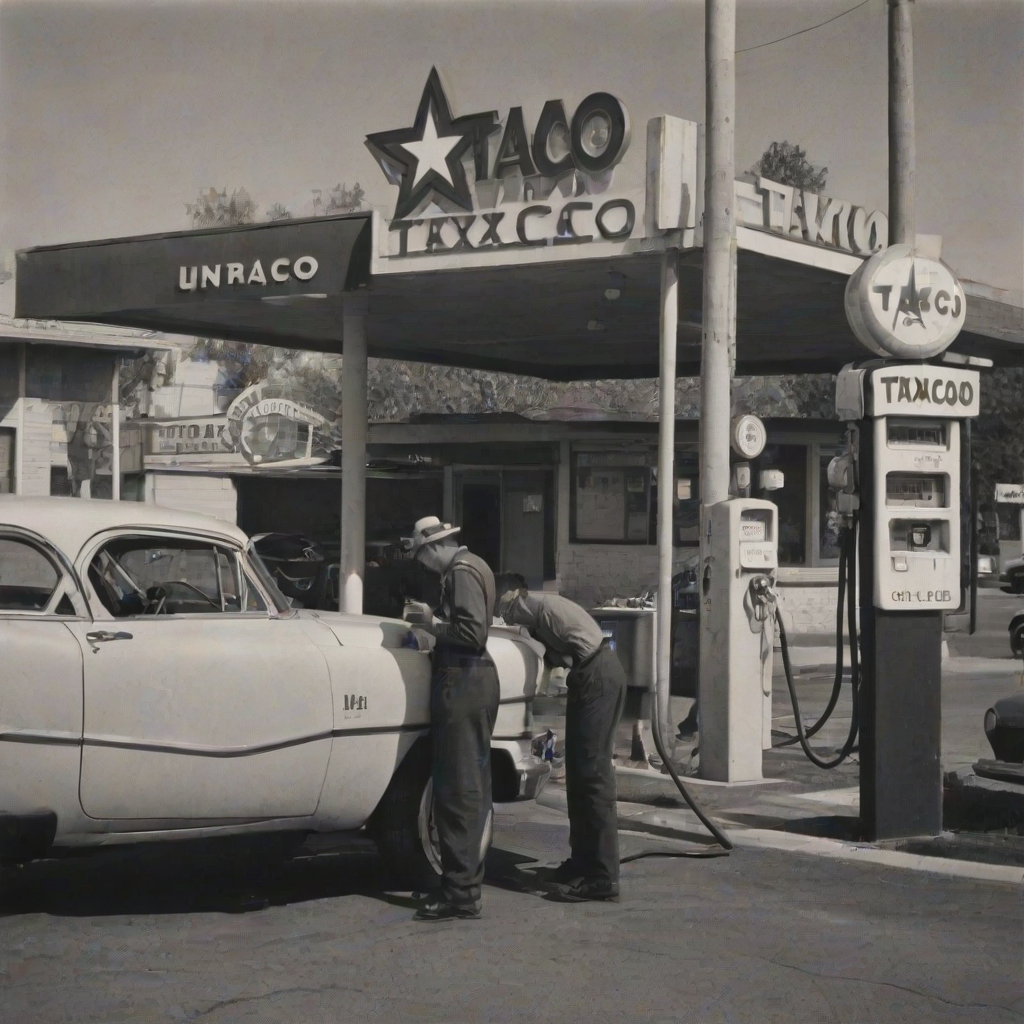
The filling station was a room with a man in it and the man knew your car. You pulled in and the man came out and the coming out was the service. The man did not wait for you to ask. The man came to you. The man wiped your windshield and checked your oil and filled your tank and the filling was not the point. The conversation was the point. The man asked how the family was doing and you told him and the telling was the transaction beneath the transaction. The gasoline was the excuse. The human contact was the product. The filling station was the last place in America where a stranger touched your car with care and the care was professional and the profession was dying before the man knew it was dying.
The first dedicated gasoline filling station in the United States opened in Pittsburgh Pennsylvania in December of nineteen thirteen at the corner of Baum Boulevard and St. Clair Street. The Gulf Refining Company built it and the building looked like a small house because the building was meant to look like a small house. The filling station was designed to belong in the neighborhood because the filling station needed the neighborhood's permission to exist. The neighbors did not want a gas depot on their street. The neighbors wanted a building that looked like it lived there and the architects gave them a building that looked like it lived there and the disguise was the beginning of a sixty year relationship between the automobile and the American neighborhood. The filling station pretended to be a house and the pretending worked. By nineteen twenty there were fifteen thousand filling stations in America. By nineteen thirty there were a hundred thousand. By nineteen forty the filling station was as common as the church and more regularly attended.
The attendant was the occupation. The filling station attendant wore a uniform and the uniform was pressed and the pressing was the standard. The uniform had the man's name stitched on the chest and the name was the first name because the filling station was a first name business. The attendant checked your tires and your battery and your belts and the checking was free because the checking was the hook. The checking found problems and the problems needed fixing and the fixing was where the money was. But the checking was also genuine. The attendant looked under your hood because the attendant cared about engines the way a doctor cares about bodies and the caring was not performed. The caring was real. The filling station attendant was the last generalist mechanic in America. The attendant could diagnose a misfire by sound and a leak by smell and a worn belt by feel and the diagnosis cost nothing because the diagnosis was the relationship. The relationship kept you coming back and the coming back kept the station open and the station staying open kept the man employed and the employment was the man's life and the man's life was the station. The man who ran the filling station did not go home at night. The man was home.
Standard Oil and Texaco and Shell and Gulf competed for corners and the competition was architectural. The stations became landmarks. The stations had towers and canopies and porcelain enamel panels in red and white and green and the colors were the brand and the brand was the trust. You knew what a Shell station looked like from three blocks away and the knowing was the marketing. Walter Dorwin Teague designed Texaco stations in nineteen thirty seven and the design was streamlined and modern and the stations looked like the future and the future was clean and white and the white was the promise that your car would be treated with precision. Frank Lloyd Wright called the filling station the most important building type of the twentieth century and Wright was not wrong. The filling station was where America met the automobile and the meeting happened four hundred million times a year and every meeting included a human being who came out of a small room and walked toward your car and said what can I do for you today.
The self-service pump killed the filling station. The first self-service station opened in Los Angeles in nineteen forty seven and the self-service saved the customer eleven cents a gallon and the eleven cents was the price of the conversation. The customer chose the savings. The customer always chooses the savings. By nineteen eighty two New Jersey and Oregon were the only states that still required an attendant to pump your gas and New Jersey held on until the law felt like nostalgia and Oregon changed its law in twenty eighteen and the change was the end. The filling station is now a gas station and the gas station is a convenience store with pumps and the convenience store does not know your name and the pumps do not check your oil and nobody comes out of a small room to walk toward your car. The transaction is between you and a screen. The screen asks you for your zip code. The screen does not ask how your family is doing. The eleven cents you saved in nineteen forty seven has compounded into a world where no one comes out to greet you when you pull in and the not coming out is the cost and the cost was higher than eleven cents.