 JOHN SINCLAIR
FENCE
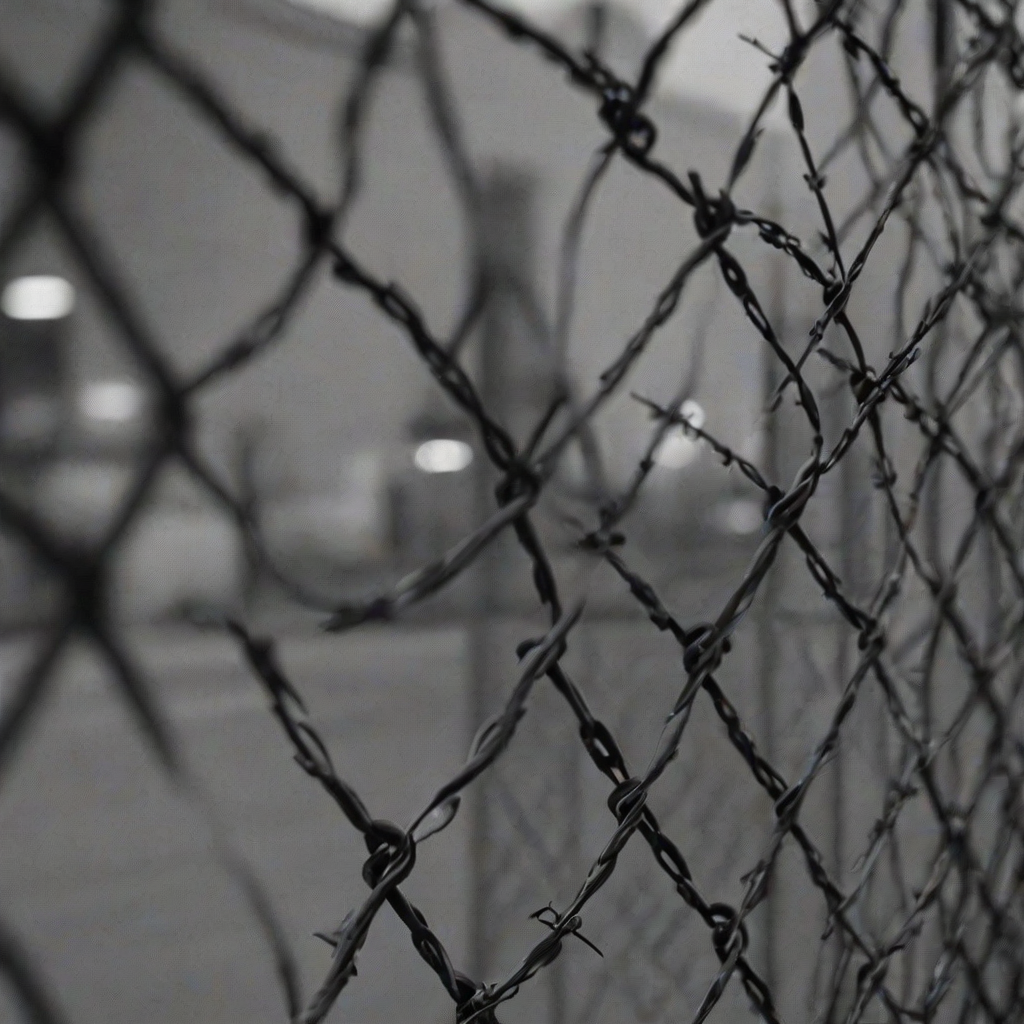
You build a fence and you create two sides that did not exist before. Before the fence the land was one thing. After the fence the land is two things and the two things have a relationship that the one thing never had. The fence creates neighbors. The fence creates strangers. The fence creates the concept of trespassing which did not exist when there was nothing to trespass across. The fence is the oldest piece of political technology in the world. Somebody put a stick in the ground and said this side is mine and the other side of the stick became yours whether you agreed to it or not.
Robert Frost wrote that good fences make good neighbors but the poem is about a man who disagrees with that proverb. The narrator wants to take the wall down. The neighbor wants to keep it up. They walk along the wall every spring and put the fallen stones back and the narrator asks why. What are we walling in or walling out. The neighbor just repeats what his father told him. Good fences make good neighbors. The most quoted line in the poem is the line the poet is arguing against. People use the poem to defend fences without reading the poem closely enough to see that the poem is asking whether fences are necessary at all.
The Berlin Wall was a fence that became a canvas. On the east side the wall was blank and guarded and anyone who touched it was shot. On the west side the wall was covered in graffiti and murals and the graffiti said everything the concrete was trying to suppress. Thierry Noir painted cartoon heads on the west side in nineteen eighty four. Keith Haring painted a mural on the west side in nineteen eighty six. The west side of the wall was the largest open-air gallery in the world and the gallery existed only because the wall existed. When the wall came down in nineteen eighty nine the art came down with it. The fence created the art and the freedom destroyed it. That is the paradox of the fence. The fence makes you want to say something. The absence of the fence takes away the reason.
At the border between Nogales Arizona and Nogales Sonora families stand on opposite sides of the steel fence and talk through the mesh. They hold hands through the gaps. Children press their faces against the bars. The fence is eighteen feet tall and made of steel bollards and the bollards are spaced four inches apart and four inches is enough to pass a finger through but not a hand. The architects of the fence calculated exactly how much human contact to permit. Four inches. That is the government's answer to the question of how much love to allow across a border. Four inches of space between two pieces of steel. Enough for a whisper. Not enough for an embrace.
You stand at the fence and you look through it and the other side looks the same as your side because the other side is the same as your side. The fence does not separate different things. The fence separates the same thing into two pieces and calls them different. The fence is a line that someone drew and the line became real because everyone agreed to treat it as real. The fence is the chalk line that nobody washed away. The fence is the toll booth that never opens. The fence is the most permanent form of a temporary idea because the idea was that we need to be apart and the idea was wrong but the fence is still standing.