 JOHN SINCLAIR
EVICTED
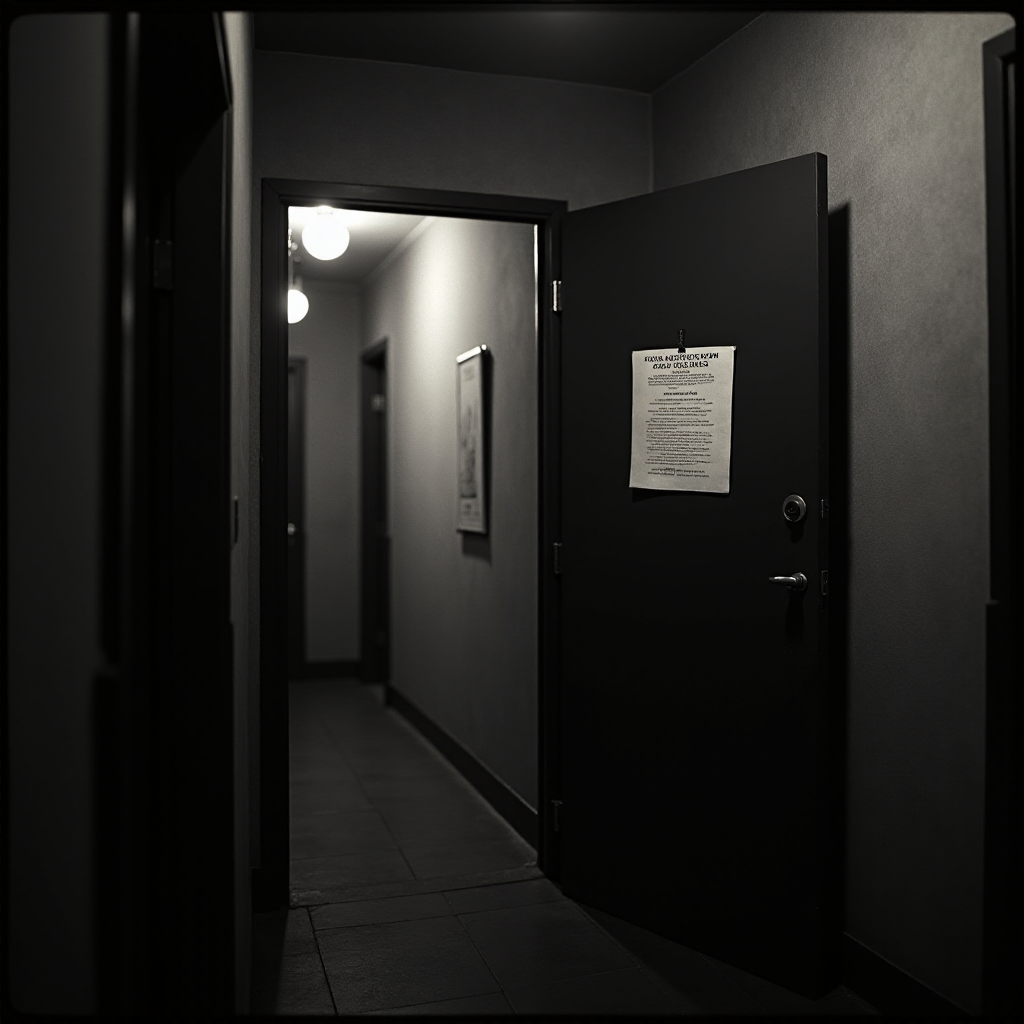
You come home and there is a piece of paper on your door. The paper says you have thirty days. Thirty days to disassemble your life and put it in boxes and carry the boxes somewhere else. You have lived here for seven years and somebody who has never been inside your apartment has decided that you do not live here anymore. The paper does not ask how you feel. The paper does not ask where you will go. The paper is a period at the end of a sentence and the sentence is your address.
Matthew Desmond wrote a book called Evicted in twenty sixteen. He followed eight families in Milwaukee through the eviction process. He found that in poor neighborhoods a quarter of all renters are evicted at some point. One in four. He found that eviction is not something that happens because people make bad decisions. Eviction is something that happens because rent takes seventy percent of your income and one emergency takes the other thirty and then the paper goes on the door. Eviction is arithmetic. The arithmetic does not work and the paper is the answer the arithmetic gives you.
You put your things on the sidewalk. That is what eviction looks like from the street. A couch on the sidewalk. A lamp on the sidewalk. Boxes of clothes and books and photographs on the sidewalk. Your private life becomes public in the time it takes to carry it down the stairs. Everybody on the block knows you got evicted because your couch is on the sidewalk and a couch on a sidewalk is a sentence that everybody can read. The couch says somebody lost. The couch says the rent won.
In Detroit in twenty thirteen the city was bankrupt and the banks were foreclosing on houses at a rate that looked like a war. Entire blocks emptied. Entire neighborhoods hollowed out. People who had lived in their houses for thirty years came home to a notice on the door. The notice did not care that your children were born in that house. The notice did not care that your mother died in that house. The notice cared about a number and the number was the mortgage and the mortgage was owned by a bank in New York that had never seen Detroit from the ground.
You change the lock. That is the final act of eviction. The landlord changes the lock and your key does not work in your own door. You stand outside your own door with a key that used to mean something and now means nothing. The key is still shaped like your lock. The key still remembers the tumblers. But the tumblers have been replaced and the key is a souvenir of a life that ended when somebody changed the hardware. You put the key in your pocket and you walk away and the key stays in your pocket for months because you cannot throw away the key to a place you still think of as home.