 DAVID PEEL
Escutcheon
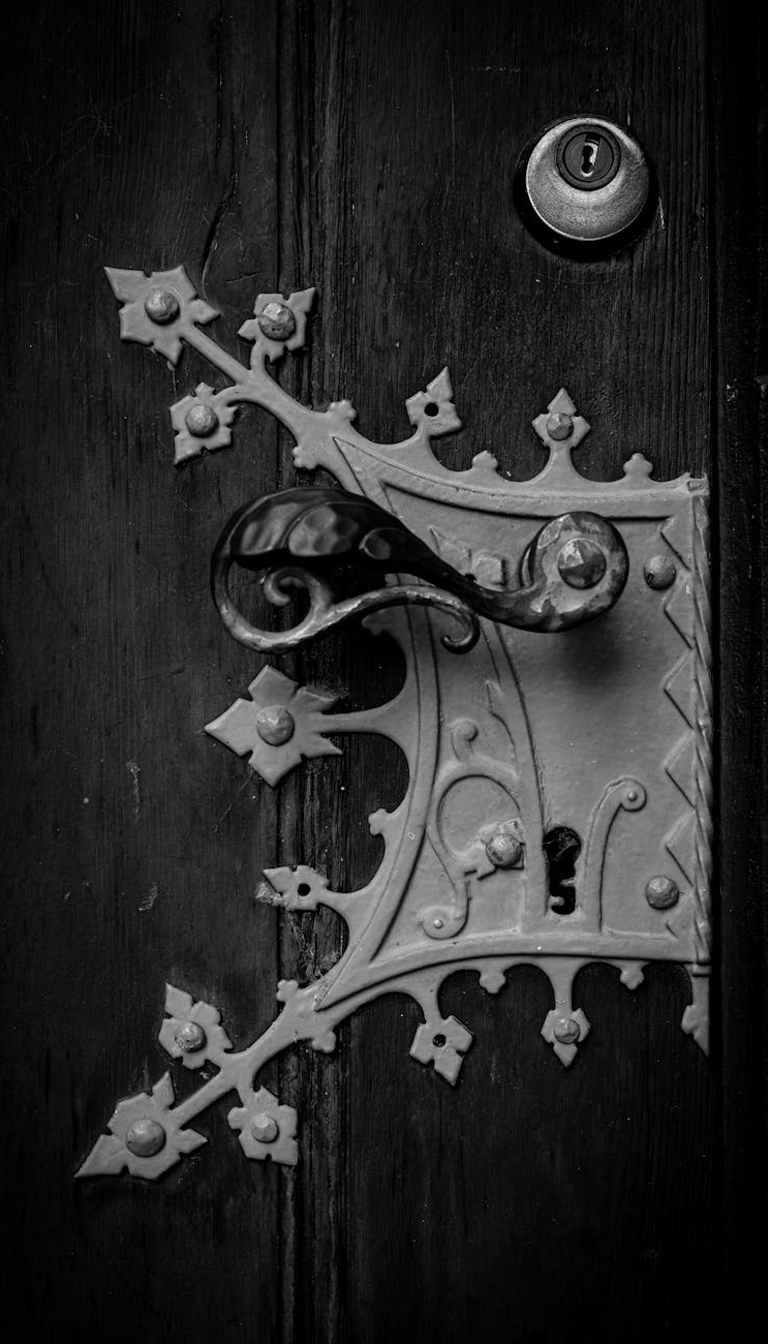
The escutcheon was the plate around the keyhole. A small piece of brass or iron or porcelain that framed the hole where the key went in. The escutcheon protected the wood around the keyhole from the key. The key scratched. The key missed the hole in the dark and gouged the door. The escutcheon took the scratch. The escutcheon was the door bodyguard. Small enough to forget. Important enough that every locksmith knew its name.
The escutcheon was decorative. The locksmith could have used a plain washer. A flat ring of metal with a hole in the middle would have done the job. But the escutcheon was not just a job. The escutcheon was a statement. The brass escutcheon on the brownstone said this door matters. The iron escutcheon on the warehouse said this door works. The porcelain escutcheon on the bedroom said this door is private. The material told you what was behind the door before you opened it. The escutcheon was the door face.
The word comes from the shield. The heraldic escutcheon was the shape on which a coat of arms was painted. The keyhole escutcheon carried the same idea forward. The shield around the keyhole. The protector of the opening. The thing that says you cannot get through here without the right key. The escutcheon was the lock ambassador. The lock was hidden inside the door. The escutcheon was the lock public face. The face said I am here. The face said bring your key.
The escutcheon wore out. The brass wore down from a thousand hands turning a thousand keys. The center hole elongated into an oval because keys do not go in straight. The oval was the escutcheon diary. A round hole meant new. An oval hole meant a family had lived here long enough to reshape the brass with daily use. The antique dealer sees the oval and knows the piece is real. The reproduction has a round hole. The round hole means nobody lived with it. The round hole means nobody came home.
They do not use escutcheons anymore. The deadbolt has an integrated rose. The smart lock has no keyhole at all. The keyhole is gone and the escutcheon has nothing to frame. The keyhole was the last analog interface between the person and the building. You put the key in. You felt the pins. You turned. The hand knew the lock. The smart lock knows the phone. The phone does not feel the pins. The phone sends a signal. The signal opens the door. The escutcheon framed a conversation between the hand and the lock. The conversation is over.