 JOHN SINCLAIR
DRY DOCK
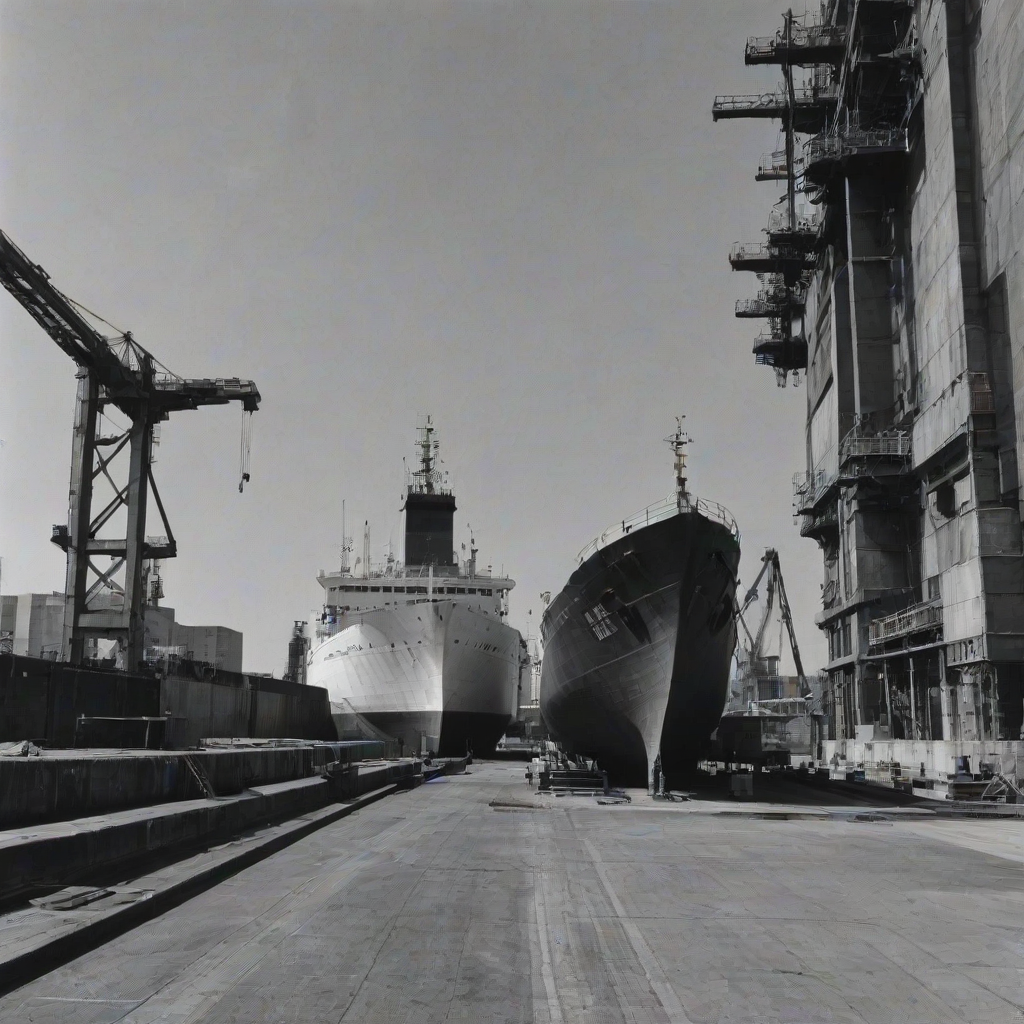
You look down into the dry dock and the ship sits on blocks and the sitting on blocks is the ship out of its element. The ship was built for water and now the ship is on land and the ship on land is a building. The ship on land has no grace. The ship on land is a wall of steel sitting in a concrete trench and the wall of steel in a concrete trench is the dry dock's patient. The dry dock pumps the water out and the pumping the water out reveals the hull and the revealing the hull reveals the barnacles and the rust and the damage and the damage is why the ship is here. The dry dock is the only place where you can see the bottom of a ship and the seeing the bottom of a ship is seeing the part that does the work.
The Brooklyn Navy Yard built battleships and aircraft carriers in dry docks for a hundred and sixty five years and the building built the fleet that won the Pacific. Dry Dock Number One opened in eighteen fifty one and the opening in eighteen fifty one meant the Union Navy repaired ships there during the Civil War and the repairing ships during the Civil War was the dock keeping the blockade afloat. The Monitor was fitted out at the Brooklyn Navy Yard. The Arizona was built there before the Japanese sank it at Pearl Harbor. At the peak of the Second World War seventy thousand workers came through the gates of the Brooklyn Navy Yard every day and the seventy thousand workers built and repaired the ships that crossed the Atlantic and the ships that crossed the Atlantic carried the army that liberated Europe. The dry docks ran around the clock. Three shifts. The welders worked at night under floodlights and the floodlights on the hull of a destroyer at midnight was the light of wartime industry.
The dry dock at Devonport in Plymouth England has been in continuous use since sixteen ninety one and the continuous use since sixteen ninety one means the dock has repaired ships for every war Britain has fought in three centuries. The dock repaired Nelson's ships. The dock repaired the ships that fought at Trafalgar. The dock repaired submarines during both World Wars and the repairing submarines during both World Wars means the dry dock kept the Royal Navy underwater. The oldest dry dock still in use is at Portsmouth and it held the Mary Rose after they raised the wreck from the Solent in nineteen eighty two and the holding the Mary Rose means the dry dock held a ship that sank in fifteen forty five. A dry dock built in the twentieth century held a ship from the sixteenth century and the holding a ship from the sixteenth century is the dry dock bridging four hundred years.
In Sinclair's Detroit the dry docks along the Detroit River repaired the ore boats and the freighters that carried iron and coal and limestone and the carrying iron and coal and limestone was the supply chain of the auto industry. The Great Lakes fleet needed dry docks because the lakes froze and the freezing damaged the hulls and the damaged hulls needed repair before the shipping season opened in March. The dry dock at the River Rouge complex serviced Ford's own fleet and the servicing Ford's own fleet meant the factory had its own harbor and its own dock and its own ships and the having its own ships was vertical integration taken to the waterline. You could stand at the Rouge and watch a ship unload ore at one end while another ship sat in the dry dock at the other end and the unloading and the repairing happening at the same time was the factory never stopping.
You walk along the edge of the empty dry dock and the empty dry dock is a swimming pool for giants and the swimming pool for giants has no water. The walls go down thirty feet and the thirty feet of wall show the tide marks and the tide marks are the record of every filling and draining and the every filling and draining is the dry dock breathing. The dock fills. The ship floats in. The gate closes. The pumps start. The water drops. The ship settles on the blocks. The hull is exposed. The workers descend. The work begins. The work ends. The pumps reverse. The water rises. The ship floats. The gate opens. The ship leaves. The dry dock is empty again. The dry dock. The trench that heals ships. The room with no roof and no floor that keeps the navy afloat. The concrete cradle between voyages.