 JOHN SINCLAIR
DRUGSTORE
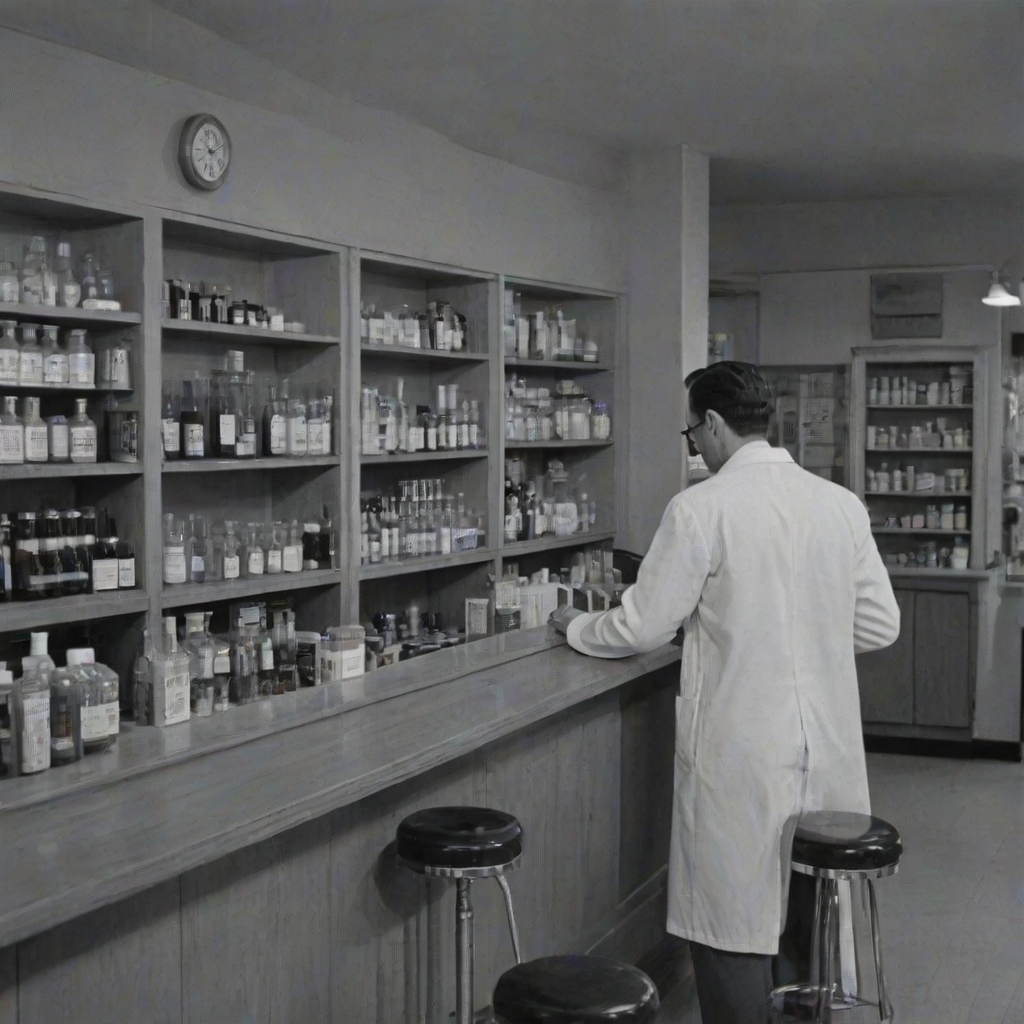
You walked into the drugstore and the pharmacist knew your name and the knowing was the medicine before the medicine. The pharmacist stood behind a counter that was higher than other counters because the height was the authority and the authority was the trust and the trust was that the man behind the counter would not kill you with the wrong pill. The drugstore smelled like rubbing alcohol and chocolate syrup and the combination was the smell of a neighborhood that still had both sickness and sweetness in the same building. The soda fountain was in the front. The pharmacy was in the back. You came in through pleasure and walked toward necessity and the walking was the design and the design was genius because the walking past the candy and the magazines and the greeting cards meant you might buy something you did not need on the way to getting something you did.
Charles R. Walgreen opened his first drugstore on the South Side of Chicago in nineteen oh one. Walgreen was a pharmacist from Dixon Illinois and the drugstore he opened was not the first drugstore in America but it was the drugstore that understood the formula. The formula was this. The prescription is the anchor. The anchor brings the customer. The customer who comes for the prescription stays for the milkshake. Walgreen invented the milkshake as we know it by adding two scoops of ice cream to the standard malted milk at his soda fountain in nineteen twenty two and the adding of the ice cream was the invention that made the drugstore a destination instead of an errand. By nineteen thirty Walgreen had four hundred and ninety seven stores in two hundred cities and the four hundred and ninety seven stores all had soda fountains because the soda fountain was the profit and the prescription was the purpose and the having of both in one room was the American drugstore.
The independent drugstore was the medical infrastructure of the neighborhood before the neighborhood had medical infrastructure. The pharmacist was the first person you asked when something was wrong with your body and the asking was free. The doctor charged two dollars for an office visit in nineteen forty. The pharmacist charged nothing for looking at your rash and telling you it was nothing or telling you to see the doctor and the telling was the triage and the triage was the service that no one billed for because the billing would have killed the relationship and the relationship was the business. The pharmacist knew which customers were diabetic and which were pregnant and which were taking pills they should not be mixing and the knowing was the database before the database. The pharmacist knew that Mrs. Henderson picked up her husband's heart medication every Tuesday and when Mrs. Henderson did not come on Tuesday the pharmacist called and the calling was the wellness check that no algorithm has ever replicated.
The drugstore had a magazine rack and the magazine rack was the free library of the neighborhood. You stood at the rack and you read Life and Look and the Saturday Evening Post and the reading was not stealing because the reading was expected. The drugstore understood that the man who reads the magazine for twenty minutes and then buys a pack of gum has still spent twenty minutes in the store and the twenty minutes is the presence and the presence is the commerce that does not show up on the receipt. The magazine rack was where teenagers learned about the world outside the neighborhood and the learning was free and the free was the investment. The greeting card aisle was where you bought the card that said what you could not say and the not saying was the product. Hallmark built an empire on the assumption that Americans cannot express emotion without assistance and the drugstore was where the assumption met the customer three days before every birthday and every anniversary and every funeral.
The independent drugstore is vanishing at the rate of two per day. There were forty thousand independent pharmacies in America in two thousand and five. There are fewer than nineteen thousand today. The vanishing is not because people stopped getting sick. People take more prescriptions than they ever have. The average American fills twelve prescriptions per year and the twelve prescriptions are filled at CVS or Walgreens or Rite Aid and the filling at CVS or Walgreens or Rite Aid means the pharmacist does not know your name. The pharmacist processes your prescription in two minutes and the two minutes do not include looking at your rash or calling when you miss a Tuesday. The chain pharmacy eliminated the soda fountain in nineteen seventy because the soda fountain took up space that could hold more product and the more product was the margin and the margin was the reason the soda fountain had to die. The independent drugstore is still there in the neighborhoods where the chains have not arrived or have already left. The counter is still high. The pharmacist still knows your name. The soda fountain is gone but the man behind the counter still looks at your rash for free and the free is the medicine that no chain pharmacy dispenses.