 JOHN SINCLAIR
DRIVE-IN CHURCH
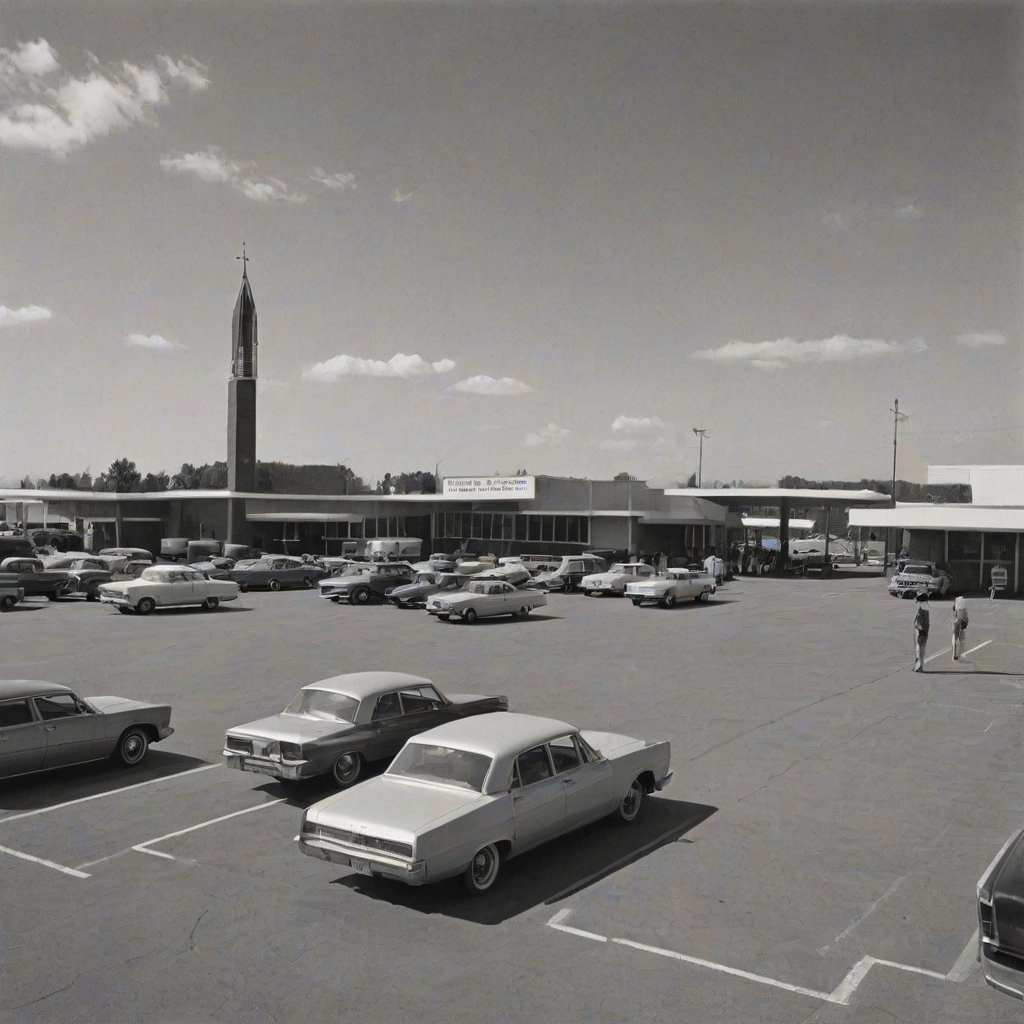
The drive-in church was a building with no walls and a congregation that never left their cars. The pastor stood on a platform and the platform was a stage and the stage was in a parking lot and the parking lot was the nave. The sermon came through the car radio on an AM frequency and the frequency was the architecture. The church was not the parking lot. The church was the frequency. You tuned your radio to the frequency and you were inside the church. You turned the dial and you were outside. The entering and the leaving were the same gesture. A twist of the wrist.
Robert Schuller built the first drive-in church in Orange County California in nineteen fifty-five. He rented the Orange Drive-In Theater and he preached from the roof of the snack bar and the roof was his pulpit and the snack bar was his altar and the repurposing was the sermon before the sermon. The building did not need to be sacred to contain sacred things. The building needed to be available. The available was the sacred.
The drive-in church understood the car. The car was not a barrier between the believer and God. The car was a pew with an engine. The car was private the way a prayer is private. You could cry in your car and nobody saw the crying. You could sing and nobody judged the singing. You could sleep through the sermon and the sleeping was between you and the windshield. The windshield was the stained glass window of the drive-in church. The light came through the windshield and the light was not colored by saints. The light was colored by the sun and the sun did not discriminate.
The speaker hung on the window and the hanging was the connection. You rolled down the window two inches and you hooked the speaker on the glass and the hooking was the joining. The sound came through a metal box that smelled like rain and old wiring and the smelling was sensory and the sensory was worship. The metal speaker crackled and the crackling was not interference. The crackling was texture. The texture said this message is traveling through the air from a man on a platform to a box on your window and the traveling is the miracle. The clear digital signal has no miracle in it. The miracle requires distance and the distance requires imperfection and the imperfection is the proof that something real is happening between the source and the receiver.
The parking lot had rows and the rows were pews and the pews were angled toward the platform the way theater seats are angled toward the stage. The angle said look here. The looking was voluntary because the car could face any direction but the car faced the platform because the driver chose the facing and the choosing was the faith. A church with walls gives you no choice about where to look. A church without walls gives you every choice. The choosing to look at the pastor when you could look at anything is the purest form of attention and the purest attention is the purest prayer.
The drive-in church gathered people who would not enter a building. The building intimidated. The building had a dress code that was unspoken and the unspoken was louder than the spoken. The parking lot had no dress code because the car was the dress. You could attend church in your bathrobe. You could attend church with your dog. You could attend church with a hangover and a cup of gas station coffee and the attending was sufficient. The sufficient was revolutionary. The traditional church said you must be presentable. The drive-in church said you must be present. The present was enough.
The drive-in church is not gone but the drive-in church that was a gathering place is gone because the gathering required a parking lot and the parking lot required a frequency and the frequency required a transmitter and the transmitter required a man standing on a platform believing that the parking lot was a congregation. The livestream eliminated the parking lot. The livestream put the church inside the phone and the phone is not a parking lot. The phone is a room for one. You cannot look across a phone and see a hundred cars facing the same direction and the seeing was the gathering. The hundred cars facing the same platform was a hundred decisions made independently arriving at the same angle and the same angle was the communion. The communion required the parking lot. The parking lot required the sky. The sky was the ceiling and the ceiling was unlimited and the unlimited was the theology.