 JOHN SINCLAIR
DRIVE-IN
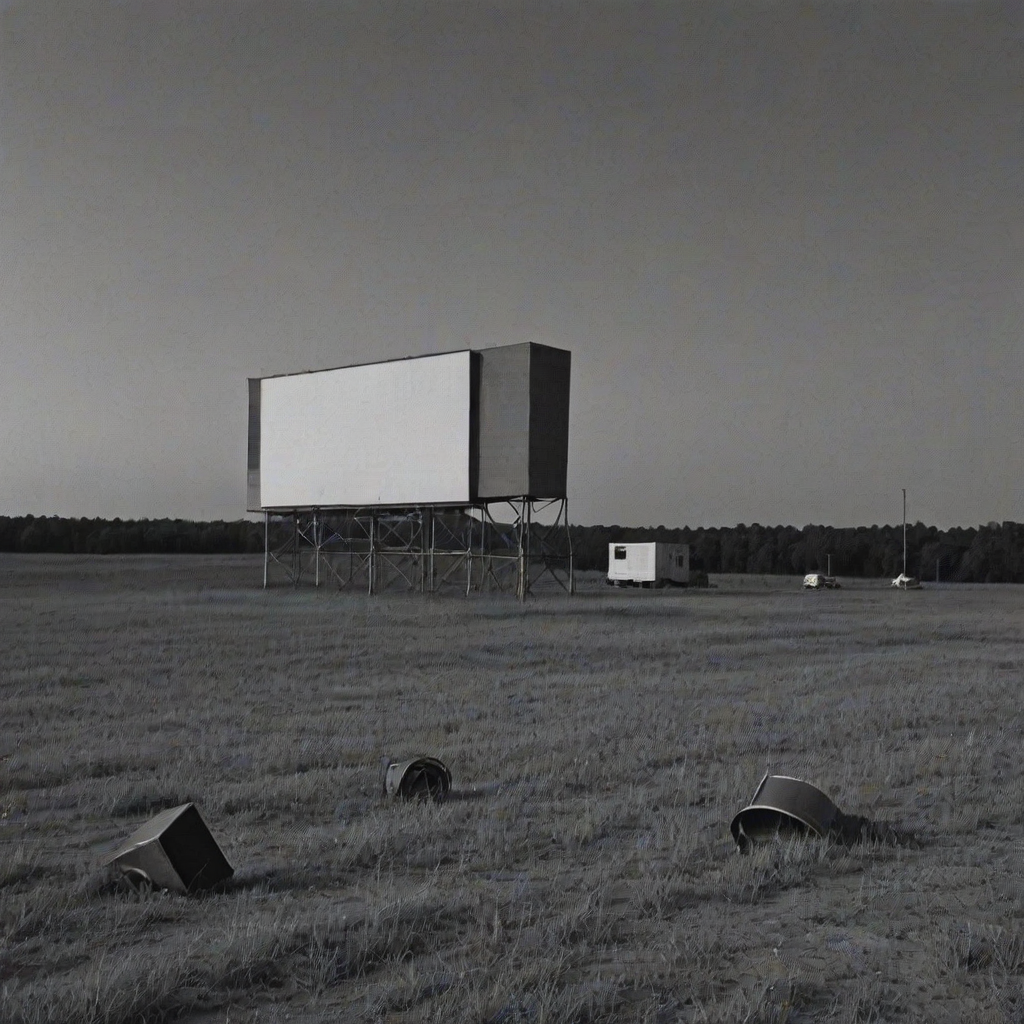
The drive-in theater was the only place in America where you could watch a movie in your own car with the windows down and the night air coming in and nobody told you to be quiet. You brought the furniture. The theater brought the screen. The screen was the size of a building because the screen was a building. A white wall sixty feet wide standing in a field and the field was the auditorium and the auditorium had no roof and the stars were the ceiling and nobody charged you for the ceiling. Richard Hollingshead Junior of Camden New Jersey filed the patent in nineteen thirty three. Patent number one nine oh nine five three seven. He tested the idea in his driveway with a nineteen twenty eight Kodak projector and a screen nailed between two trees and he figured out the sight lines by parking cars at different angles and distances and he called it a drive-in and the name was the whole pitch. You drive in. That is the instruction and the experience in two words.
They called them passion pits and the name was accurate. The drive-in was the back seat made legitimate. You were in public but you were in your car and your car was private and the privacy was the product. The movie was the excuse. The parents dropped off the teenagers or the teenagers drove themselves and the teenagers parked in the back rows where the speaker sound was worst and the sound did not matter because the teenagers were not listening. The drive-in was the only business in America that succeeded because its customers were not paying attention to what it sold. The concession stand still made money because the intermission was real and the walk to the snack bar was part of the ritual and the ritual was getting out of the car and being seen and seeing who else was there. The drive-in was a small town compressed into a parking lot. You knew who was in Row G. You knew whose car that was. You waved across three lanes of Chevrolets and the wave meant the same thing it meant on the front porch. I see you. You are not a stranger here.
The speaker was a metal box that hung on your car window. You rolled the window down halfway and hooked the speaker over the glass and the speaker was wired to a post and the post was your assigned spot and the sound came from inside your car even though the movie was outside your car and the arrangement was ingenious and terrible. The sound was mono and tinny and the volume knob had two settings which were too quiet and too loud and if you forgot to remove the speaker before you drove away you pulled the wire out of the post and sometimes the post out of the ground and the damage deposit was the price of your distraction. When FM radio transmission replaced the speakers you tuned your car stereo to the station and the sound improved but something was lost. The speaker on the window was physical. The speaker was a connection between your car and the theater. The FM signal was invisible and the invisible connection is not the same as the one you can see and touch and forget to unhook.
There were four thousand and sixty three drive-in theaters in the United States in nineteen fifty eight. There are fewer than three hundred today. The land killed them. A drive-in needs ten to fifteen acres and ten to fifteen acres near a population center is worth more as a shopping mall or a housing development than it is as a place to watch movies. The real estate math is simple and the real estate math is merciless. The owner of a drive-in in nineteen seventy five was sitting on land worth more closed than open and the math made the decision and the decision was always the same. Sell the land. Tear down the screen. Build something useful. Useful meaning profitable. Profitable meaning not a drive-in. The drive-in did not die because people stopped going. The drive-in died because the ground it stood on became too expensive to use for joy.
You cannot build a new drive-in. The zoning will not allow it. The light pollution complaints will kill it. The neighbors will object to a sixty foot screen visible from their bedroom window. The business model requires summer weather and summer weather is three months and three months of revenue cannot service twelve months of property tax. Every force in modern America conspires against the drive-in. The economics. The regulations. The screens in your pocket that show you any movie ever made in a rectangle the size of a postcard. But the rectangle is not the same. The rectangle does not have a breeze. The rectangle does not have a back seat. The rectangle does not have a sky full of stars above a screen full of light and the distance between those two things is the entire experience. You are outside watching something that was made to be watched inside and the contradiction is the magic. The drive-in put the private inside the public and the inside outside and the upside down arrangement worked for thirty years and then the money said no and the money always wins but the people who were there remember. They remember the speaker on the window and the gravel under the tires and the screen glowing white before the movie started and the white screen was the promise. Something is about to happen. You are in your car in a field in the dark and something is about to happen and you are not alone.