 DAVID PEEL
Drawknife
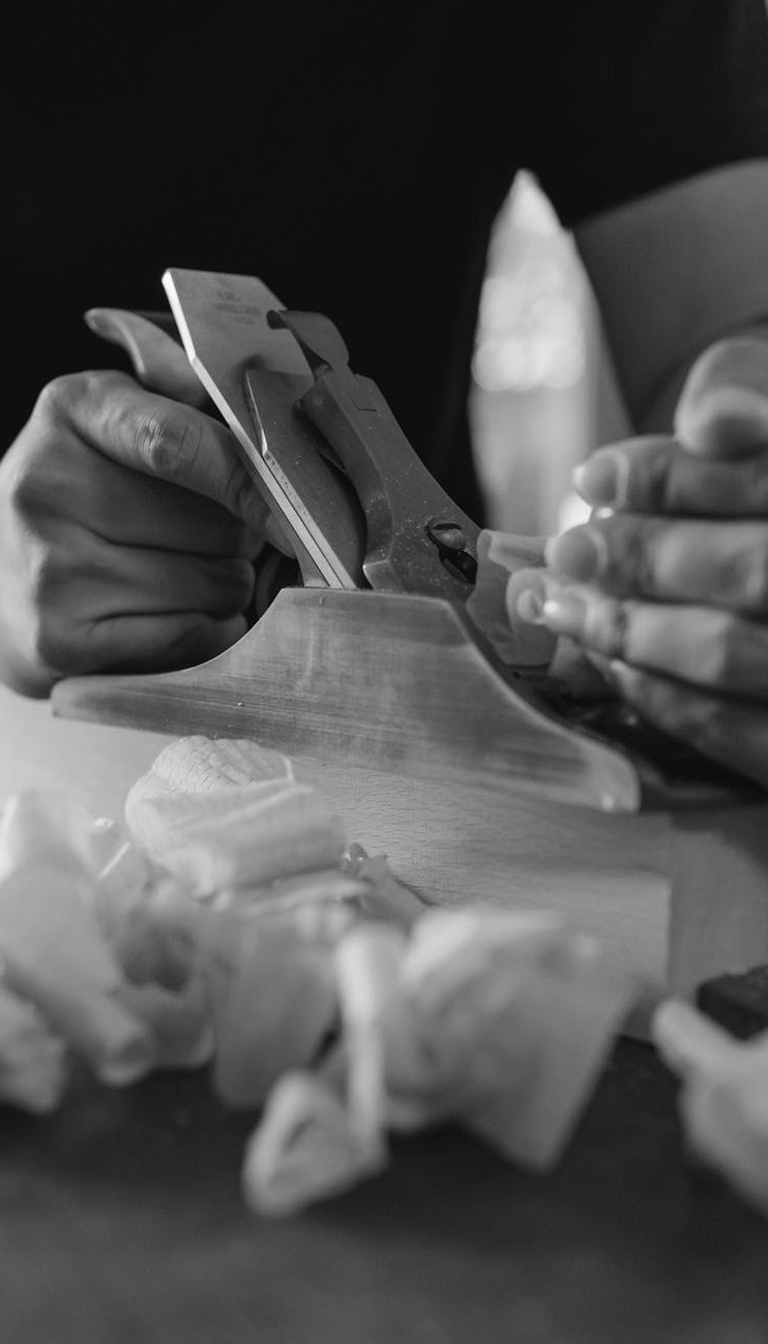
The drawknife was a blade with two handles. You pulled it toward you. That was the whole motion. Pull. The carpenter sat on a shaving horse and held the work between the clamp and pulled the drawknife along the surface and the blade shaved a curl of wood off the top. The curl fell to the floor and the floor collected the curls and the curls were the evidence that work was being done. A clean floor meant nobody was working. A floor covered in shavings meant the drawknife was talking.
The drawknife was the fastest way to remove wood by hand. Faster than a plane. Faster than a chisel. The drawknife took a thick shaving because the carpenter controlled the angle with both hands. Pull the handles up and the blade dug deep. Pull the handles down and the blade skimmed the surface. The depth was in the wrists. The carpenter learned the drawknife by feel not by measurement. The feel was the skill. The measurement came later when the carpenter checked the work with calipers.
The drawknife shaped chair legs and fence posts and tool handles and shingles. Everything that needed to go from round to flat or from square to round. The drawknife did not care what shape the wood started as. The drawknife cared what shape the wood was becoming. The starting shape was the raw material. The ending shape was the product. The drawknife was the conversation between the two. The blade asked the wood what it wanted to be and the wood answered by splitting along the grain.
The shaving horse was a bench with a foot-operated clamp. The carpenter sat on the bench and pressed a foot pedal and the clamp held the workpiece. Both hands were free for the drawknife. The shaving horse was the third hand. Every craft has a third hand. The mason has the mortarboard. The welder has the jig. The carpenter has the shaving horse. The third hand holds the work so the real hands can do the work. The limitation of two hands is the mother of every clamp ever invented.
Nobody uses a drawknife on a job site. The drawknife moved to the craft shop. The green woodworker uses the drawknife to make spoons and bowls and walking sticks. The drawknife is now a hobby tool. The tool that built every fence and every chair and every axe handle in America is now a weekend activity. The drawknife did not get less useful. The world got less patient. The drawknife takes fifteen minutes to shape a handle. The lathe takes two. The world chose two. The handle does not know the difference. The hand that holds the handle does.