 DAVID PEEL
Dowel
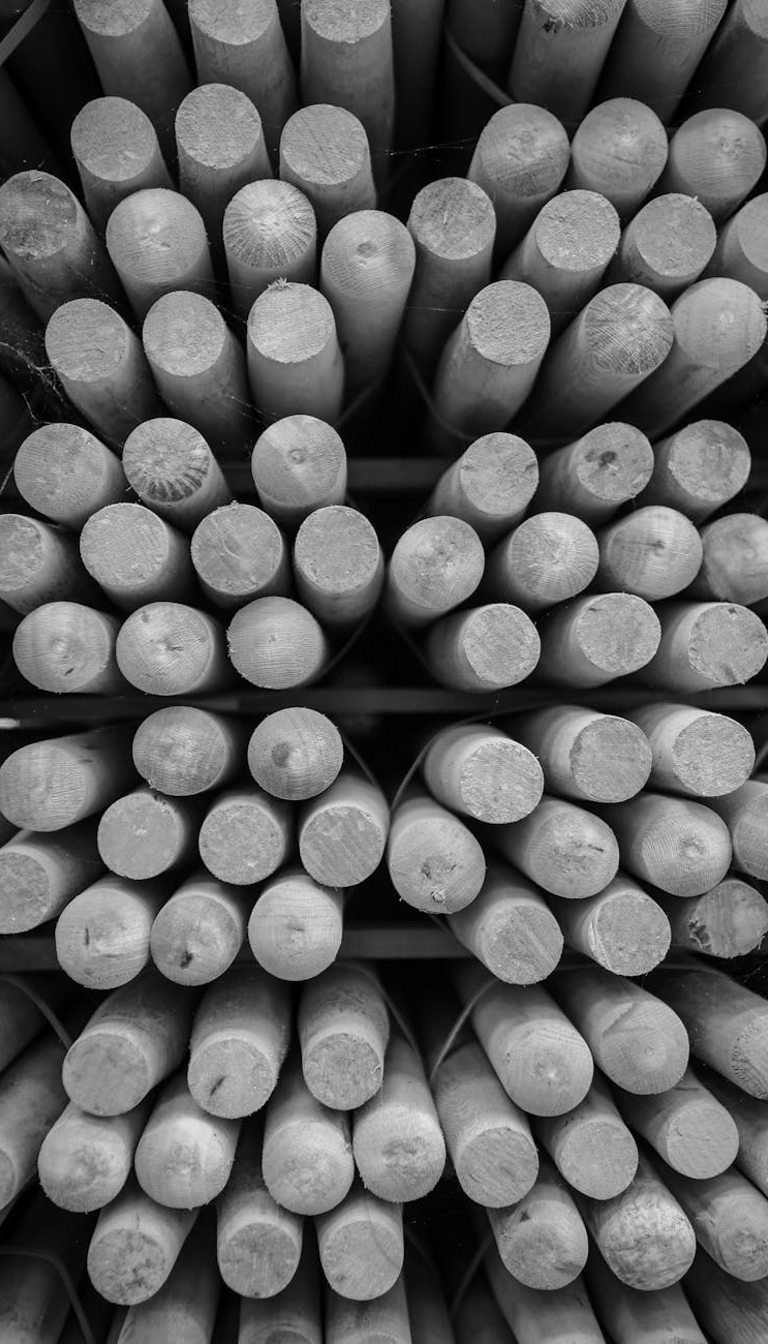
The dowel was a round peg of wood. A cylinder of maple or birch or oak that fit into a round hole and held two boards together. The dowel was the simplest joint in woodworking. A peg in a hole. A child understands it. A house depends on it. The dowel did not need to be explained because the dowel explained itself.
The dowel was driven with a mallet. You drilled the hole and tapped the dowel in and the dowel fit tight because the dowel was a thirty-second wider than the hole. The extra thirty-second was the dowel's grip. The wood compressed around the dowel and the compression held the dowel and the dowel held the boards and the boards held the table and the table held the family. One thirty-second of an inch between a table that wobbles and a table that lasts.
The dowel was invisible. That was the point. You drove the dowel below the surface and capped it with a plug and the plug was the same wood as the board and you could not see the joint. The dowel was the joint that hid. The nail showed itself. The screw showed itself. The dowel said I am here but I am not going to make a scene. The dowel had the confidence of something that did not need credit.
The dowel pin held the tenon. In timber framing the carpenter drove a dowel through the mortise and the tenon and the dowel locked the joint. The dowel was the key that locked the door. Pull the dowel and the joint came apart. Drive the dowel and the joint stayed forever. A building held together with dowels could be taken apart and moved. The old barns were disassembled and reassembled because every joint was a dowel. Try disassembling a building held together with nails.
They use biscuits now. A thin wafer of compressed wood glued into a slot cut by a machine. The biscuit does what the dowel did but the biscuit is flat and the dowel was round and the difference is the difference between a handshake and a fist bump. Both connect. One remembers. The dowel was turned on a lathe by a man who made a thousand dowels a day and every dowel was round because round was the shape of the tool. The biscuit is stamped by a press. The press does not know what round means.
See also: Tenon, Newel Post