 DAVID PEEL
Door Knocker
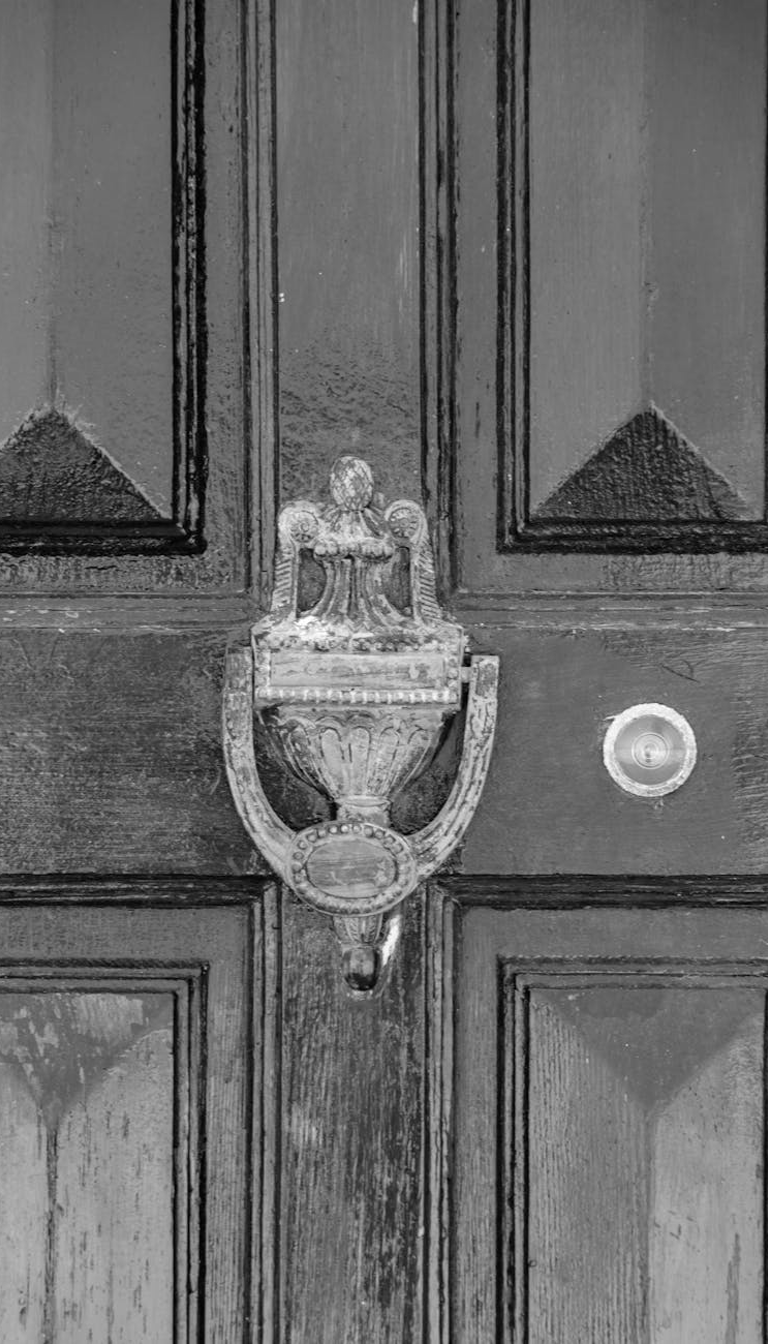
The door knocker was a piece of brass or iron mounted on the front door at eye level. A ring. A lion's head. A hand holding a ball. You lifted it and dropped it and the sound went through the door and into the hallway and up the stairs and the person inside knew someone was outside. The door knocker was the doorbell before the doorbell. The door knocker was the announcement.
Every door knocker sounded different. The brass knocker on the brownstone on West Tenth Street had a deep thud. The iron knocker on the tenement on Avenue B had a sharp crack. You could tell which door was being knocked by the sound. The door knocker was the building's voice. The doorbell is the building's beep. A voice has character. A beep has volume.
The door knocker required effort. You had to climb the steps. You had to stand at the door. You had to lift the knocker and let it fall. The person inside heard you and decided whether to answer. The door knocker gave the person inside a choice. The doorbell gives the person inside an interruption. The text message gives the person inside nothing. You arrive by notification. You used to arrive by sound.
I had a lion's head knocker on my door on East Seventh Street. The lion had a ring in its mouth and you grabbed the ring and knocked. The lion's face was worn smooth from a hundred years of hands. Brass wears. Wearing is not damage. Wearing is evidence of visitors. The smooth lion was the most popular lion on the block. The shiny lion had no friends.
They do not put knockers on doors anymore. The intercom replaced the knocker. The intercom is a speaker and a button and a camera and a lock and none of it has any personality. The door knocker said come in by sound. The intercom says who is it by suspicion. The door knocker assumed you were welcome. The intercom assumes you are not.
See also: Skeleton Key, Stoop