 JOHN SINCLAIR
DINER
The diner was open when nothing else was open. Three in the morning the diner was open. Christmas the diner was open. The opening was unconditional and the unconditional was the covenant. The diner said I am here and the here was permanent and the permanent was the only promise the diner made and the promise was kept every night for sixty years.
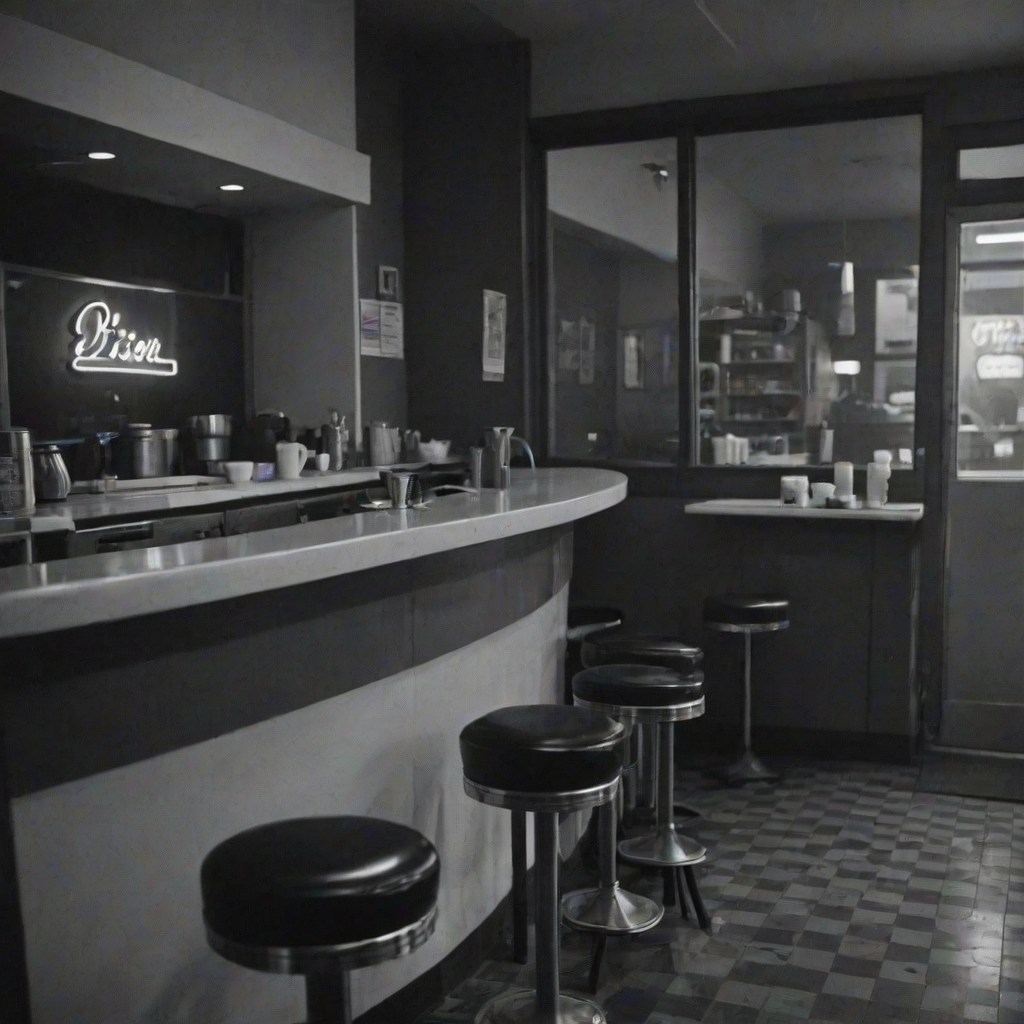
The counter was the diner's spine. The counter was curved and the curve was deliberate because a curve lets strangers face each other without confrontation. A straight counter is a wall. A curved counter is a conversation waiting to happen. You sat at the counter and the person three stools down was in your peripheral vision and the peripheral was the invitation. You did not have to talk. You could talk. The could was the architecture.
The waitress knew your name if you came twice. The knowing was not a database. The knowing was a woman who had been pouring coffee for eleven years and her memory was the customer relationship management system and the system was infallible because it ran on attention and the attention was genuine. She said the usual and the usual was a question and an answer in the same sentence. The question was do you want what you always want. The answer was yes. The yes was comfort. The comfort was the diner's product. The menu was the excuse.
The pie was under glass and the glass was a dome and the dome was a museum. The pie sat under the dome and the sitting was a display and the display said this pie was made today by a person in this building and the person is still here and the still here was the difference between the diner and every other restaurant. The chain restaurant shipped the pie frozen from a warehouse in Nebraska. The diner made the pie in a kitchen you could see from the counter and the seeing was the trust and the trust was the crust.
The jukebox in the corner had songs from three decades and the three decades coexisted without conflict. Patsy Cline next to the Supremes next to Merle Haggard and the next to was the tolerance and the tolerance was musical. You put a quarter in and you chose a song and the song played for everyone in the room and the everyone was the gamble. You gambled that the truck driver in the corner booth would tolerate your taste and the truck driver gambled the same about you and the mutual gambling was the social contract of the jukebox. The jukebox was the last machine in America that forced strangers to share a frequency.
The booth was the diner's private room. The booth had high backs and the high backs were walls and the walls were upholstered and the upholstery absorbed secrets. The booth was where the teenager told her mother she was pregnant. The booth was where the salesman called his wife and said he would not be home. The booth was where the old man sat every morning at six fifteen and read the paper and the paper was the reason and the reason was the booth and the booth was the reason and the circle was the diner's engine. The engine ran on regulars. The regulars ran on coffee. The coffee ran on the waitress. The waitress ran on tips. The tips ran on the regulars. The circle was closed and the closed was the economy and the economy was local and the local was the miracle.
The neon sign said EAT and the saying was imperative. Not please eat. Not would you like to eat. EAT. The imperative was honest. The diner did not seduce you. The diner commanded you. The command was three letters and the three letters were sufficient because hunger does not require adjectives. Hunger requires a counter and a waitress and a menu with laminated pages and the laminated was the permanence and the permanence was the promise and the promise was kept at three in the morning on Christmas when nothing else was open.
The diner is not gone. The diner still exists at every exit on every interstate in America. But the diner that was a gathering place is gone because the gathering required time and the time required sitting and the sitting required nowhere else to be. The diner at three in the morning gathered the people who had nowhere else to be and the nowhere was the membership. The drive-through eliminated the sitting and the sitting was where the gathering happened. You cannot gather in a car. You can eat in a car. The eating is not the gathering. The gathering required the counter and the counter required the curve and the curve required the peripheral vision and the peripheral was where the stranger became a regular and the regular became a name the waitress remembered and the remembering was the whole thing. EAT. The sign still glows. The counter still curves. The stools still spin. The waitress still pours. Whether anybody sits is the question the diner asks every night at three in the morning and the asking is the keeping open and the keeping open is the faith.