 DAVID PEEL
Daub
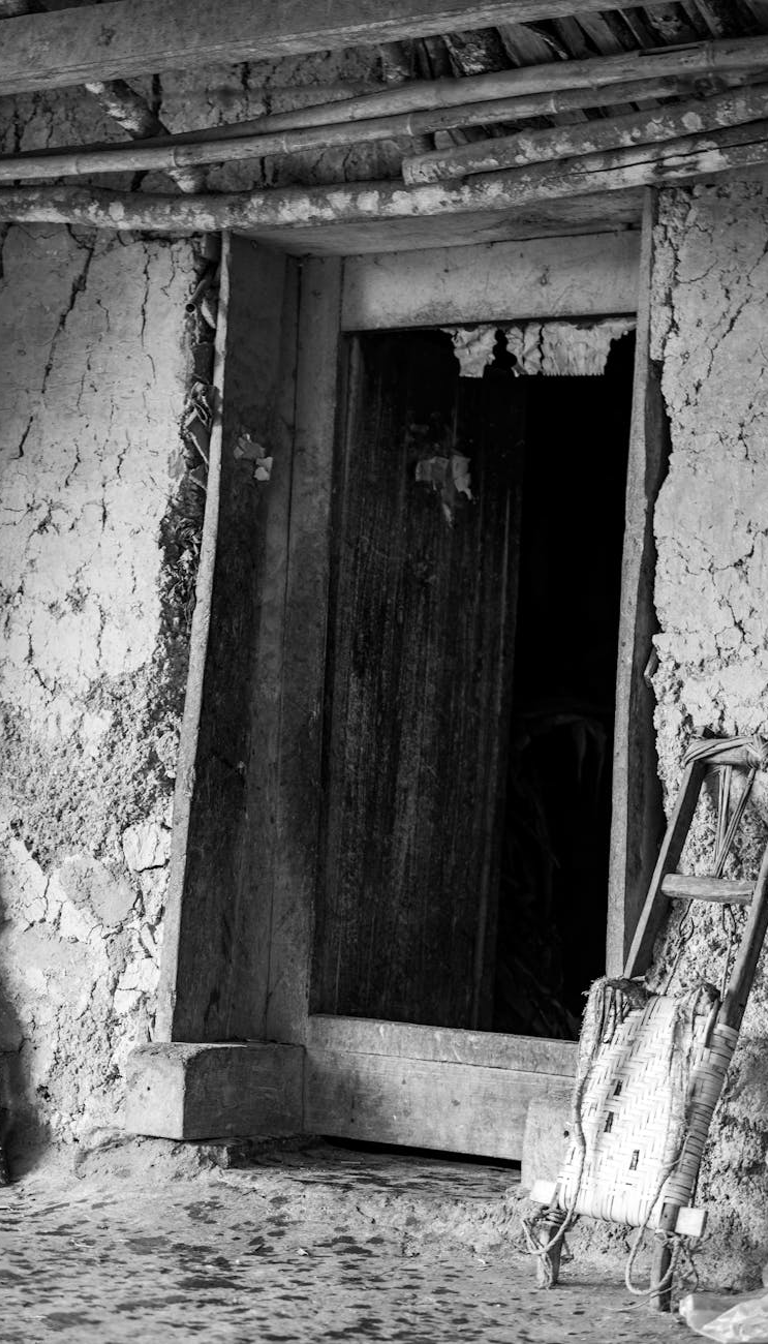
The daub was the mud you smeared on the wall. A mixture of clay and straw and dung and water that you mixed with your hands and pressed into the wattle until the gaps disappeared. The daub was the wall's second skin. The wattle was the bones and the daub was the flesh. You could not have one without the other. The wattle without the daub was a fence. The daub without the wattle was a puddle. Together they were architecture.
The daub was mixed on the ground. You dug the clay from the yard and chopped the straw and collected the dung from the animals that lived beside the house and you mixed it all together with water until it was thick enough to hold its shape but soft enough to push into the weave. The recipe was different in every village because the clay was different in every village and the straw was whatever grew nearby and the dung was whatever animal was closest. The daub was local by necessity. The premixed joint compound comes from a factory in Ohio. Ohio does not know your wall.
The daub cracked when it dried. That was expected. You mixed a second batch and pressed it into the cracks and the second coat sealed the first and the wall got thicker with every repair. The daub was never finished. The daub was maintained. Every spring you mixed a new batch and filled the winter's cracks and the wall grew a little thicker every year. After fifty years the wall was six inches of compressed earth and straw and it insulated like stone. The drywall does not crack because the drywall does not move. A wall that does not move is a wall that does not forgive.
The daub held fingerprints. You pressed it into the wattle with your palms and the clay remembered the shape of your hands. Archaeologists have found daub walls with fingerprints five hundred years old. The builder's hands preserved in the wall they built. The drywall holds no fingerprints. The drywall is hung by a man wearing gloves and finished by a machine that sprays texture from a compressor. The texture is called knockdown. The fingerprint is called evidence of life.
Nobody mixes daub anymore. The clay pit is a parking lot and the straw field is a subdivision and the dung is collected by a machine and sold in bags at the garden center. The materials are still here but the knowledge is gone. The knowledge was in the hands. The hands knew how wet and how thick and how hard to press. You cannot write that down. You cannot put it in a bag. The knowledge lived in the hands and when the hands stopped mixing the knowledge died with them. The factory makes a hundred products that replace the daub. None of them hold fingerprints.