 DAVID PEEL
Dance Hall
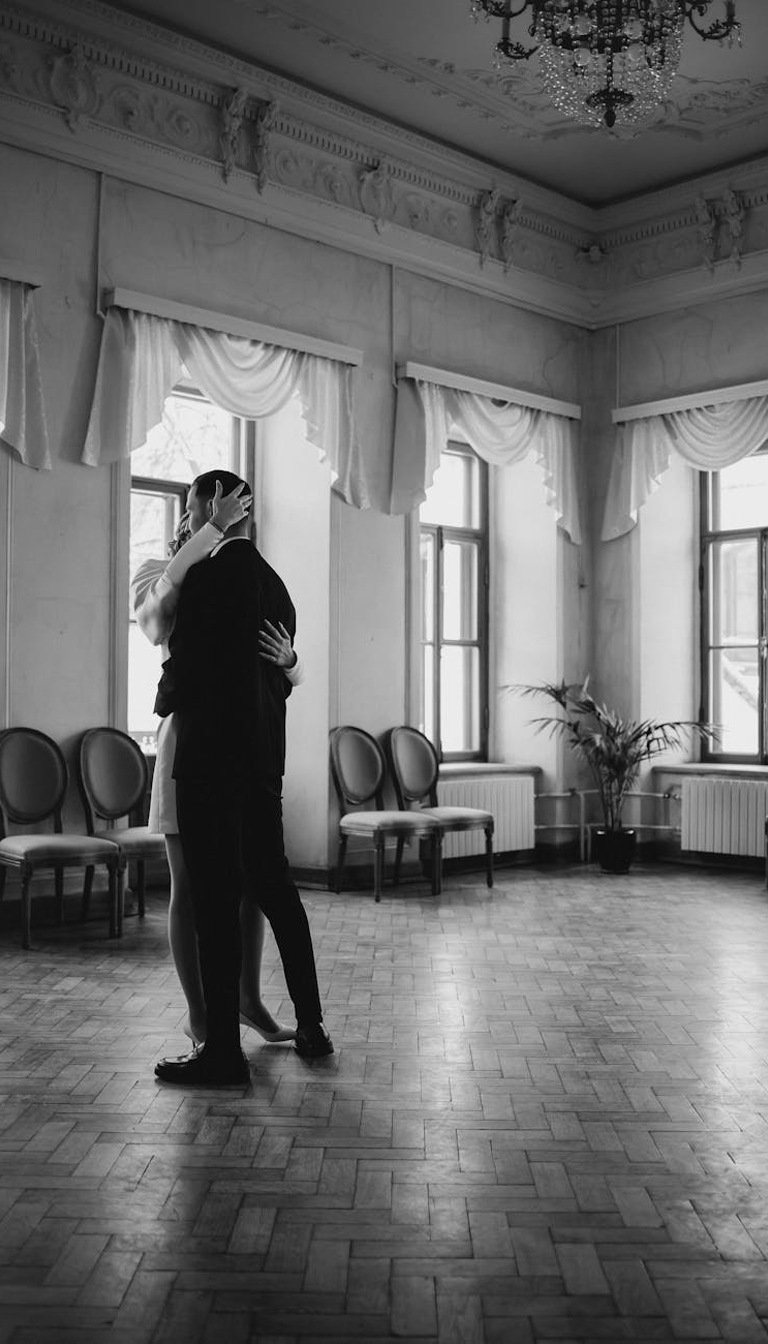
The dance hall was the place where strangers touched. That was the whole business model. You paid a dime and you walked into a room with a band and a hundred people and you asked somebody to dance and they said yes or they said no and either way you had spoken to a stranger. The dance hall was the original dating app. The algorithm was a saxophone. The swipe was a look across the room. The match was a slow song.
The Palladium on East Fourteenth Street. The Savoy up in Harlem. Roseland on Broadway. Every neighborhood had a dance hall and every dance hall had rules. No fighting. No drinking on the floor. No holding your partner too close. The bouncer enforced the rules and the bouncer was always the biggest man in the room and he had a way of looking at you that made you adjust your hands without being told. The dance hall had its own government. The bouncer was the police. The band was the legislature. The dancers were the citizens.
I played at dance halls on the Lower East Side in the late sixties. Not the big ones. The small ones. Basement halls where the ceiling was so low the trumpet player had to tilt his horn. Polish halls. Ukrainian halls. Puerto Rican halls. Every culture had its own dance hall and its own dances and its own music but every dance hall had the same thing. A room full of people who came to move. That is what a dance hall sold. Movement. The permission to move your body in public without anybody thinking you were crazy.
The dance hall was where the neighborhoods mixed. You could not mix on the street. The street had borders. Italian blocks. Irish blocks. Black blocks. But the dance hall was neutral territory. The music did not care where you were from. The Savoy Ballroom in Harlem had a white night and a Black night and then somebody had the sense to make every night every night and that was the most radical act in the history of New York nightlife. A dance floor that said everybody is welcome. Radical because it should not have been radical.
The dance halls are clubs now. The clubs have DJs instead of bands. The DJ plays records instead of instruments. The drinks cost fourteen dollars. Nobody asks you to dance because asking is obsolete. You stand near somebody and you move and if they move back that is the conversation. No words. No dime. No bouncer adjusting your hands. The club is darker than the dance hall. The music is louder. The touching is different. The dance hall was about connection. The club is about proximity. Those are different things. The saxophone knew the difference. The DJ does not.
See also: Jukebox, Block Party, Movie Theater