 JOHN SINCLAIR
CURB
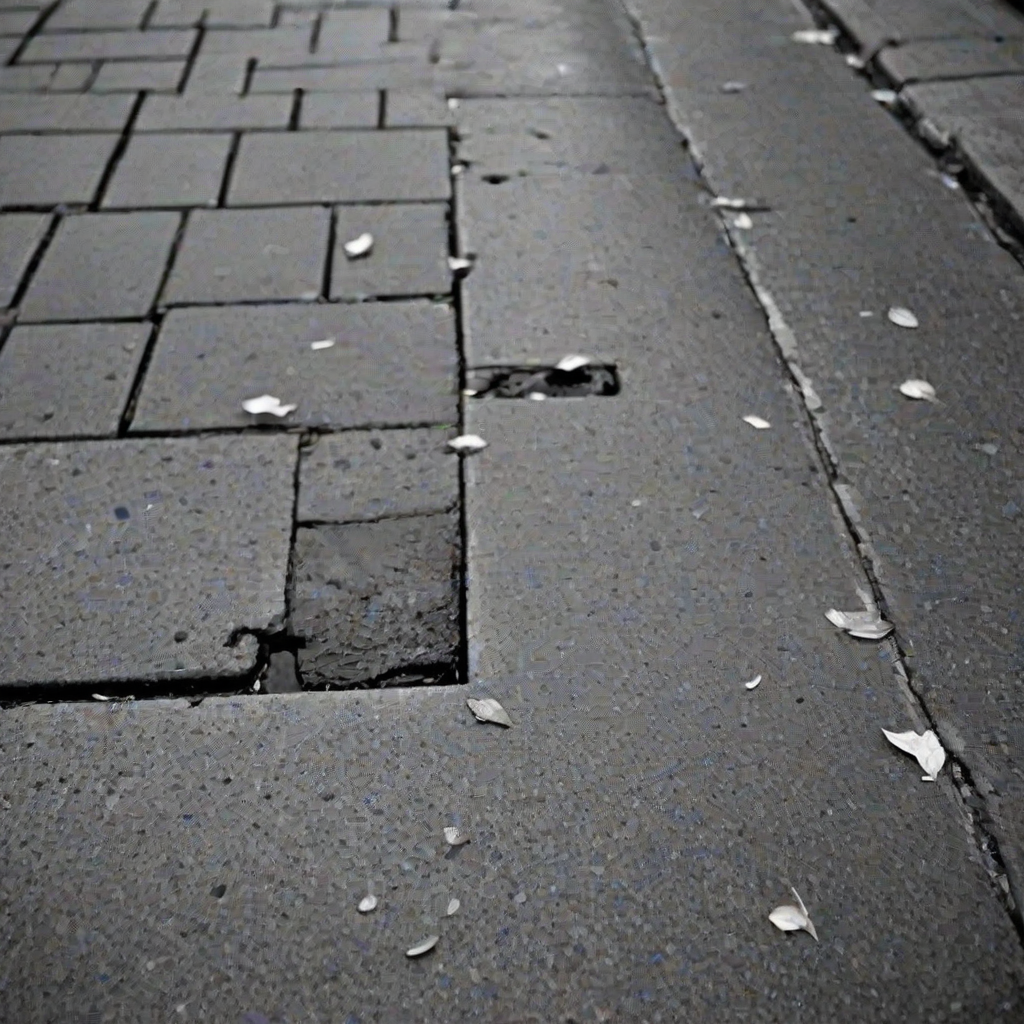
You step off the curb and you are in the street and the stepping off is the crossing from safety into risk. The curb is six inches tall. Six inches. The distance between the sidewalk and the road is the distance between the pedestrian and the automobile and the distance is six inches and six inches is not enough but six inches is all you get. The curb is the border and the border is concrete and the concrete is the thinnest wall in the city. The thinnest wall that does the most work. The curb keeps the car on the road and the person on the sidewalk and the keeping is the law written in stone and the law written in stone is older than any law written on paper.
The curb was invented in Pompeii where raised stones kept the sewage in the road and the people on the sidewalk and the keeping of the sewage in the road was the first public health measure in the history of cities. The Romans did not call it a curb. The Romans called it a crepido and the crepido was a foot high and the foot high was the distance between civilization and filth. The streets of Pompeii ran with water and waste and the waste flowed down the center and the crepido kept your feet dry and the keeping your feet dry was the beginning of urban planning. Every city that has ever existed has had to decide where the filth goes and the decision is always the same. The filth goes in the street. The people go on the side. The curb is the line between them.
Ed Ruscha drove down the Sunset Strip in nineteen sixty six and photographed every building on both sides and the photographs were published as a book and the book was called Every Building on the Sunset Strip and the curb was in every photograph because the curb is in every photograph. You cannot photograph a street without photographing the curb. The curb is the frame. The curb is the edge that tells you where the street ends and the sidewalk begins and the beginning of the sidewalk is the beginning of the building and the beginning of the building is the beginning of the city. Ruscha understood that the city is built from the curb up and the from the curb up is the truth that architects forget because architects look at the skyline and the skyline is not where people live. People live at the curb.
You sit on the curb. Everyone has sat on the curb. The curb is the bench that no one designed and no one maintains and no one owns. You sit on the curb when the bench is taken or when there is no bench or when you are tired and the tiredness does not care about furniture. The curb is the seating of last resort. The curb is where you sit after the bar closes. The curb is where you sit when you are waiting for someone who is late. The curb is where the child sits when the game is over and the sitting on the curb after the game is the posture of exhaustion and the exhaustion is honest. You sit on the curb and the gutter is right there and the gutter has water from the last rain and a cigarette butt and a leaf and the leaf and the cigarette butt and the water are the still life of the street.
You stand at the curb and hail a cab and the hailing is the arm raised and the arm raised at the curb is the universal gesture for I need to go somewhere and I cannot walk. The curb is the departure point. The curb is the arrival point. The curb is where the taxi drops you and where the bus picks you up and where you stand for one second between the vehicle and the sidewalk and the one second is the transition. One second ago you were moving. Now you are standing. The curb is the threshold between motion and stillness and the threshold is six inches tall and six inches wide and six inches is the most important measurement in any city because six inches is the height of the curb and the height of the curb is the height of civilization.