 JOHN SINCLAIR
CULVERT
You drive over the culvert and you do not know you drove over it and the not knowing is the culvert doing its job. The culvert is a pipe or a box or a half-circle of corrugated steel buried under the road and the buried under the road means the water passes beneath where the cars pass above. The road crosses the stream. The stream does not stop for the road. The culvert is the compromise. The culvert lets the stream continue and the road continue and neither one yields to the other. The culvert is the most common piece of infrastructure you have never thought about.
The culverts under the Appalachian Trail carry two thousand miles of mountain streams beneath the footpath and the carrying two thousand miles of mountain streams means the hiker steps over flowing water hundreds of times without knowing. The trail crosses streams that are too small for bridges and too persistent to ignore. The culvert handles them. A corrugated metal pipe twelve inches in diameter set into the trail bed carries the stream under the path and the carrying under the path means the hiker's boots stay dry and the stream keeps flowing and the trail does not wash away. The Appalachian Trail Conservancy replaces culverts every year because the mountain water corrodes the metal and the corroding the metal is the stream winning slowly. The stream was there before the trail. The stream will be there after the culvert fails.
The Tyburn River flows through a culvert under Buckingham Palace and the flowing under the palace means the queen slept over a buried river for seventy years. The Tyburn was once an open river that fed into the Thames at what is now Pimlico. The Romans knew the Tyburn. The medieval Londoners drew water from the Tyburn. But as London grew the Tyburn became a sewer because every river in a growing city becomes a sewer and the becoming a sewer meant the river was buried in a culvert and the buried in a culvert meant the river disappeared from the surface of the city. London has dozens of buried rivers. The Fleet. The Walbrook. The Westbourne. The Effra. Each one flows through a culvert beneath streets and buildings and underground stations. The culvert is the city's way of erasing a river without stopping it.
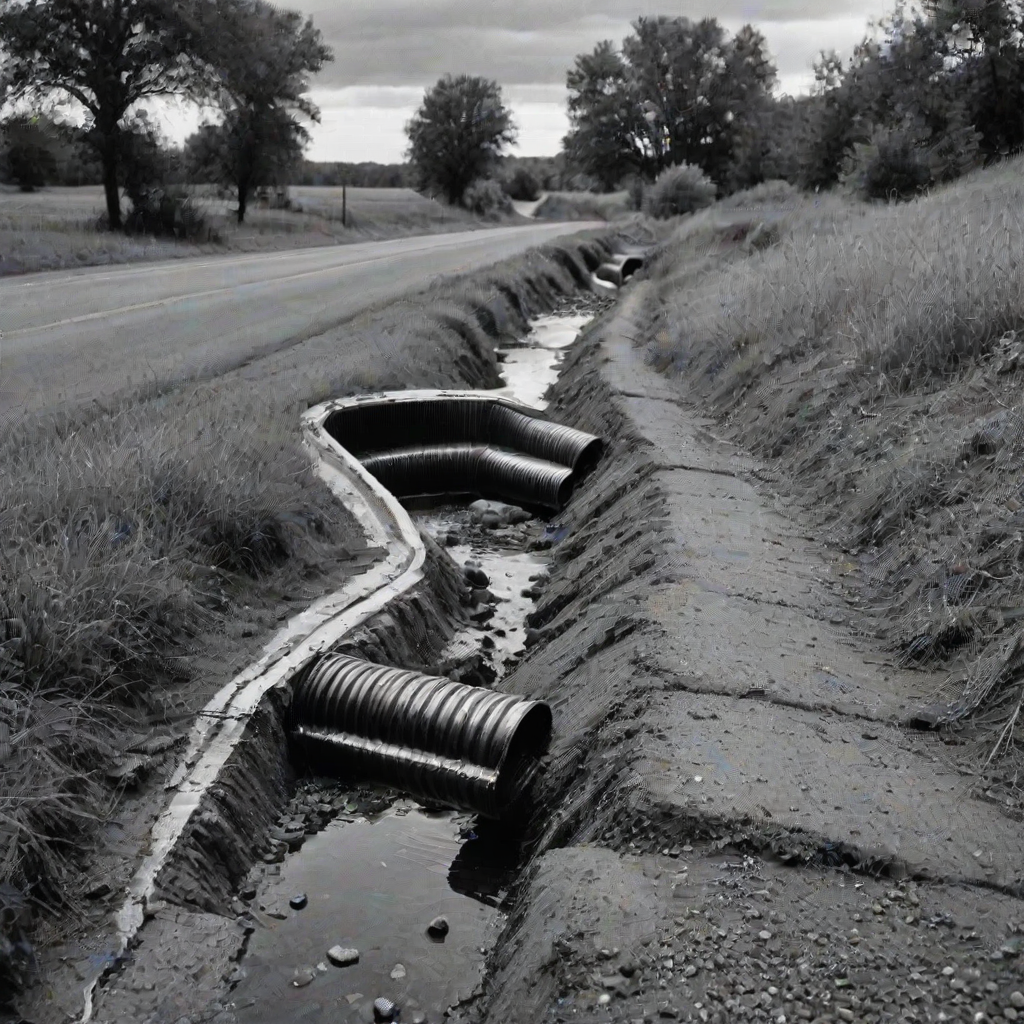
In the American Midwest the culvert carries the drainage ditch under the county road. Every intersection of ditch and road has a culvert and the every intersection means there are millions of culverts in the Midwest. The farmer needs the ditch to drain the field. The driver needs the road to cross the ditch. The culvert satisfies both. The corrugated steel pipe is the standard. The pipe is twenty four or thirty six or forty eight inches in diameter depending on the size of the ditch. The county highway department installs the culvert by digging a trench in the road and laying the pipe and covering the pipe with gravel and paving over the gravel. The culvert is invisible within a week. The culvert will carry water for twenty or thirty years before the rust eats through and the eating through means the road sinks and the sinking means the county replaces the culvert and the replacing means digging up the road again. The cycle. The pipe. The rust. The replacement. The road over the water over and over.
You stop the car and walk to the edge of the road and look down and the culvert mouth is there in the ditch. The water enters. The water is dark inside the pipe. The water sounds different inside the pipe because the pipe amplifies the flow and the amplifying the flow means the culvert has a voice and the voice is a hollow rushing. You cannot see the other side. The water enters the dark and emerges on the other side of the road having traveled thirty feet underground. The culvert. The pipe. The tunnel. The buried stream. The river under the palace. The ditch under the county road. The mountain stream under the hiking trail. The most common piece of infrastructure. The thing you drive over every day. The thing you have never seen. The water enters the dark. The water comes out the other side. The road continues. The stream continues. The culvert. Invisible. Everywhere. Working.