 JOHN SINCLAIR
COVERED BRIDGE
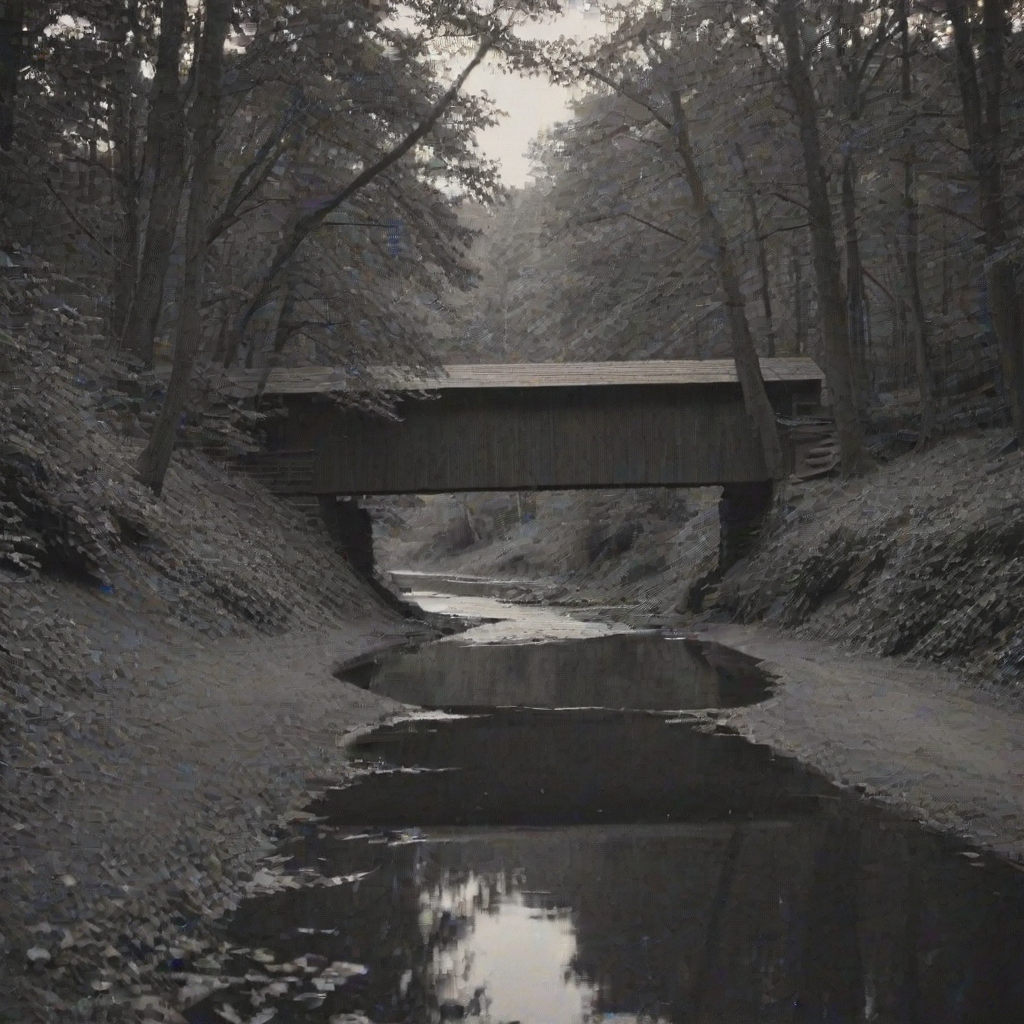
You drove into it and the light changed. The covered bridge was the tunnel that was also a room and the room was made of wood and the wood creaked when you crossed and the creaking was the bridge telling you it was alive and working and holding you above the water. The covered bridge was dark inside and the dark was the transition between one side of the river and the other and the transition was the journey compressed into thirty seconds. You entered on the east side of the creek and you exited on the west side and the exiting on the west side meant you were in a different township and the different township was a different world and the bridge was the door between the worlds.
The covered bridge was covered for one reason and the reason was not romance. The reason was that wood rots when it gets wet and the rotting when wet meant an uncovered wooden bridge lasted ten years and a covered wooden bridge lasted eighty years and the lasting eighty years was the economy that justified the roof. Timothy Palmer built the first covered bridge in America across the Schuylkill River in Philadelphia in eighteen oh five and the building across the Schuylkill was the proof that a wooden bridge could span a hundred and fifty feet if you kept the rain off the trusses. Theodore Burr patented his arch-truss design in eighteen oh four and the arch-truss was the engineering that made long spans possible and the making long spans possible meant the covered bridge could cross rivers that had previously required ferries and the previously requiring ferries meant the covered bridge killed the ferry crossing at every river it spanned. Ithiel Town patented the lattice truss in eighteen twenty and the lattice truss was the genius because the lattice could be built by carpenters using only planks and wooden pins and the using only planks and wooden pins meant any town with a sawmill could build a covered bridge and the any town with a sawmill was every town in New England and Ohio and Indiana and Pennsylvania.
The covered bridge was the room between towns. The farmer drove his wagon into the bridge and the driving into the bridge was the crossing and the crossing was the commitment because once you were inside the bridge you could not turn around. The horse's hooves echoed off the wooden floor and the echoing was the amplification and the amplification meant you could hear a horse approaching from the other end and the hearing from the other end was the traffic management because the covered bridge was one lane and the one lane meant someone had to wait and the waiting was the courtesy. The covered bridge had gaps between the boards on the sides and the gaps let in stripes of light and the stripes of light fell across the floor in bars and the bars of light moved as you drove and the moving was the animation that the bridge performed every afternoon when the sun was at the right angle. Children called them kissing bridges because the dark interior gave young couples privacy that the open road did not provide and the giving privacy was not the purpose but the purpose did not prevent the kissing.
The covered bridge was the billboard of the countryside. The interior walls were covered with advertisements and the advertisements were painted directly on the wood and the painting directly on the wood meant the advertisement lasted as long as the bridge. Carter's Little Liver Pills and Bull Durham Tobacco and patent medicines with names like Dr. Kilmer's Swamp Root were painted on every available surface and the painting on every available surface was the media and the media was the wall of a bridge that every farmer in the county crossed twice a week. The covered bridge was also the notice board. Town meeting announcements and auction notices and lost horse descriptions were nailed to the entrance and the nailing was the publishing and the publishing was free. The covered bridge was where the hermit lived in winter because the bridge had a roof and walls and the having a roof and walls made the bridge a house that nobody owned and the nobody owning was the public shelter that the town provided without intending to.
The covered bridge is vanishing. There were over fourteen thousand covered bridges in America in eighteen eighty. There are fewer than seven hundred and fifty today. The vanishing happened because the automobile was heavier than the wagon and the heavier meant the bridge that held a horse and wagon could not hold a truck and the not holding a truck meant the covered bridge was replaced by a concrete bridge and the concrete bridge was wider and stronger and had no roof and no walls and no stripes of light and no echoing hooves and no kissing and no advertisements for Carter's Little Liver Pills. The covered bridges that survive are preserved because the community decided that the bridge was worth saving and the deciding that the bridge was worth saving is the rare American act of choosing beauty over efficiency. The wood still creaks when you cross. The light still changes when you enter. The bridge is still the door between the worlds. But the worlds on either side are the same now and the same is the highway and the highway does not require a door and the not requiring a door is the loss and the loss is that America no longer builds rooms between places and the rooms between places were the transitions that made the arriving mean something.