 JOHN SINCLAIR
CORNICE
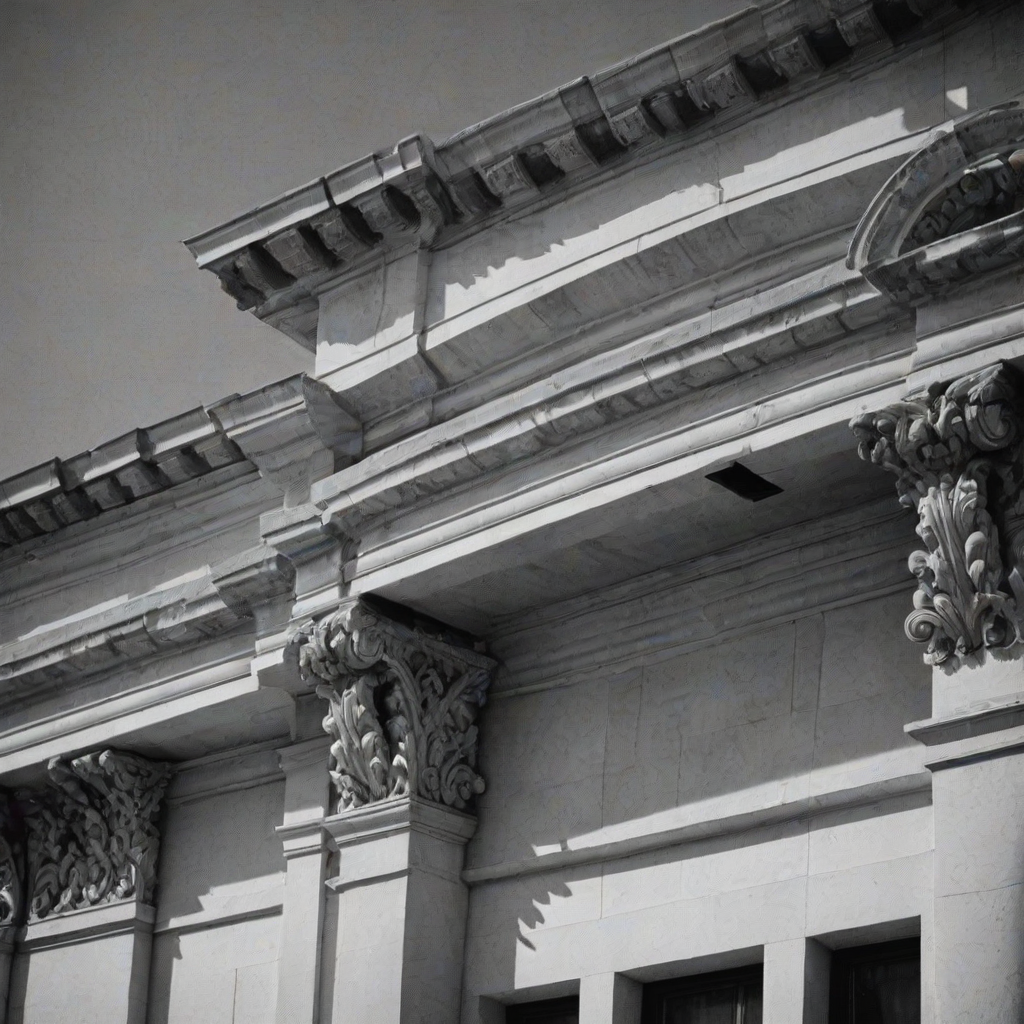
You look up at the cornice and the cornice is the crown of the building. The cornice is the horizontal molding that projects from the top of the wall where the wall meets the roof and the projecting from the top means the cornice is the last thing the building says before it becomes sky. The cornice sheds water. The cornice casts shadow. The cornice tells you where the building ends and the telling you where the building ends is the function and the beauty. Without the cornice the building just stops. With the cornice the building finishes.
The cornices of Paris were decreed by Baron Haussmann in eighteen fifty three and the decreeing meant every building on the boulevard ended at the same height. Haussmann rebuilt Paris for Napoleon III and the rebuilding Paris meant tearing down the medieval streets and replacing them with wide boulevards lined with limestone buildings that all obeyed the same rules. The cornice line was one of the rules. Every building on the Boulevard Haussmann rises to the same cornice and the rising to the same cornice creates the uniformity that makes Paris look like Paris. The cornices are decorated with dentils and modillions and the dentils are the small blocks that look like teeth and the modillions are the brackets that support the overhang. Haussmann did not invent the cornice. Haussmann standardized the cornice. He took the crown and made it a law and the law created one of the most beautiful skylines in the world because the skyline is not the tops of the buildings but the cornice line that connects them.
The cornice at the Pantheon in Rome projects four feet from the wall and the four feet has shed rain for nineteen hundred years. The Pantheon was completed around one twenty five AD under the Emperor Hadrian and the completing around one twenty five AD means the cornice has survived the fall of Rome and the floods of the Tiber and the quarrying of the bronze and the conversion to a church and the bombardments of two world wars. The cornice is Corinthian and the Corinthian means the cornice sits above columns topped with acanthus leaves. The projection throws the rain clear of the wall and the throwing the rain clear is the engineering reason for every cornice ever built. Water destroys buildings. Water seeps into mortar and freezes and the freezing expands the joint and the expanding the joint loosens the stone. The cornice stops this. The cornice is the umbrella of the building.
A falling cornice killed a pedestrian on Broadway in two thousand fifteen and the killing proved that the crown can become the weapon. The cornice was terra cotta and the terra cotta had been attached to the facade with iron anchors and the iron anchors had rusted and the rusting meant the anchors expanded and the expanding cracked the terra cotta and the cracking released the cornice. New York City has inspected facades since nineteen eighty under Local Law Eleven and the inspecting since nineteen eighty means every building over six stories must have its facade examined every five years. The law exists because cornices fall. The cornices of New York are stone and terra cotta and pressed metal and cast iron and every material ages differently and the aging differently means the inspection must understand each material. The city has thirty thousand buildings subject to the law. The cornices look down on the sidewalks. The inspectors look up at the cornices. The arrangement keeps the crown from becoming a killer.
You stand on the sidewalk and you look up. The cornice is there. The cornice is always there at the top of every building on every street in every city that builds in stone or brick. The cornice. The crown. The umbrella. The Haussmann decree in Paris. The nineteen hundred years at the Pantheon. The falling terra cotta on Broadway. The last line the building writes before it meets the sky. The water falls. The cornice sheds it. The wall stays dry. The building stands. The cornice finishes the sentence.