 DAVID PEEL
Corbel
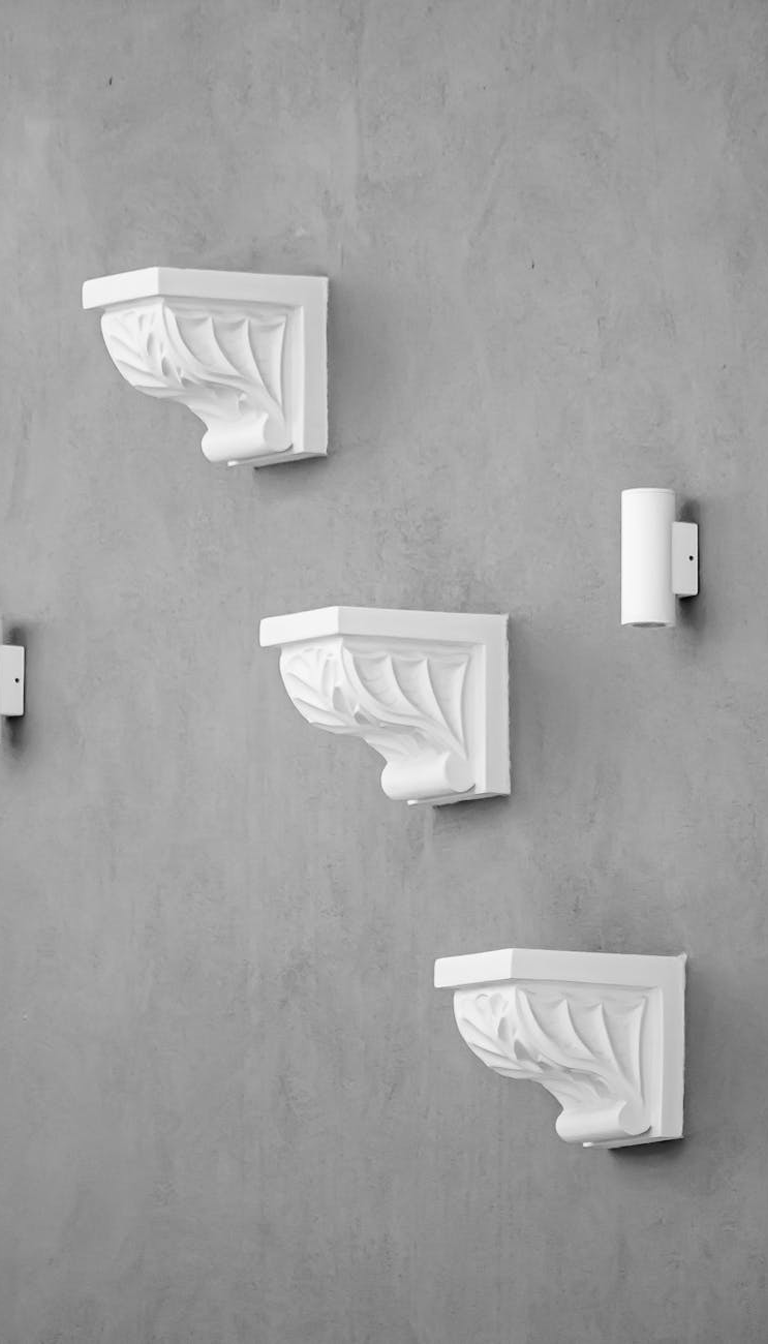
The corbel was a stone bracket that stuck out of the wall. A piece of carved stone or brick that supported a balcony or an arch or a cornice. The corbel carried weight. That was its job. The corbel took the load of the thing above it and transferred it to the wall below. The corbel was the building's shoulder. Every balcony on every brownstone sat on corbels and the corbels held the balcony the way a father holds a child on his shoulders. Without complaint and without credit.
The corbel was carved. Not just shaped but carved with scrolls and leaves and sometimes a face. The mason who carved the corbel spent an hour on a piece of stone that would spend a hundred years holding up a windowsill. The carving did not make the corbel stronger. The carving made the corbel beautiful. The mason understood that a thing can do its job and also be worth looking at. The steel bracket does its job. The steel bracket is not worth looking at. The mason knew the difference.
The corbel stepped. That was the technique. Each course of brick stuck out a little farther than the one below it until the courses formed a shelf. A corbeled arch was an arch made without mortar by stacking bricks so each one stuck out until they met in the middle. The corbeled arch was the oldest arch in architecture. Older than the Romans. The Mycenaeans corbeled their tombs three thousand years ago. The building on Rivington Street used the same technique on the fire escape support. Three thousand years and the idea still works. Try that with a snap-in bracket.
The corbel cracked. Stone corbels on old buildings cracked when the water got in and froze. A cracked corbel was a building losing a tooth. The dentist was the mason and the mason was expensive and the landlord did not call the mason until the crack became a chunk on the sidewalk. A chunk of stone on a sidewalk was the building's letter to the landlord. The letter said pay attention. The landlord read the letter and wrapped the corbel in chicken wire and called it a repair. Chicken wire on a corbel is a Band-Aid on a fracture.
They do not carve corbels anymore. The modern building has a steel angle bracket bolted to the wall with lag screws. The angle bracket holds the same weight the corbel held. The angle bracket does not crack. The angle bracket does not need a mason. The angle bracket is hidden behind a panel so you do not see it. The corbel was visible because the building wanted you to see how it carried its weight. The angle bracket is hidden because the building does not want you to think about weight at all. The corbel said look at what I carry. The bracket says do not look.