 JOHN SINCLAIR
COBBLESTONE
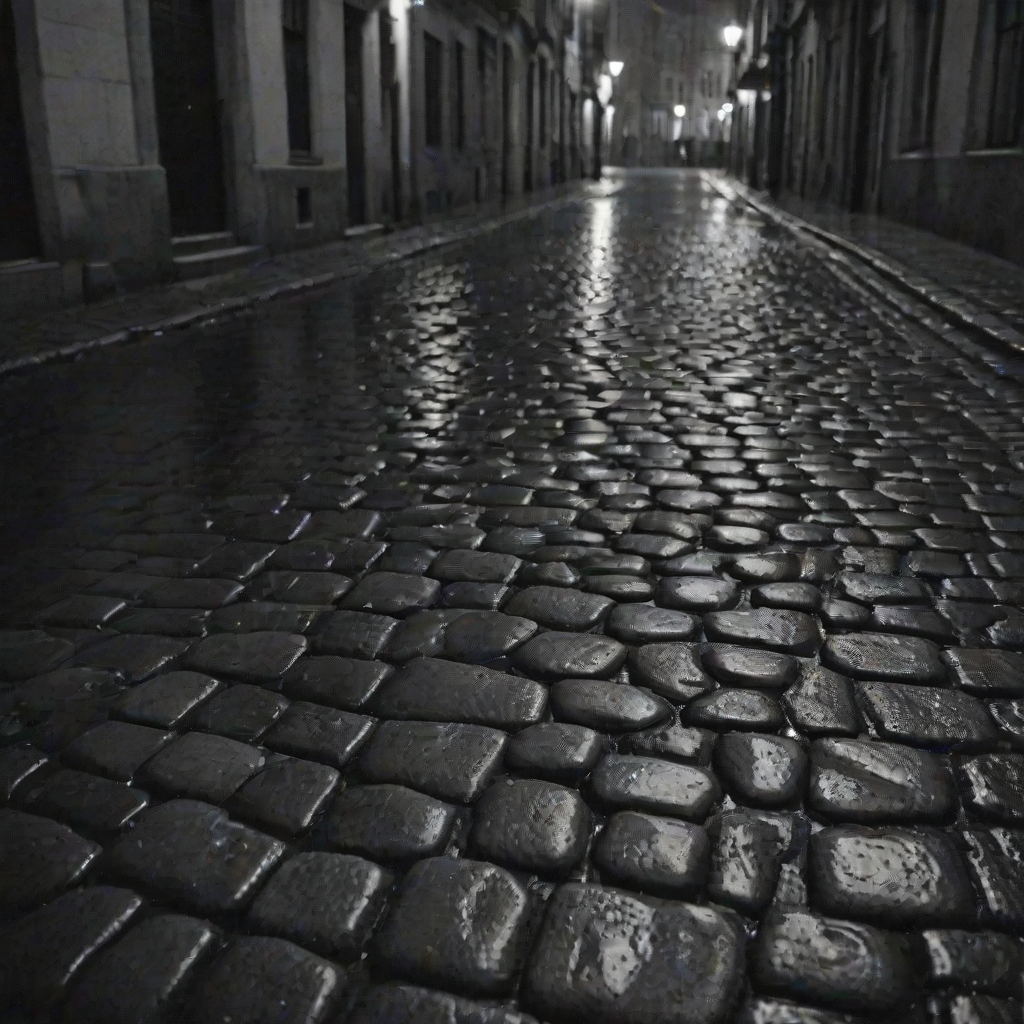
You walk on the cobblestone and the cobblestone is the oldest road still under your feet. The cobblestone was laid by hand. Every stone was placed by a man on his knees and the man on his knees set the stone in sand and the setting the stone in sand was the paving and the paving was one stone at a time. The cobblestone street is a mosaic made of labor. Every stone is different. Every stone has a different shape and the different shapes fit together because the man on his knees made them fit and the making them fit was the craft and the craft is visible in every street that still has its cobblestones.
The cobblestones of Bryggen in Bergen Norway have been walked on since the fourteenth century and the walked on since the fourteenth century is the stone remembering every step. The Hanseatic merchants walked these stones. The fishermen walked these stones. The stones are worn smooth by six hundred years of feet and the worn smooth is the polish that only time can apply. The cobblestones in the oldest parts of Rome are the sampietrini and the sampietrini are small black basalt cubes and the small black basalt cubes have paved Rome since the popes ordered the streets paved in the sixteenth century. The sampietrini are hell on high heels and heaven for historians because the sampietrini are the original surface and the original surface is the road that Caesar's city became after Caesar.
The barricades of Paris were built from cobblestones torn from the street and the tearing from the street was the road becoming the weapon. In eighteen forty eight and in the Paris Commune of eighteen seventy one and in May nineteen sixty eight the cobblestone was the ammunition. The slogan was sous les pavés la plage. Under the paving stones the beach. The students of sixty eight tore up the cobblestones of the Latin Quarter and threw them at the police and the throwing cobblestones at the police was the revolution using the infrastructure of the city against the city. The cobblestone is heavy enough to break a window and small enough to throw and the heavy enough and small enough is the cobblestone's dual nature which is that the cobblestone is both the road and the projectile. The same stone that carries the commerce carries the riot.
In Sinclair's Detroit the cobblestone streets survived under the asphalt and the surviving under the asphalt means the cobblestones are still there. You can see them where the asphalt has worn through. You can see the Belgian blocks on the streets near Eastern Market and the Belgian blocks near Eastern Market are the original surface that the city paved over because the city wanted smooth roads for automobiles and the wanting smooth roads for automobiles was Detroit choosing the car over the stone. The cobblestone was too bumpy for the Ford. The cobblestone shook the chassis. The cobblestone was the road that the automobile rejected and the automobile rejecting the cobblestone changed every street in America from stone to asphalt. Detroit paved over the cobblestones to make room for the car and the paving over the cobblestones to make room for the car is Detroit's autobiography in one sentence.
You drive over the cobblestone street and the tires thump and the thumping is the rhythm and the rhythm is the road speaking. The cobblestone road speaks. The asphalt road is silent. The cobblestone road tells you it is there with every bump and the every bump is the stone asserting itself and the stone asserting itself is the road refusing to be forgotten. The cobblestone road is slower. The cobblestone road is louder. The cobblestone road is beautiful in the rain because the rain fills the gaps between the stones and the gaps filled with rain reflect the streetlights and the streetlights reflected in the gaps is the road becoming a mirror. The cobblestone. The oldest road. The hand-laid road. The road that remembers. The road that carried the revolution and the commerce and the feet of six centuries. The road under the road. Still there. Still bumping. Still speaking.