 JOHN SINCLAIR
CHURCH STEPS
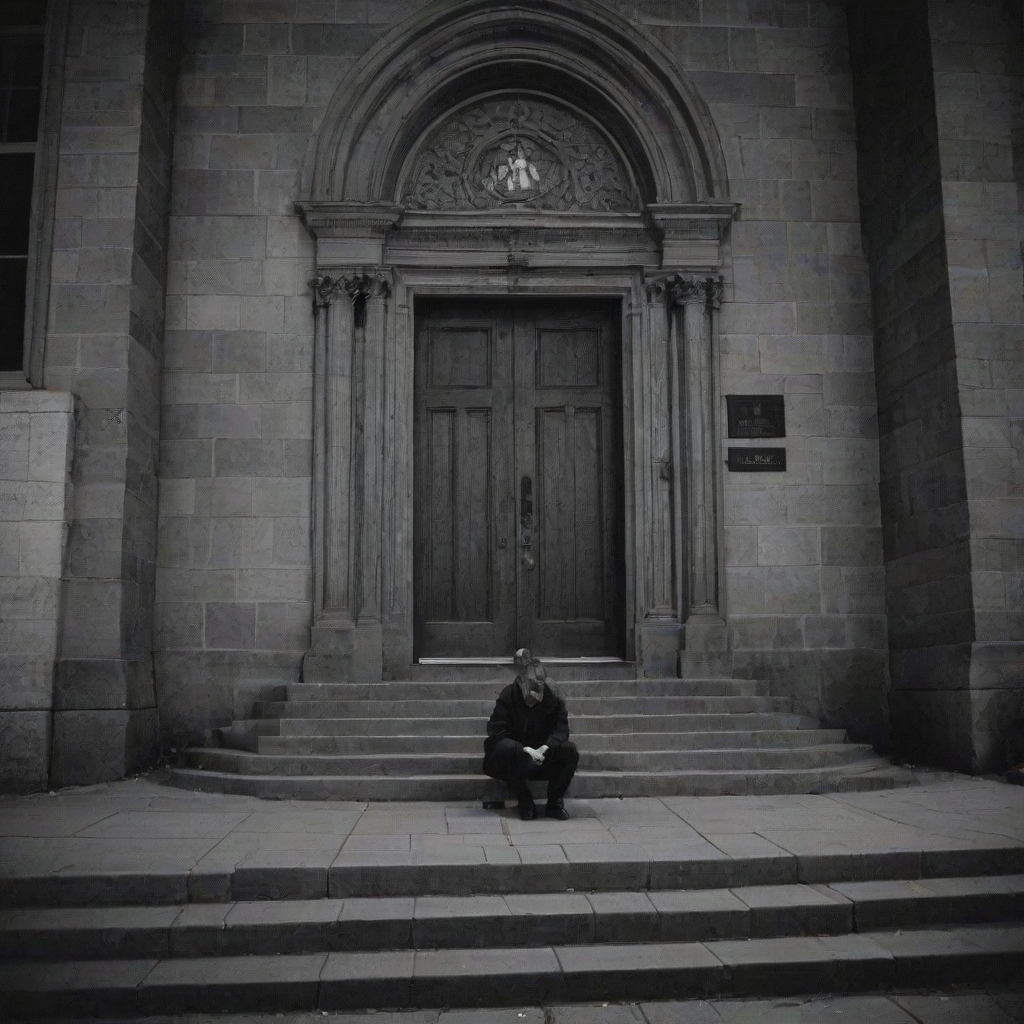
You sit on the church steps and the sitting is not worship and the not worship is fine because the church steps belong to the street not to the church. The church steps are the border between the sacred and the sidewalk and the border is stone and the stone is wide and the wide is the invitation. The church steps invite you to sit the way the stoop invites you to sit but the church steps add gravity. The gravity of the building behind you. The building behind you has a steeple or a dome or a cross and the steeple or dome or cross is the building's posture and the posture is looking up and the looking up is the architecture's prayer. You sit on the steps below the prayer and you are not praying. You are resting. The church steps do not mind.
Martin Luther nailed ninety-five theses to the door of the Castle Church in Wittenberg on October thirty first fifteen seventeen and the nailing was on the steps. Luther walked up the steps to get to the door. Luther stood on the steps while he hammered. The steps held Luther while Luther broke the church and the breaking of the church started on the steps because the steps are where you make your argument before you enter the building. The steps are the stage. The door is the audience. Luther made his argument on the steps and the argument was heard inside and the hearing inside changed the world. The Protestant Reformation began on church steps. Every revolution begins at the threshold and the threshold of the church is the steps.
The church steps at Abyssinian Baptist in Harlem held Adam Clayton Powell Junior when he organized the boycotts in the nineteen thirties and the steps held the congregation when the congregation marched from the church to the picket line and the picket line was an extension of the church steps. The church steps at Sixteenth Street Baptist in Birmingham held the children on September fifteenth nineteen sixty three and the church was bombed and four girls were killed inside but the steps survived and the surviving steps became the memorial because the steps are what you see from the street. The steps are the church's face. The face that was there before the bombing and the face that was there after the bombing and the face that is still there and the still there is the testimony.
In Rome the Spanish Steps hold tourists and lovers and street musicians and the holding of tourists and lovers and street musicians is the steps becoming a theater. The Spanish Steps are one hundred and thirty five steps rising from the Piazza di Spagna to the Trinita dei Monti church and the rising is the spectacle. People sit on every step. People sit on the steps and watch people sit on the steps and the watching people sit on the steps is the entertainment. The Spanish Steps are not church steps anymore. The Spanish Steps are city steps. The church at the top is an afterthought. The steps stole the show and the stealing the show is what church steps do when the steps are more beautiful than the church.
You walk past the church at midnight and the church is locked and the locked church is the church protecting itself from the city. But the steps are still there. The steps are unlocked. The steps cannot be locked because the steps are outside and the outside belongs to everyone. The person sleeping on the church steps at midnight is the city's contradiction. The church preaches shelter and the church locks its door and the locked door pushes the person onto the steps and the person on the steps is the sermon the church did not intend to deliver. The church steps at midnight. The person sleeping. The locked door. The steeple pointing at the sky. The steps holding someone the building will not hold. The church steps are the most honest part of any church because the church steps cannot pretend. The church steps are stone. The stone does not lock. The stone holds whoever comes.