 JOHN SINCLAIR
CHALK LINE
You draw a line in chalk and the rain takes it. That is the deal. The chalk does not pretend to be permanent. The chalk does not pretend to be bronze or marble or oil on canvas. The chalk says I am here right now and right now is all I have and if that is not enough for you then walk past. Most people do not walk past. Most people stop because the chalk is on the ground and the ground is where you are already looking and the chalk catches you before you know you have been caught.
Keith Haring drew radiant babies and barking dogs in chalk on the blank advertising panels in New York subway stations in nineteen eighty because he wanted art that would disappear. He could have painted on canvas. He could have rented a gallery. He chose chalk on black paper in the subway because the subway was where the people were and the people were not going to galleries. Haring drew for free on his way to work and the commuters watched him draw and some of them stopped and some of them did not and all of them saw the drawing whether they meant to or not. The MTA arrested him for vandalism. The art world put him in museums. The chalk did not care about either decision.
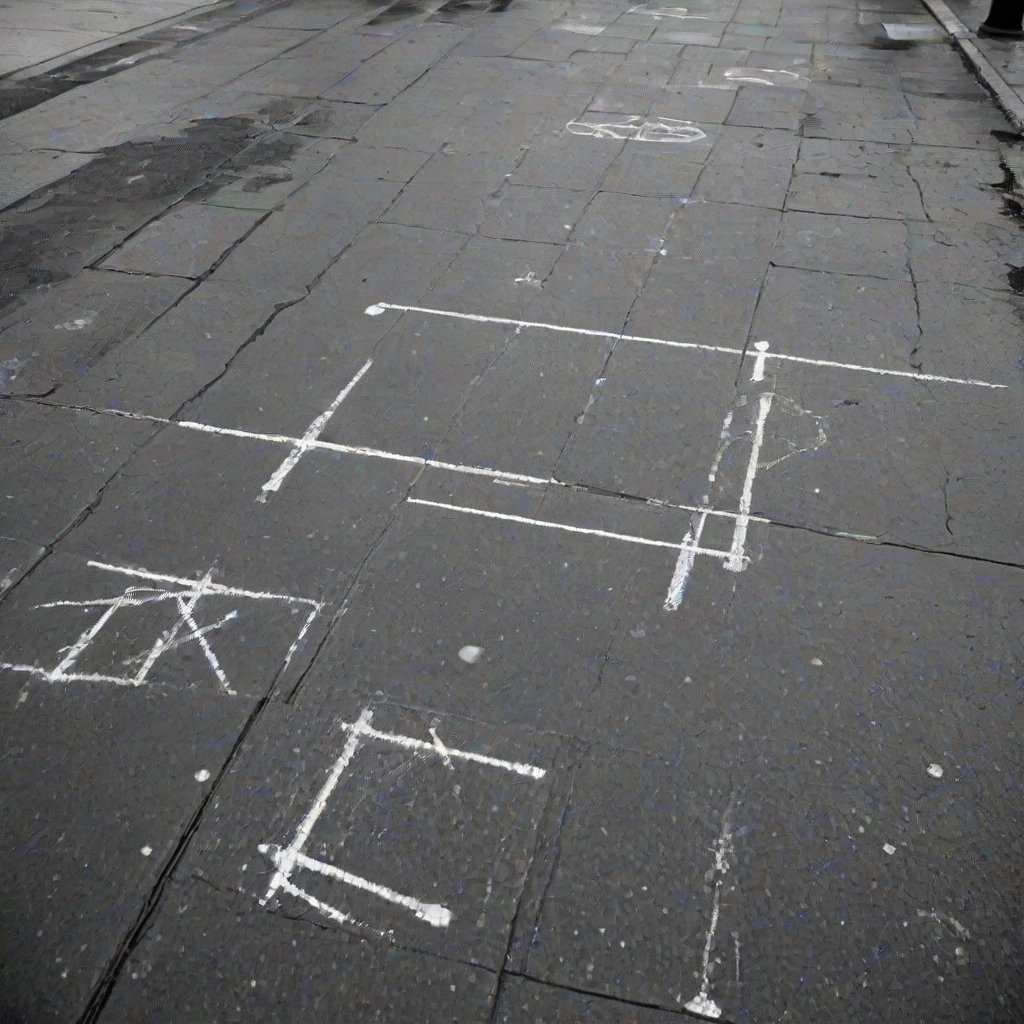
Kids draw hopscotch on the sidewalk with a piece of chalk they found in a box in the closet and the game lasts until the next rainstorm. The squares are not even. The numbers are backward. The lines wobble. None of that matters because the game does not require perfection. The game requires a piece of chalk and a sidewalk and the willingness to throw a stone and hop on one foot. The chalk line on the sidewalk is the oldest temporary architecture in the world. Every kid who ever drew hopscotch was an architect for an afternoon and a demolition crew came for free that night in the form of weather.
In the nineteen sixties in Birmingham Alabama the police drew chalk lines on the pavement to mark where the demonstrators were allowed to stand. The chalk line was the law. Step over the chalk line and you got arrested. The demonstrators looked at the chalk line and saw what it really was. A line drawn by a man with a piece of chalk. A line that the rain could wash away. A line with no more authority than the hand that drew it. The children of Birmingham stepped over those chalk lines by the hundreds and the fire hoses came and the dogs came and the television cameras came and the chalk lines disappeared under the weight of what happened next. The chalk line was supposed to be the boundary. The chalk line became the proof that the boundary was never real.
You draw a line in chalk and the line means whatever you decide it means. The chalk line is a border or a game or a work of art or a crime scene or a protest and the chalk does not know which one it is. The chalk is just calcium and pigment and pressure. The meaning is yours. The chalk line is the most democratic form of expression because the chalk costs nothing and the sidewalk belongs to everyone and the rain treats all chalk lines equally. The masterpiece and the hopscotch and the protest and the crime scene all wash away at the same speed. The rain does not curate. The rain just cleans.