 DAVID PEEL
Chalk
Chalk was the first language of the street. Before spray paint. Before markers. Before stickers and wheat paste and stencils. There was chalk. You could write anything on the sidewalk and it would last until the rain. The rain was the eraser. Every rainstorm wiped the city clean and the next morning somebody started writing again. Chalk was a conversation with the weather.
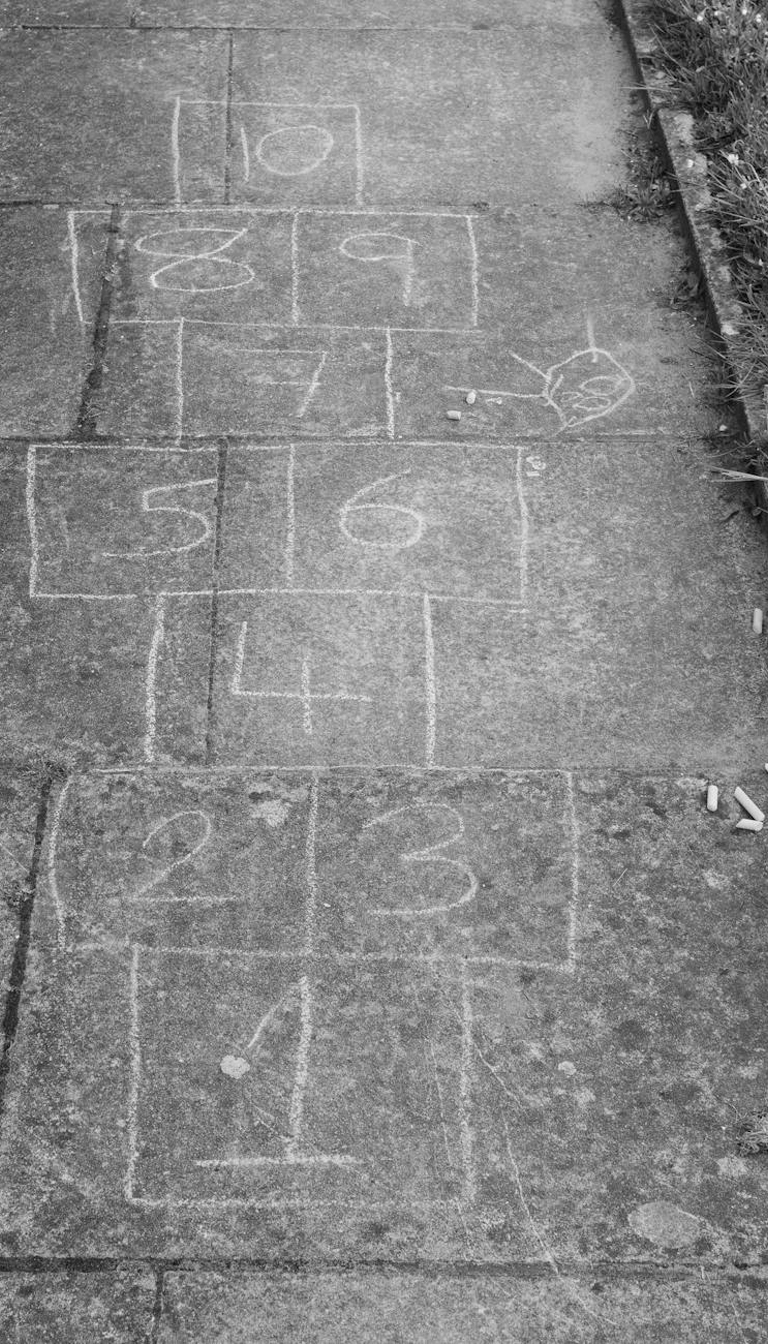
The kids used chalk for hopscotch. They drew the grid on the sidewalk and numbered the squares and threw a stone and hopped. The hopscotch grid was there every morning on every block in every neighborhood and it was always the same. One through nine. Turn around. Come back. Hopscotch was the oldest game in New York and nobody owned it and nobody taught it. You learned it by watching. You played it until you were too old and then you walked over it on your way to work and you did not look down.
Chalk outlines. The police drew them around the body. I do not know if they still do that. But in the seventies you saw chalk outlines on the sidewalk and you knew what happened there. The outline stayed after they took the body away. The rain eventually washed it but until the rain came that outline was a ghost. A flat white ghost on the concrete. People walked around it. Nobody stepped in it. Even the toughest kid on the block walked around the chalk outline. That was respect. Not for the law. For the dead.
The teachers used chalk on the blackboard. Every classroom in New York had a blackboard and a piece of chalk and the teacher wrote on the board and the chalk squeaked and thirty kids covered their ears and the teacher kept writing. The blackboard was the original screen. You stared at it for six hours a day. The teacher erased it at the end of class and the next day wrote something new. The blackboard was a newspaper that came out every hour and disappeared every hour. The chalk dust was in the air. You breathed it. You tasted it. Every kid in New York ate chalk dust and nobody died from it.
They use whiteboards now. Dry erase markers. No dust. No squeak. No chalk in the tray and no eraser fights after school. The eraser fight was when you took the felt eraser and threw it at your friend and it left a white rectangle on his jacket and he threw it back and by the end of the fight you both looked like ghosts. Chalk was temporary. That was the whole point. You wrote something and the world erased it and you wrote it again. Every chalk drawing was an act of faith. You made something beautiful knowing the rain was coming. That is what art is. That is what all of it is.