 JOHN SINCLAIR
CEMETERY
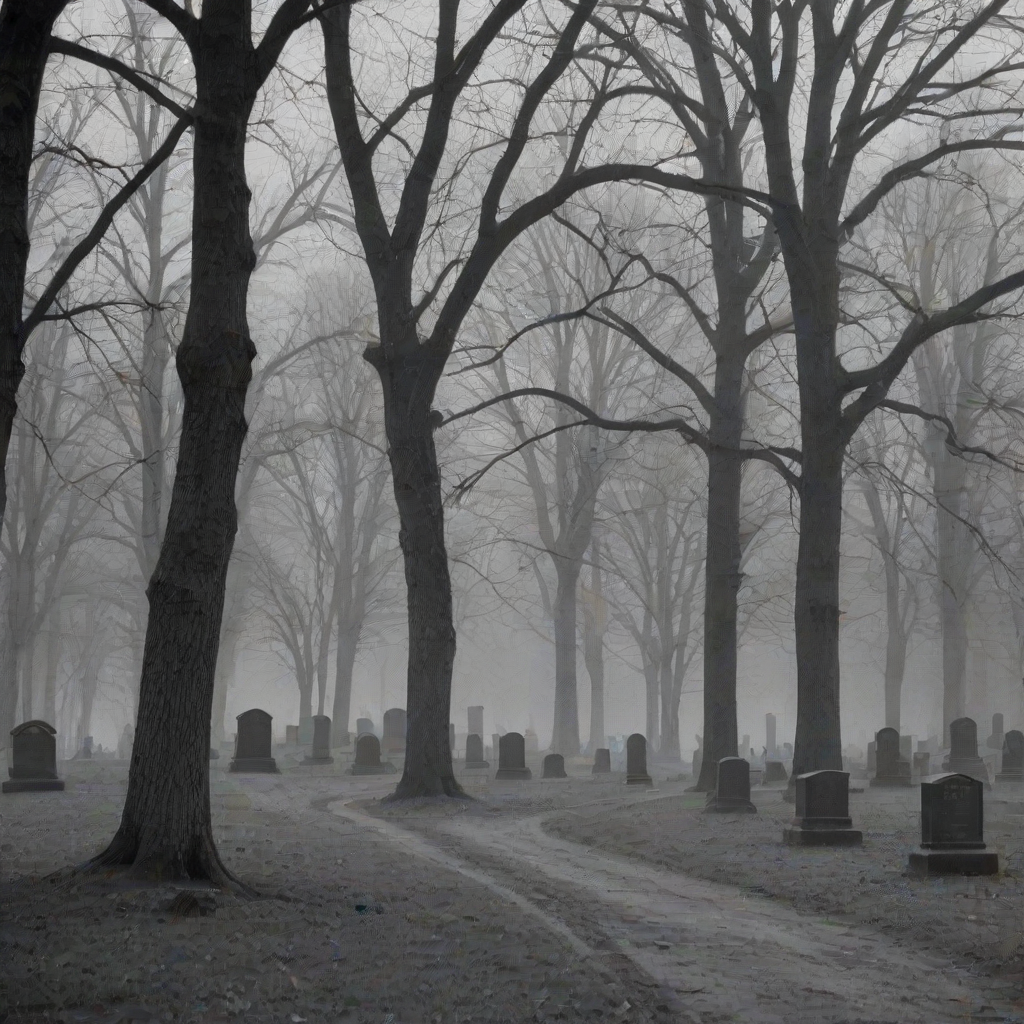
You walk through the cemetery and the walking is quiet and the quiet is the cemetery's only rule. The cemetery has paths and the paths are paved and the paving is for the living because the dead do not need paths. The headstones stand in rows or they do not stand in rows and the standing in rows or not tells you when the cemetery was built. The old cemeteries are chaotic. The stones lean and crowd and the crowding is the centuries piling up. The new cemeteries are gridded. The stones are uniform and the uniformity is the democracy of death and the democracy of death is the only democracy that works perfectly because everyone gets the same amount of ground.
Pere Lachaise in Paris opened in eighteen oh four because Napoleon needed the dead out of the churches. The churches were full. The churchyards were full. The dead were stacked in the catacombs and the stacking in the catacombs was the city running out of room for its history. Napoleon created Pere Lachaise on a hill east of the city and the hill was strategic because the hill was far enough from the living to be sanitary and close enough to the living to be visited. Napoleon buried Moliere there and La Fontaine and Abelard and Heloise and the burying of famous people in the new cemetery was the marketing and the marketing worked because everyone wanted to be buried near Moliere. Pere Lachaise became the most visited cemetery in the world. Jim Morrison is there. Oscar Wilde is there. Edith Piaf is there. The living line up to visit the dead and the lining up to visit the dead is the cemetery doing what the cemetery does.
The potter's field on Hart Island in the Bronx has held a million bodies since eighteen sixty nine and the million bodies have no headstones and the no headstones is the poverty. Hart Island is where New York buries the people no one claims. The unclaimed. The unknown. The people who died alone in a room or on a street and no one came for the body and the no one coming for the body is the city's failure and the city's failure is buried on Hart Island in trenches. The trenches hold a hundred and fifty coffins stacked three deep and the stacking three deep is the arithmetic of the forgotten. Prisoners from Rikers Island dig the graves and the prisoners digging the graves is the city making its most invisible people bury its most invisible dead.
In New Orleans the cemeteries are above ground because the water table is eighteen inches below the surface and the eighteen inches means you cannot dig a grave without hitting water and the hitting water means the coffin floats and the floating coffin is the reason the dead in New Orleans live in houses. The tombs in Saint Louis Cemetery Number One are whitewashed and crumbling and the crumbling is beautiful because the crumbling is the city's aesthetic. Marie Laveau is in Saint Louis Number One and the tourists leave lipstick marks on her tomb and the lipstick marks are the prayers and the prayers are the cemetery becoming a church without a roof.
You sit on a bench in the cemetery and the sitting is the resting and the resting in a cemetery is the most peaceful rest in any city. The cemetery is the quietest park. The cemetery has trees and grass and paths and benches and the trees and grass and paths and benches are the park but the park has dead people under it and the dead people under it change the quality of the silence. The silence in a cemetery is not the absence of sound. The silence in a cemetery is the presence of time. You sit on the bench and the headstone in front of you says eighteen forty seven to nineteen twelve and the eighteen forty seven to nineteen twelve is a life and the life is sixty five years and the sixty five years are compressed into a dash. The dash between the dates. The dash is the life. The dash is everything that happened between the being born and the dying and the everything is a single mark on a stone and the single mark is the cemetery's notation. One dash. One life. The cemetery is full of dashes.