 DAVID PEEL
Cartouche
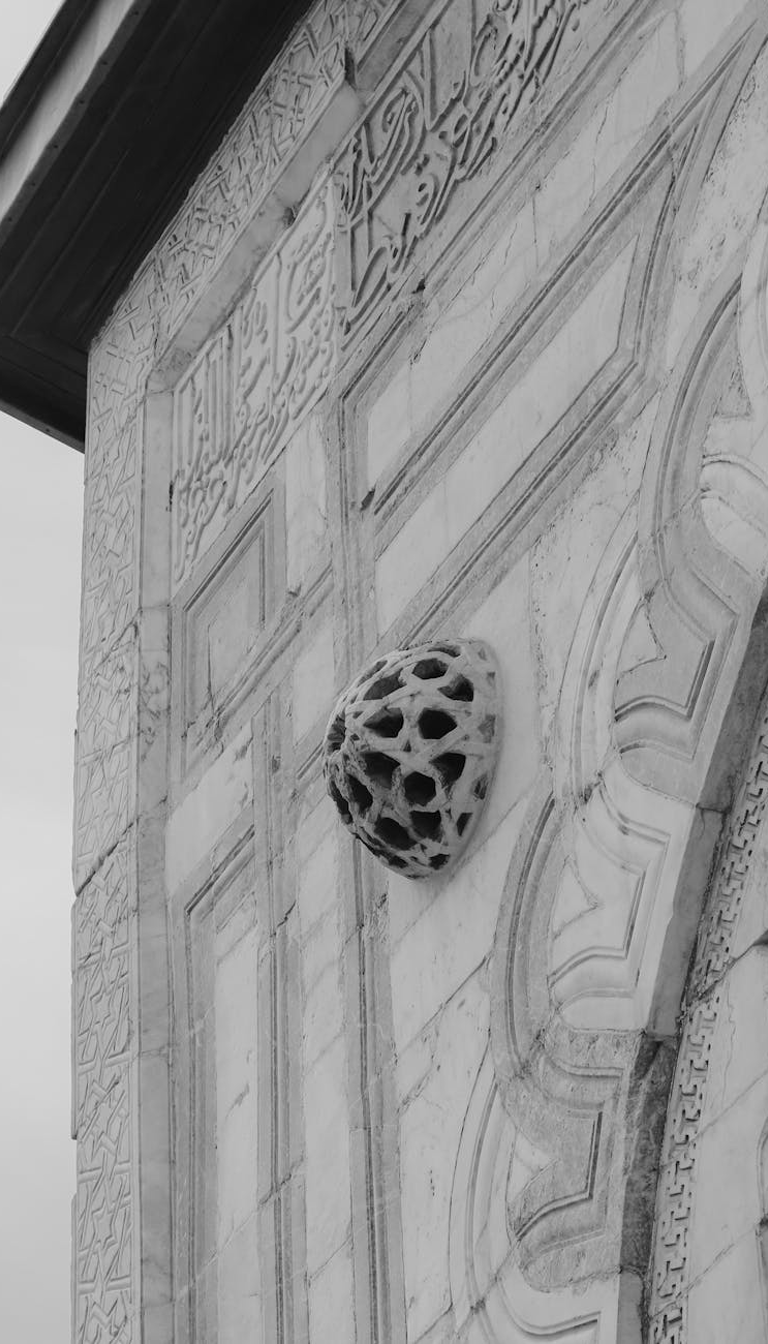
The cartouche was a frame with nothing ordinary inside it. An ornamental tablet carved into the facade. Scrollwork around the edges. A date or a monogram or a coat of arms in the center. The cartouche was the building business card. Mounted above the entrance where every pedestrian could read it. The building announced itself the way a street performer announces the next song. Here is who I am. Here is when I was made. Here is who paid for me. The cartouche held the introduction.
The word comes from the Italian cartoccio. A roll of paper. The cartouche looked like a scroll that had been partially unrolled and pinned to the wall. The edges curled. The center was flat. The flat center held the message and the curled edges held the drama. The cartouche was a stage for text. The text could have been carved into a plain rectangle but the rectangle would not have said look at me. The cartouche said look at me. The cartouche understood that presentation is half the message.
The Egyptian cartouche was different. An oval ring enclosing the name of a pharaoh. The oval was a rope tied in a loop. The loop said this name is protected. This name is enclosed. This name cannot be erased because the rope holds it. Champollion cracked the hieroglyphics by finding the cartouches first. The cartouches were the proper nouns. Find the names and the grammar follows. The cartouche was the key to the whole language. The ornamental frame turned out to be the most important thing on the wall.
The Beaux-Arts buildings on Fifth Avenue had cartouches the size of dining tables. Carved limestone scrollwork surrounding a date or an initial or a shield with lions on it. The lions did not live on Fifth Avenue. The lions lived in the imagination of the owner who wanted the building to look like it had always been there. The cartouche aged the building. A brand-new facade with a cartouche from 1902 looked like it had survived something. The cartouche was the building war story. The building had not been to war. The cartouche said it had.
Nobody commissions cartouches. The glass tower has no frame for a name because the glass tower does not want a name. The glass tower wants an address. The address is a number. The number is not carved. The number is printed on a brass plate screwed to the wall at eye level. The brass plate does not curl at the edges. The brass plate does not have lions. The brass plate says 432 and 432 says nothing about who built it or when or why. The cartouche answered all three questions in one stone. The brass plate answers one question in one font. The building got quieter.
See also: Escutcheon, Cornerstone