 JOHN SINCLAIR
CANAL
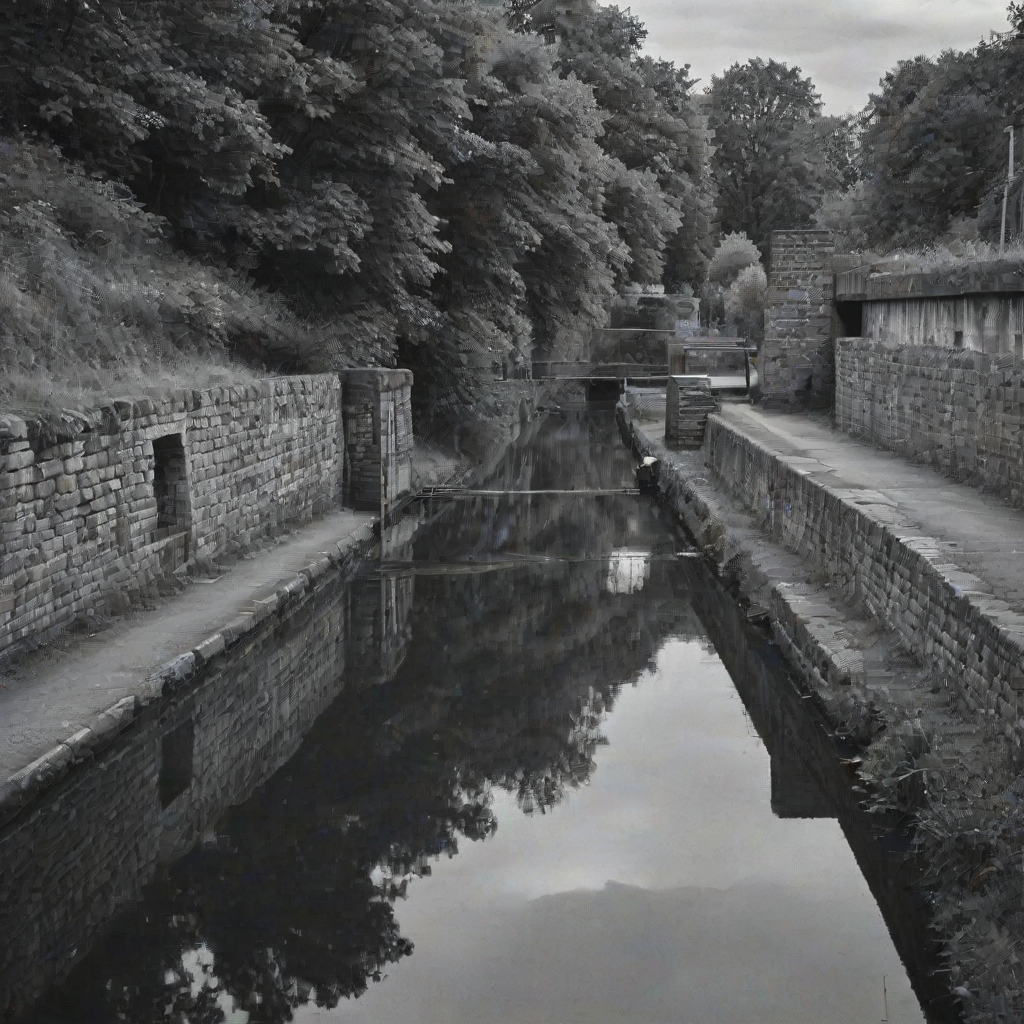
You walk along the canal and the canal is a river that someone built and the building of a river is the ambition that defines civilization. The canal is not natural. The canal is a ditch filled with water and the ditch filled with water is the simplest description of the most transformative infrastructure in human history. Before the railroad there was the canal. Before the highway there was the canal. The canal moved goods from where they were made to where they were needed and the moving of goods from where they were made to where they were needed is the definition of commerce and the definition of commerce is a canal.
The Erie Canal opened in eighteen twenty five and the opening connected the Atlantic Ocean to the Great Lakes and the connecting the Atlantic to the Great Lakes changed America from a coast into a continent. Before the Erie Canal it cost one hundred dollars to ship a ton of goods from Buffalo to New York City. After the Erie Canal it cost ten dollars. The ninety dollar difference was the canal's revolution. The canal made it cheaper to move wheat from the prairies to the ports and the cheaper moving of wheat made the prairies worth farming and the prairies being worth farming made the Midwest happen. The Erie Canal built Chicago. The Erie Canal built Cleveland. The Erie Canal built Detroit. The Erie Canal was three hundred and sixty three miles of ditch forty feet wide and four feet deep and the three hundred and sixty three miles of ditch created an empire.
The Panama Canal cut a continent in half and the cutting in half took ten years and twenty thousand lives and the twenty thousand lives were mostly Caribbean and Spanish laborers who died of malaria and yellow fever and landslides and the dying of malaria and yellow fever and landslides is the price that Panama charged for the shortcut. The French tried first. Ferdinand de Lesseps who had built the Suez Canal tried to build the Panama Canal and failed and the failure killed twenty two thousand French workers and the killing of twenty two thousand French workers was the largest engineering disaster of the nineteenth century. The Americans finished it in nineteen fourteen and the finishing meant a ship could sail from the Atlantic to the Pacific without going around South America and the not going around South America saved eight thousand miles and the eight thousand miles saved was the canal's value measured in distance.
In Venice the canals are the streets and the canals being the streets is the city that chose water over land. Venice was built on one hundred and eighteen islands and the one hundred and eighteen islands are connected by four hundred and thirty five bridges and the bridges cross canals and the canals are the arteries and the arteries carry gondolas and water taxis and the gondolas and water taxis are the cars of a city that never had cars. The Grand Canal in Venice is two and a half miles long and the two and a half miles is the main street and the main street is water and the main street being water means Venice is the only city where the street can flood and the flooding of the street is not a disaster but a condition. Venice floods. Venice has always flooded. The canal city lives with water because the canal city was built by water.
You sit on the bank of the canal in a small city and the canal is quiet and the quiet canal is the canal between barges. The canal waits for the next barge the way the platform waits for the next train. The towpath runs along the canal and the towpath is where the mules used to walk and the mules used to walk pulling the barges and the pulling of barges by mules is the slowest form of transportation that built a country. The canal lock raises the water and the raising of the water lifts the barge and the lifting of the barge over the hill is the canal's magic trick. Water climbing a hill. Water does not climb hills. But the canal lock makes water climb hills and the making water climb hills is engineering disguised as patience. The lock fills. The barge rises. The gate opens. The barge moves forward. The canal. The built river. The patient infrastructure. The ditch that moved the world.