 JOHN SINCLAIR
CAMP MEETING
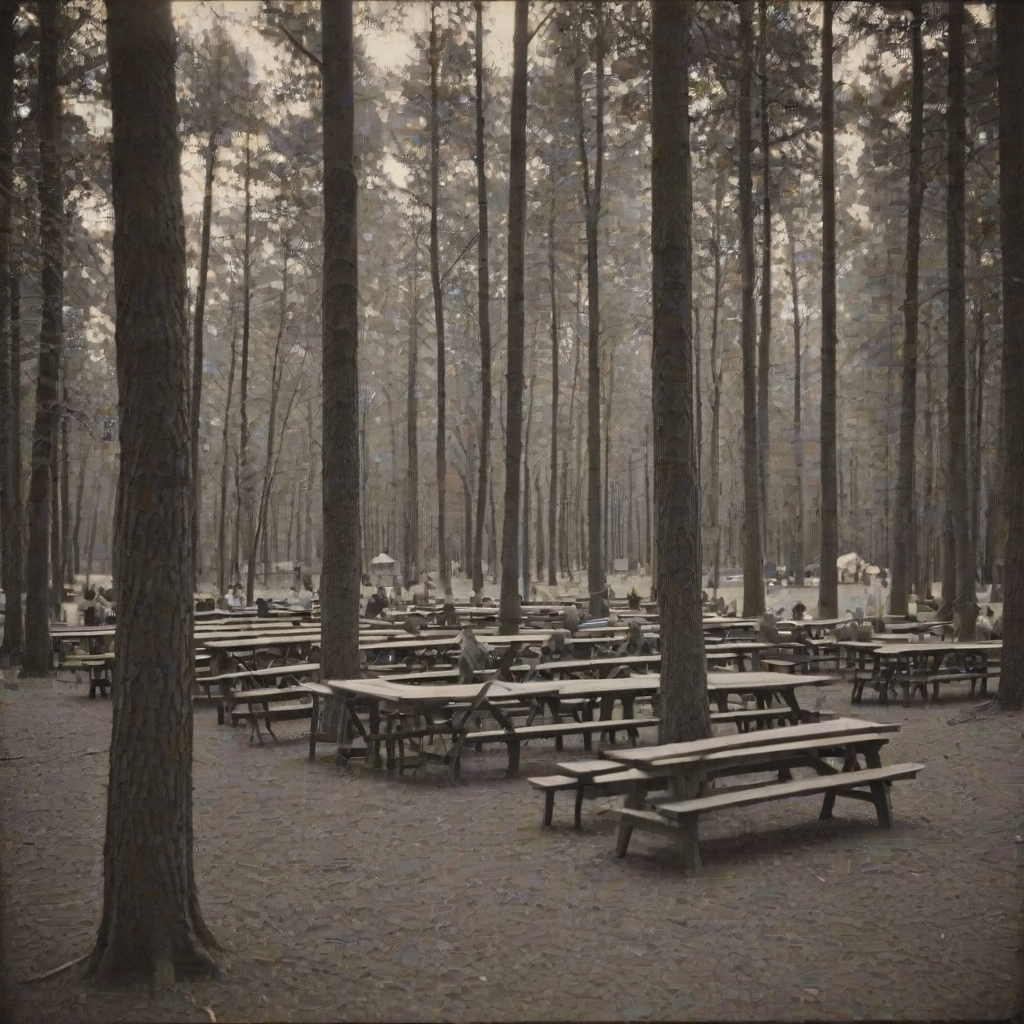
You heard it before you saw it. The singing came through the trees and the trees were the walls and the walls were open on every side and the open on every side was the invitation that no building could make. The camp meeting was the church that had no church. The camp meeting was the gathering that happened before there were buildings to gather in because the frontier moved faster than the carpenter and the faster than the carpenter meant the people who needed God needed God before the church was built and the needing God before the church was built was the camp meeting.
The camp meeting began at Cane Ridge Kentucky in August of eighteen oh one and the beginning at Cane Ridge was the explosion. Between ten and twenty thousand people came to a clearing in Bourbon County and the coming of twenty thousand people to a clearing was the largest gathering in the history of the American frontier. The Reverend Barton W. Stone organized it as a communion service for his Presbyterian congregation and what he got was the Second Great Awakening. People fell to the ground. People barked like dogs. People jerked and trembled and spoke in tongues and the speaking in tongues was the frequency and the frequency was that something was happening in the clearing that could not happen inside four walls. The camp meeting needed the sky because the sky was the ceiling that God built and the ceiling that God built was higher than any ceiling a carpenter could build and the higher was the point.
The camp meeting was the first American music festival. The singing at a camp meeting was not the singing in a church. The singing in a church was controlled by the hymnal and the hymnal was the program and the program was the order. The singing at a camp meeting was controlled by nothing. The song started at one end of the clearing and moved through the crowd like weather and the moving like weather was the participation because you did not need a hymnal to sing at a camp meeting. You needed a voice. The spirituals that became the foundation of American music were born at camp meetings where Black and white worshippers sang together in the same clearing and the singing together in the same clearing was the integration that the church would not allow for another hundred and fifty years. The call and response that became gospel that became rhythm and blues that became rock and roll started in a clearing in Kentucky where someone sang a line and the crowd sang it back and the singing it back was the democracy of the voice.
The camp meeting created the American vacation. Families loaded wagons and drove to the meeting ground and camped for a week and the camping for a week was the first time most Americans left home for anything other than war or commerce. Oak Bluffs on Martha's Vineyard began as a Methodist camp meeting in eighteen thirty five and the beginning as a camp meeting is still visible in the tiny gingerbread cottages that ring the tabernacle because the cottages replaced the tents and the tents were the original architecture. Ocean Grove New Jersey was founded as a camp meeting in eighteen sixty nine and the founding as a camp meeting meant the town did not allow automobiles on Sunday until two thousand and two and the not allowing automobiles on Sunday was the camp meeting's Sabbath surviving into the twenty first century. Chautauqua New York gave its name to the Chautauqua movement which was the camp meeting secularized and the secularizing meant the tent that had held the revival now held the lecture and the lecture was the education that the camp meeting had always provided disguised as salvation.
The camp meeting is not vanishing. The camp meeting is the festival. Woodstock was a camp meeting. Bonnaroo is a camp meeting. Burning Man is a camp meeting. The people drive to a field and they camp and they listen to music and they have experiences that cannot happen inside four walls and the having experiences that cannot happen inside four walls is the camp meeting's gift to American culture. The tent revival still exists in the rural South and the still existing is the persistence of the form because the form works. The clearing works. The sky as ceiling works. The singing that starts at one end and moves through the crowd like weather works. The camp meeting understood something about gathering that the building never learned which is that the walls are the limit and the limit is the containment and the containment is the opposite of what happens when twenty thousand people stand in a clearing and sing and the singing rises and the rising has no ceiling because the ceiling is the sky and the sky does not end.