 JOHN SINCLAIR
BUTTRESS
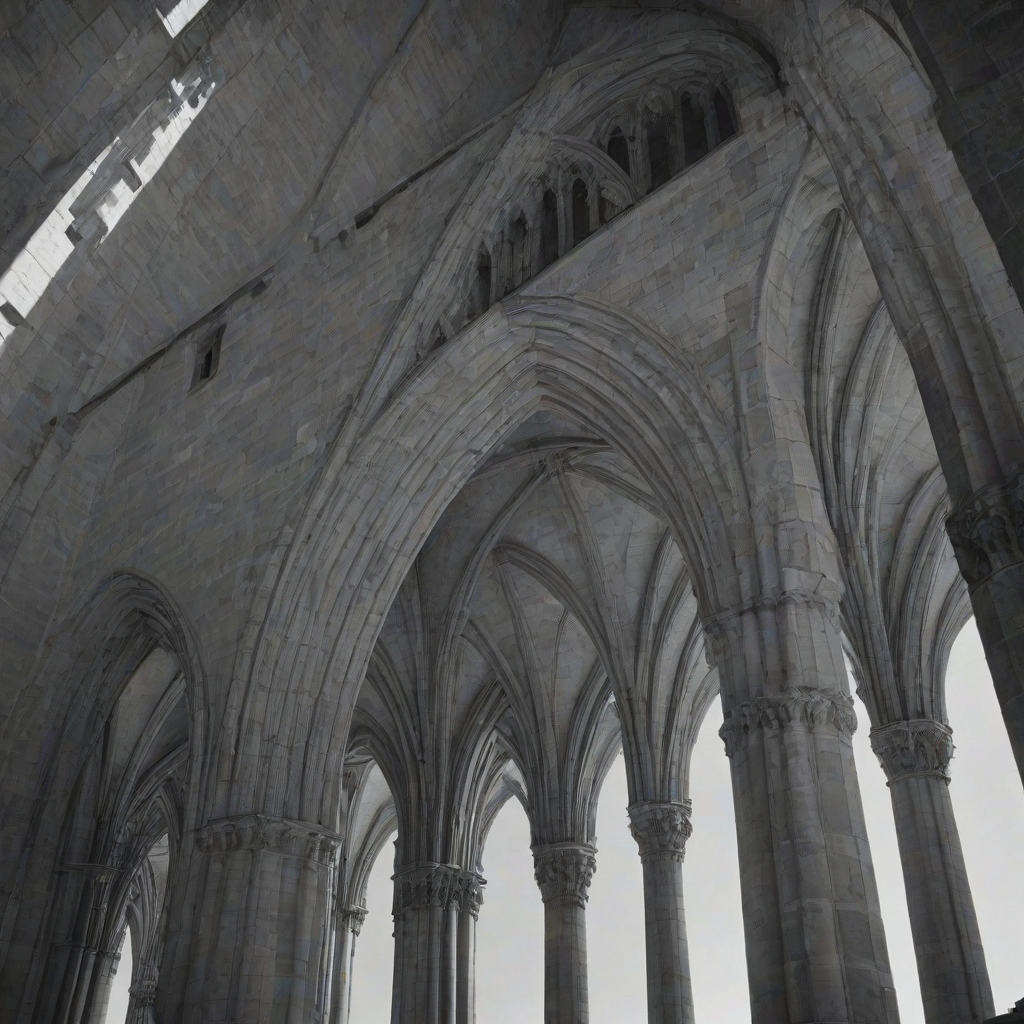
You see the buttress and the buttress is the wall leaning against the wall. The buttress is the support that resists the lateral thrust of an arch or a vault and the resisting the lateral thrust means the buttress pushes back against the force that wants to push the wall outward. A vault pushes down and outward. The wall wants to fall. The buttress says no. The buttress is the argument against collapse. Every Gothic cathedral stands because its buttresses push back against the stone that wants to spread.
The flying buttresses of Notre-Dame de Paris carry the thrust of the vault across open air and the carrying across open air freed the walls to become windows. The flying buttress is an arch that leaps from a pier to the wall of the nave and the leaping from a pier means the buttress does not touch the ground at the wall. The buttress flies. The force travels through the arch to the pier and the pier carries the force to the ground and the carrying the force to the ground is the engineering that made Gothic architecture possible. Before the flying buttress the walls had to be thick because the walls were the buttresses. Thick walls meant small windows. Small windows meant dark churches. The flying buttress moved the structural work outside the building and the moving outside meant the walls could be thin and the thin walls could hold stained glass and the stained glass filled the church with colored light. Notre-Dame was built between eleven sixty three and thirteen forty five and the building over one hundred and eighty two years means six generations of masons understood the flying buttress well enough to keep building it. The buttresses have held for eight hundred and sixty years. The fire of twenty nineteen burned the roof but the buttresses did not fall. The buttresses held the walls while the roof burned above them.
The buttresses at Durham Cathedral were the first pointed arches in England in ten ninety three and the first pointed arches meant Durham was the laboratory where English Gothic was invented. Durham sits on a peninsula above the River Wear and the sitting above the river means the cathedral dominates the landscape from every direction. The nave vault at Durham spans thirty three feet and the spanning thirty three feet required buttresses that could handle the thrust of a vault wider than any attempted in England. The masons at Durham used transverse pointed arches and the pointed arches directed more force downward and less force outward than the round arches of Romanesque building. More force downward meant less lateral thrust. Less lateral thrust meant the buttresses could be lighter. Lighter buttresses meant the building could be taller. Durham proved that the pointed arch and the buttress worked together. The arch changed the direction of the force. The buttress caught what was left. Nine hundred years later the vault still spans and the buttresses still push back.
The Hoover Dam is a gravity arch and the gravity arch means the dam curves upstream and the curving upstream transfers the force of the water into the canyon walls on either side. The canyon walls are the buttresses. The buttresses are the earth itself. The dam is seven hundred and twenty six feet tall and the seven hundred and twenty six feet means the water behind it exerts forty five thousand pounds per square foot at the base. The concrete alone cannot hold this. The curve transfers the load laterally into the rock walls of Black Canyon and the transferring into the rock walls means the canyon does the work that flying buttresses do at Notre-Dame. The dam was completed in nineteen thirty six and the completing in nineteen thirty six means the buttresses have held back Lake Mead for ninety years. The dam is an arch. The canyon is the buttress. The arrangement is the same arrangement the Gothic masons used. Force pushes outward. Something pushes back. The something is the buttress whether the buttress is stone or concrete or the wall of a canyon.
You stand inside the cathedral and you look up at the vault and the vault floats. The vault appears to float because the buttresses are outside and the being outside means you cannot see the thing that holds the vault in the air. The buttress. The wall leaning against the wall. The flying arches at Notre-Dame. The pointed arches at Durham. The canyon walls at Hoover. The force pushes outward. The buttress pushes back. The building stands because something outside the building refuses to let it fall.