 JOHN SINCLAIR
BUS STOP
You stand at the bus stop and you are waiting and the waiting is the democracy. The bus stop does not care who you are. The bus stop does not care how much money you have. The bus stop has a bench or it has a pole or it has nothing but a sign and the sign says the bus comes here and the coming here is the promise and the promise is public transit and public transit is the idea that the city will carry you from where you are to where you need to be for the price of a fare and the fare is the same for everyone and the same is the point.
Rosa Parks sat on a bus in Montgomery Alabama on December first nineteen fifty five and the sitting changed the country because the sitting was a refusal to stand. The bus was segregated and the front was for white passengers and the back was for Black passengers and the sitting in the front was the crime and the crime was dignity. Parks was not the first. Claudette Colvin was fifteen years old and she refused nine months before Parks refused and the refusing at fifteen is braver than the refusing at forty two because at fifteen you do not know what will happen and at forty two you know exactly what will happen and you do it anyway. The bus stop in Montgomery became a church. The boycott lasted three hundred and eighty one days. Three hundred and eighty one days of walking and carpooling and not riding and the not riding was the sermon.
The Freedom Riders left the Greyhound bus station in Washington DC on May fourth nineteen sixty one and the leaving was a test of whether America meant what it said. The Supreme Court had ruled that segregation on interstate buses was unconstitutional and the ruling was a law and the law was not being followed and the not following was the South. The Freedom Riders rode into Alabama and the bus was firebombed in Anniston and the riders were beaten in Birmingham and the beating was photographed and the photograph was the evidence and the evidence changed the politics. The bus stop in Anniston Alabama became a monument because a bus was burned there and the burning was the country showing you what it looked like when it did not want you to travel.
In Bogota Colombia the TransMilenio bus rapid transit system moves two million people a day and the system was invented because Bogota could not afford a subway. Enrique Penalosa was the mayor and Penalosa said a bus with a dedicated lane is a subway that runs on rubber tires and the rubber tires are cheaper than rail and the cheaper is the democracy because the cheaper means the city can build it now instead of waiting thirty years for the money. The bus stop in Bogota is an enclosed station with turnstiles and level boarding and the level boarding means the wheelchair gets on as fast as the commuter and the as fast as is the equity.
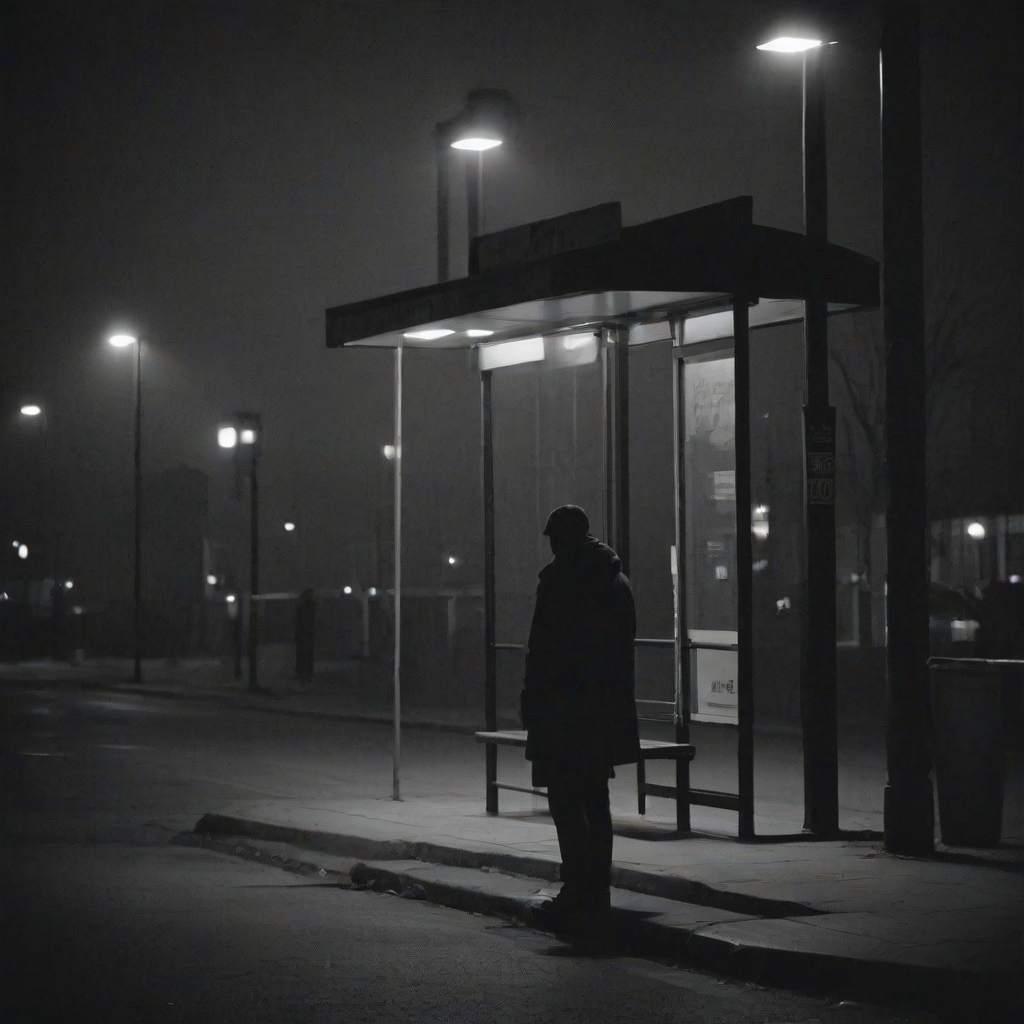
You stand at the bus stop at eleven at night and the bus is late and the late is the bus stop's condition. The bus is always late at eleven at night because the bus does not prioritize the eleven o'clock rider because the eleven o'clock rider is the night shift worker and the night shift worker does not have the political power of the morning commuter. The bus stop at night is the loneliest infrastructure in the city. The bus stop at night is a person and a sign and the dark and the dark is the waiting and the waiting is the faith that the bus will come and the bus will come because the bus always comes. Eventually. The eventually is the bus stop's prayer.