 JOHN SINCLAIR
BUS STATION
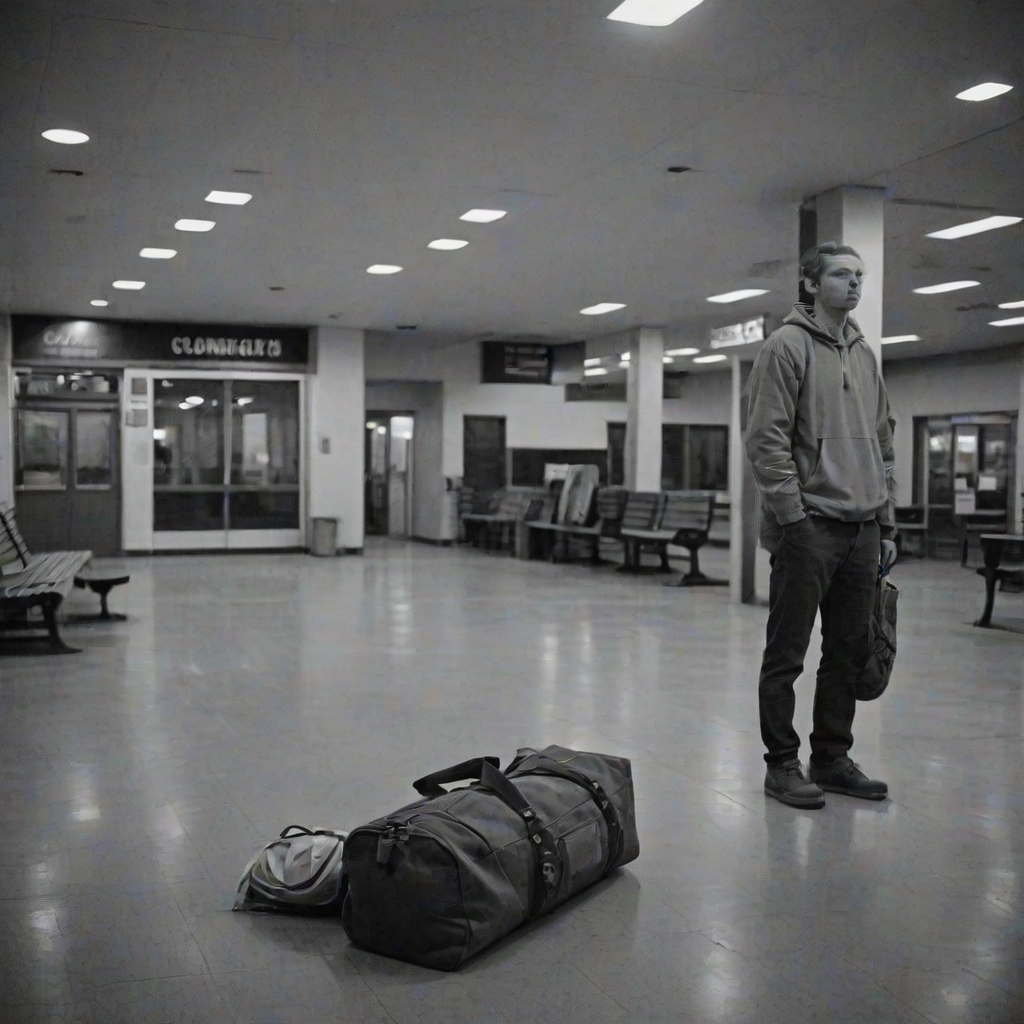
The bus station was a room full of people who were leaving. The leaving was the membership. You did not go to the bus station to stay. You went to the bus station to go and the going required waiting and the waiting was where everybody met. The bus station was the only gathering place in America built entirely on departure. The people in the room had nothing in common except the intention to not be in the room and the intention was the bond.
The bench was wooden and the wood was polished by ten thousand pairs of pants and the polishing was anonymous. Nobody knew whose pants had polished the bench. The bench did not remember the sitter. The bench remembered the sitting. The sitting was the bus station's unit of time. You sat until your bus was called and the calling was the release and the release was the reason you were sitting. The sitting was not rest. The sitting was anticipation shaped like rest.
The Greyhound sign was a dog running and the running was the promise. The promise said you will move and the moving will be horizontal and the horizontal will cost less than the vertical. The airplane moved you vertically first and then horizontally. The bus moved you only horizontally and the only was the honesty. The bus said I will take you there but I will take you there on the ground and the ground is where the country lives. The airplane shows you the country from above. The bus shows you the country from inside. The inside is where the diners are and the gas stations are and the small towns are that the airplane skips and the skipping is the forgetting and the bus does not forget.
The ticket counter had a woman behind glass and the glass was the separation and the separation was necessary because the woman behind the glass knew things you needed to know. She knew when the bus left. She knew if there were seats. She knew the price. The knowing was power and the power was behind glass and the glass was the humility. The power did not leave the counter. The power stayed behind the glass and you approached the glass the way you approach any window that contains information about your future. You leaned in and the leaning was the asking and the asking was the vulnerability. Where are you going. When do you need to be there. How much can you afford. The three questions of the bus station were the three questions of life and the life was priced by the mile.
The vending machine in the bus station sold things no other vending machine sold. The vending machine sold combs and the combs were in plastic cases and the plastic cases were the packaging and the packaging was optimistic. The packaging said you are about to arrive somewhere and the arriving requires grooming and the grooming can be purchased for seventy-five cents. The vending machine believed in your destination. The vending machine believed you were going somewhere worth combing your hair for and the believing was the kindness and the kindness cost seventy-five cents.
The bus station at night was a different country than the bus station during the day. The bus station at night belonged to the people between buses. The people between buses were the people between lives. The between was the station's real population. The person sleeping on the bench with a duffel bag for a pillow was not waiting for a bus. The person was waiting for a reason to be waiting for a bus and the waiting for the reason was the homelessness that was not yet called homelessness. The bus station sheltered people that no other building would shelter because the bus station's purpose was departure and departure does not require an address. You did not need to live somewhere to leave somewhere and the not needing was the mercy.
The announcement echoed and the echoing was the voice of the building itself. The building said bus number four seventeen to Detroit now boarding at gate six and the saying was the building's heartbeat. The building had a heartbeat made of departures and the departures were regular and the regular was the rhythm and the rhythm was the life. A building without departures is a warehouse. A building with departures is a station. The station was alive because people left it and the leaving was the living.
The bus station is not gone. The bus station still exists in every city that has a Greyhound sign. But the bus station that was a gathering place is gone because the gathering required the waiting and the waiting required the bench and the bench required the time and the time has been replaced by the phone. You do not sit on a bench and wait at a bus station anymore. You track the bus on your phone and you arrive when the bus arrives and the arriving when eliminates the waiting and the waiting was where everybody met. The bench is still there. The bench is still polished by ten thousand pairs of pants. The pants do not sit as long as they used to and the not sitting is the loss and the loss is measured in conversations that did not happen between strangers who were both leaving and both waiting and both sitting on the same wood polished by the same anonymous sitting that came before them.