 DAVID PEEL
Brownstone
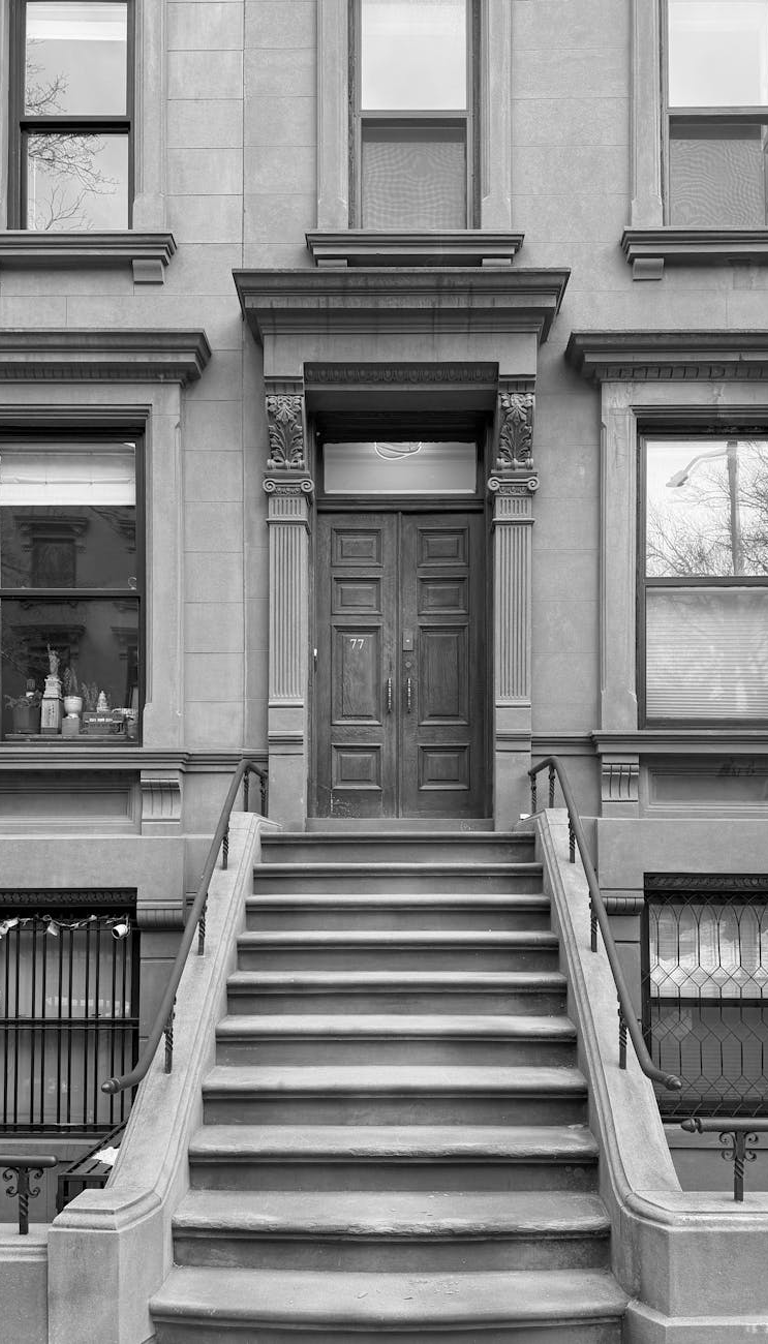
The brownstone was not brown. It was the color of dried blood. Sandstone quarried in Connecticut and New Jersey and shipped to Brooklyn and Harlem and the Upper West Side and cut into blocks and stacked four stories high with a stoop out front and iron railings that your grandmother grabbed every morning on her way down to the street. Every brownstone was the same building pretending to be different. A cornice here. A lintel there. But the bones were identical. Four floors. One family per floor. One stoop. One address. One hundred and fifty years of the same argument about the garbage cans.
The stoop was the face of the brownstone. You knew a building by its stoop. Some stoops were polished. Somebody swept them every morning. The iron was painted. The numbers were brass. Other stoops had cracks you could lose a key in and railings that wobbled and steps that tilted toward the street like the building was leaning in to hear the gossip. A stoop told you everything about the people inside. You did not need to knock.
I lived in a brownstone on East Fifth Street. Third floor. The ceiling was twelve feet high because in 1890 they built rooms for air not for efficiency. The floor sloped toward the window. If you dropped a marble it rolled to the radiator. The radiator banged all winter like a drummer who only knew one beat. The walls were plaster over brick and you could hear the couple upstairs fighting and the old woman downstairs praying and sometimes you could not tell the difference.
The brownstone was built for one family and then it was cut into apartments for four families and then it was cut into rooms for twelve people and then it was bought by a man in Connecticut and turned back into one family again. That is the whole history of New York in one building. Expansion. Division. Overcrowding. Renovation. The brownstone did not change. The city changed around it. The sandstone just sat there absorbing everybody's rent checks and everybody's arguments and everybody's cooking smells until it smelled like a hundred years of garlic and hope.
They are selling brownstones now for four million dollars. The same building that my landlord could not give away in 1975. The same building where the pipes froze every January and the roof leaked every April and the mice had a lease longer than yours. Four million dollars for a building made of sandstone that is slowly dissolving in the rain. Brownstone is soft. It crumbles. It flakes. It turns back into sand. The most expensive buildings in Brooklyn are melting. Slowly. One grain at a time. Just like the neighborhood.
See also: Walk-Up, Tenement Window