 DAVID PEEL
Brick Hammer
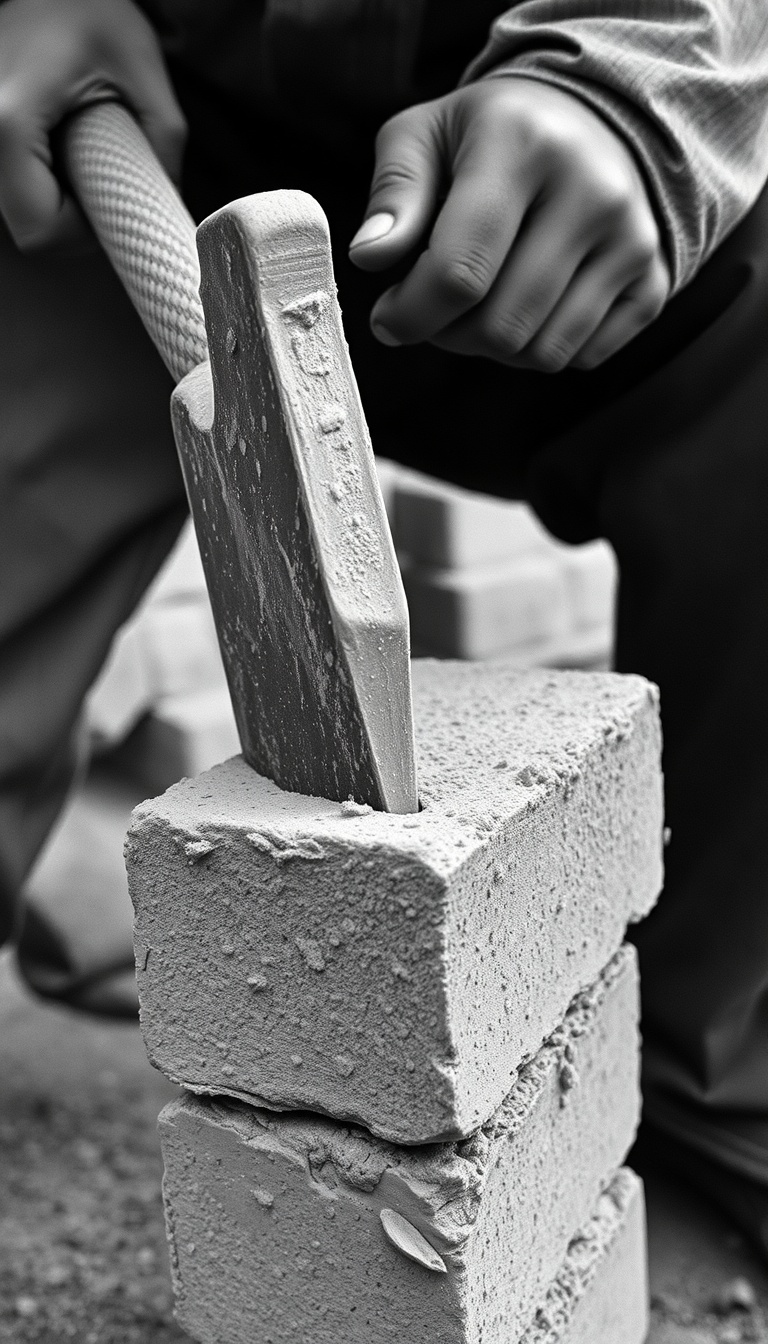
The brick hammer had two ends. One end was flat and one end was a chisel. The flat end set the brick. The chisel end cut the brick. The mason held the brick in one hand and struck it with the chisel end and the brick broke along the line of the strike. A clean break. A half brick or a three-quarter or whatever the course needed. The mason cut bricks all day with the hammer. No saw. No blade. Just the hammer and the brick and the knowledge of where to hit.
The chisel end was not sharp like a knife. The chisel end was blunt like a wedge. The wedge concentrated the force of the swing into a narrow line and the narrow line of force split the brick along its grain. Clay bricks had a grain like wood had a grain. The grain was set when the brick was fired. The mason who knew the grain could cut a brick with one swing. The mason who did not know the grain needed three swings and got a ragged edge. The first swing scored the surface. The second swing deepened the score. The third swing broke the brick. The experienced mason combined all three into one motion that took half a second.
The flat end drove the brick into the mortar bed. The mason spread mortar on the course and set the brick on the mortar and tapped the brick with the flat end until the brick was level and plumb and at the right height. Three taps. Top for level. Side for plumb. End for spacing. The three taps were the grammar of bricklaying. Every brick got three taps and every tap said something different. Top said you are flat. Side said you are straight. End said you are where you belong. The brick that got three right taps stayed where it was put for a hundred years.
The brick hammer weighed twenty ounces. Not heavy enough to tire the arm in an hour. Heavy enough to cut a brick. The weight was balanced between the flat end and the chisel end so the hammer did not twist in the hand. The handle was hickory. Hickory absorbed shock. Oak transmitted shock. A mason who used an oak handle felt the strike in his elbow by noon. A mason who used hickory felt the strike in the brick where it belonged. The handle was the shock absorber between the mason and the wall and the handle was the reason the mason could lay five hundred bricks a day and still close his hand around a glass at night.
See also: Cold Chisel, Trowel