 JOHN SINCLAIR
BOOKSTORE
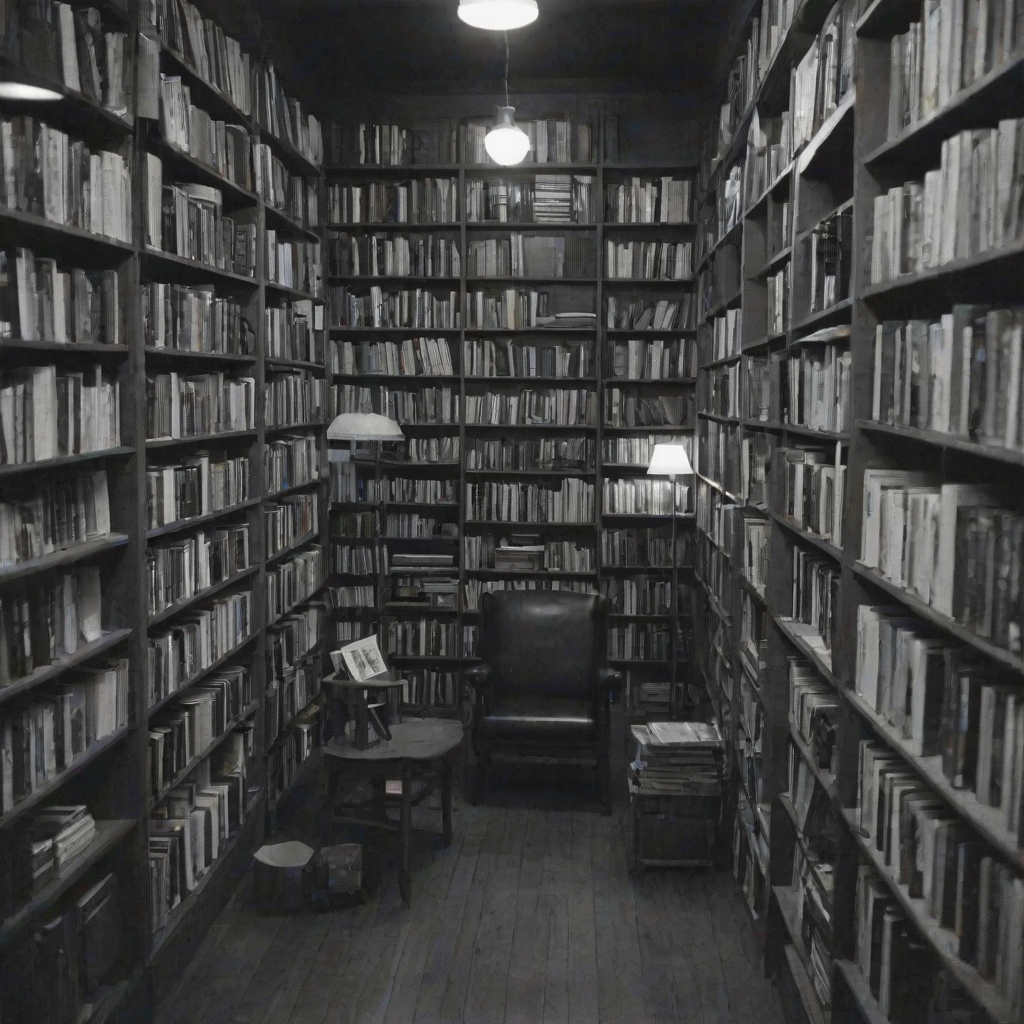
You opened the door and the smell hit you and the smell was paper and dust and ink and the combination was the smell of time being stored in a room. The bookstore did not advertise. The bookstore had a window and the window had books in it and the books were the advertisement and the advertisement said we have thought about what you should read next and the thinking was the service. The clerk behind the counter had read everything in the store and the everything was not an exaggeration. The clerk had read the novels and the poetry and the history and the philosophy and the reading was the credential and the credential was not a degree. The credential was the ability to look at you and say I think you would like this and the I think was the algorithm before the algorithm and the algorithm was a person.
Sylvia Beach opened Shakespeare and Company at eight rue Dupuytren in Paris on November nineteenth nineteen nineteen. Beach was from Baltimore and the bookstore she opened was not a bookstore. The bookstore was a lending library and a meeting place and a post office and a bank and the being all of those things was the model that every independent bookstore has followed since whether it knew it or not. Beach lent money to James Joyce for six years while Joyce wrote Ulysses and when no publisher would touch Ulysses because the book had been declared obscene Beach published it herself in nineteen twenty two and the publishing was the act that made Shakespeare and Company immortal. The bookstore published the most important novel of the twentieth century because the bookstore believed in the book before the market did and the believing before the market is the job description of every independent bookstore that has ever existed.
Lawrence Ferlinghetti opened City Lights Bookstore at two sixty one Columbus Avenue in San Francisco in nineteen fifty three. City Lights was the first all-paperback bookstore in America and the all-paperback was the politics because the paperback was the format that the working class could afford and the affording was the access and the access was the revolution. Ferlinghetti published Allen Ginsberg's Howl in nineteen fifty six and the publishing led to an obscenity trial and the trial led to an acquittal and the acquittal established that a work of literary merit could not be obscene and the establishing changed American publishing forever. Two bookstores. Two obscenity cases. Two acquittals. The independent bookstore's job is to stock the book that the world is not ready for and then wait for the world to catch up and the waiting is the courage and the courage is the inventory.
The browsing was the product that no website has replicated. You walked into the bookstore with no intention to buy and you left with three books and the three books were not books you were looking for because you were not looking for anything. The bookstore arranged the looking so that the looking found you. The shelf next to the shelf you were examining had a spine that caught your eye and the catching was not an accident. The catching was the bookstore's understanding of adjacency which is the understanding that a person who reads one kind of thing might read another kind of thing if the other kind of thing is placed close enough. The algorithm calls this a recommendation. The bookstore called it a shelf. The shelf was curated by a person who read books and the person who read books knew that the customer who picks up Kerouac might pick up Brautigan if Brautigan is three inches to the right and the three inches was the distance between what you know and what you are about to discover and the distance was the bookstore's gift to you.
The independent bookstore nearly died and then it did not. There were four thousand independent bookstores in America in two thousand and nine. Borders closed in two thousand and eleven. Barnes and Noble closed hundreds of stores. Amazon controlled half of all book sales. The independent bookstore was supposed to be extinct by two thousand and fifteen and the supposed was wrong. There are now twenty four hundred independent bookstores in America and the number is growing and the growing is the resurrection that no economist predicted. The resurrection happened because people discovered that buying a book from a website is a transaction and buying a book from a bookstore is an experience and the experience includes the smell and the shelf and the clerk who has read everything and the reading of everything is the service that no algorithm provides. The bookstore is still there. The door still opens onto the smell of paper and dust and ink. The clerk still looks at you and says I think you would like this. The I think is still the most valuable two words in American retail because the I think means a person has considered you specifically and the specifically is what the internet cannot do no matter how many books it sells.