 JOHN SINCLAIR
BILLBOARD
You look up and the billboard looks down and the looking down is the advertisement's posture. The billboard is above you because the billboard needs you to look up and the looking up is the submission. You submit to the billboard every time you read it and the reading is involuntary because the billboard was designed to be read involuntarily. The letters are tall and the colors are bright and the message is short because the billboard knows you are driving past at sixty miles an hour and at sixty miles an hour you have six seconds and the six seconds is the billboard's entire argument. Buy this. Drink this. Call this number. The billboard does not explain. The billboard commands.
The first billboard lease was sold in eighteen sixty seven and the selling was the invention of renting the sky. Before the billboard the sky belonged to everyone. After the billboard the sky belonged to whoever paid the most. Jared Bell painted circus posters on the sides of buildings in the eighteen thirties and the painting on buildings was the ancestor of the billboard but the building was already there. The billboard built its own structure. The billboard erected steel poles and wooden frames and climbed above the roofline and the climbing above was the aggression. The billboard wanted to be the tallest thing you could see and the tallest thing you can see is the thing that owns your attention and the owning of attention is the oldest business in the world.
Lady Bird Johnson signed the Highway Beautification Act in nineteen sixty five because the billboards were eating the countryside. You drove from Texas to California and the billboards sold you Burma-Shave and Stuckey's and motels and the selling never stopped and the never stopping was the highway and the highway was a billboard with asphalt. Lady Bird wanted to see the land. Lady Bird wanted to see the wildflowers and the hills and the sky without a message and the sky without a message was radical because by nineteen sixty five the sky had not been empty in a hundred years. The act passed and some billboards came down and most billboards stayed up because the billboard industry had lobbyists and the lobbyists were better funded than the wildflowers.
In Times Square the billboards became the architecture. The building behind the billboard does not matter. The billboard is the building. The light from Times Square is visible from space and the visible from space is the billboard's ambition realized. The billboard wanted to be seen and Times Square is the place where the wanting to be seen became the entire neighborhood. One point five million lights. Three hundred and eighty thousand square feet of signage. The billboard in Times Square costs three million dollars a month and the three million is not for the billboard. The three million is for the eyes. The eyes walking through Times Square. Forty million tourists a year and the forty million is the product. You are not looking at the billboard. The billboard is looking at you.
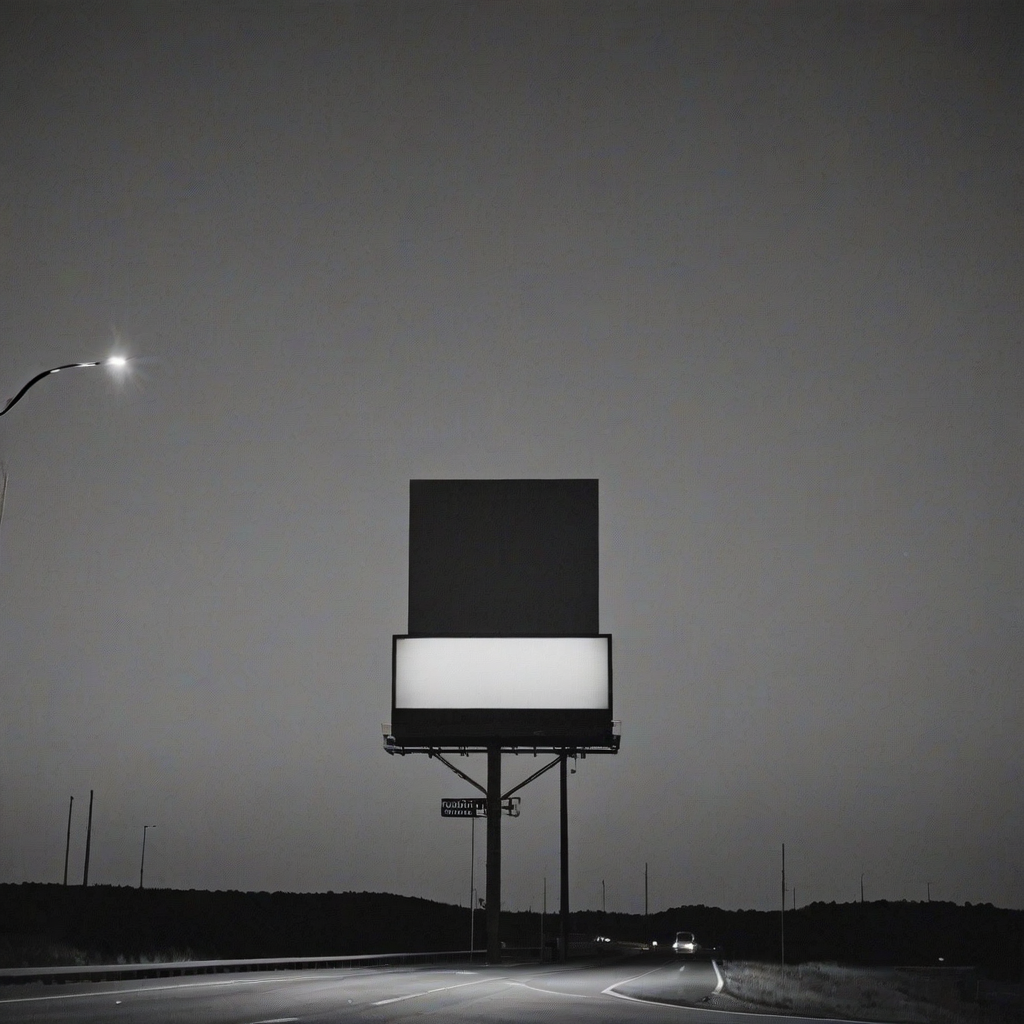
You drive past the billboard that has been blank for six months and the blank billboard is the saddest thing on the highway. The blank billboard means no one is buying. The blank billboard means the economy has forgotten this stretch of road. The blank billboard is a mouth with nothing to say and the nothing to say is the silence and the silence on a billboard is louder than any advertisement because the silence means the machine stopped. The machine that turns sky into money. The machine that turns your attention into profit. The machine stopped and the billboard stands there holding nothing and the holding nothing is the billboard being honest for the first time. The billboard with no message. The billboard that is just a rectangle and two poles and the wind.