 DAVID PEEL
Bevel
The bevel was an angle that was not ninety degrees. Every corner in a building wanted to be ninety degrees and most of them were. But the bevel was the corner that refused. The bevel was forty-five degrees or thirty degrees or whatever angle the joint required. The bevel was the negotiation between two surfaces that did not meet at a right angle. The right angle is the default. The bevel is the exception. The building is made of defaults. The trim is made of exceptions.
The bevel gauge was a handle with a sliding blade that locked at any angle. You set the blade to the angle you needed and the blade held that angle and you transferred the angle to the wood. The bevel gauge was a memory tool. The gauge remembered the angle so the carpenter did not have to. The carpenter measured the angle once. The gauge held it forever. The gauge was the carpenter notebook. One page. One entry. One angle. But that one angle was the difference between a joint that fit and a joint that gapped.
The bevel on a piece of trim was the chamfer on the edge. The sharp corner of the board was planed to a forty-five degree angle. The chamfer softened the edge. A sharp edge catches paint and the paint peels at the corner. A beveled edge holds paint because the paint wraps around the angle instead of breaking at the point. The bevel was not decorative. The bevel was practical. The bevel existed because paint does not like sharp corners. The building was designed around the behavior of paint.
The miter was a bevel at the end of a board. Two boards with matching miters met at a corner and the joint was invisible. The miter hid the end grain. End grain is ugly. End grain is the cross-section of the wood showing the rings and the pores and the cellular structure. The miter covered the end grain with face grain and the face grain was smooth and the smooth surface accepted paint and stain. The miter was a cover-up. The miter said you did not need to see what was inside the wood. The butt joint said here is the inside. The miter lied. The butt joint told the truth. Both are valid joints. They just have different relationships with honesty.
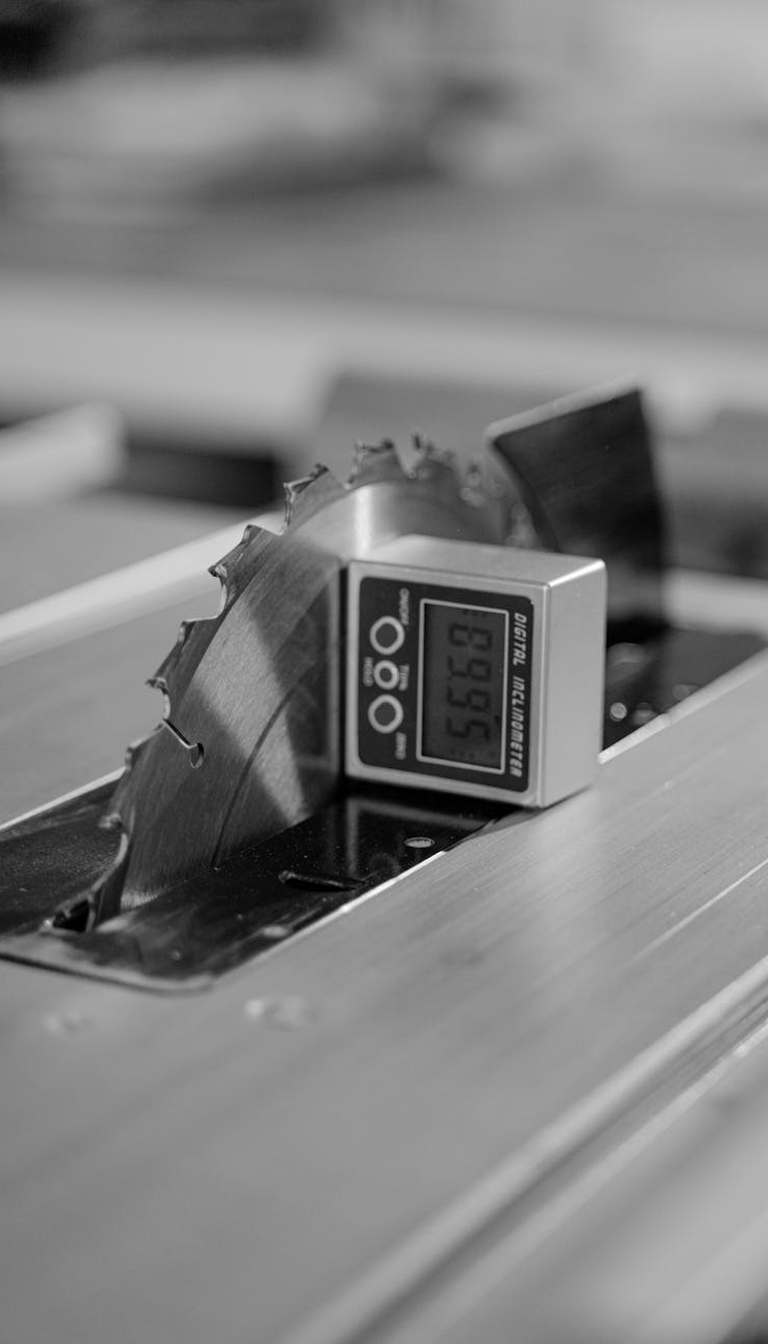
Nobody cuts bevels by hand anymore. The miter saw tilts to any angle and the blade cuts the bevel in one pass. The hand plane took twenty passes. The miter saw takes one. The miter saw is accurate to half a degree. The hand plane was accurate to whatever the carpenter eye and hand could manage. The miter saw removed the hand from the equation. The equation got more precise and less personal. The bevel cut by a miter saw is perfect. The bevel cut by a hand plane has a slight hollow in the middle where the plane iron dug a little deeper on the third pass. The hollow is the signature. The machine has no signature. The machine has a specification.