 JOHN SINCLAIR
BELLOWS
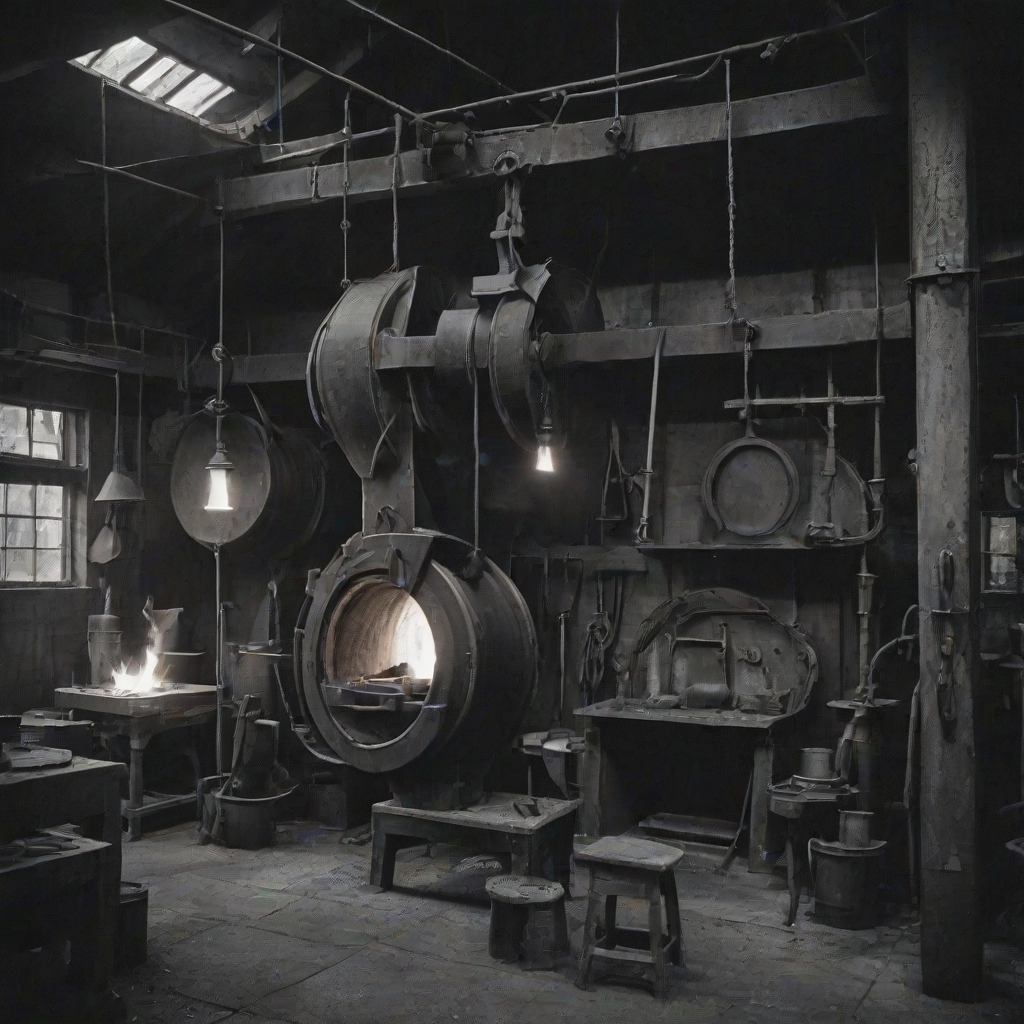
You pump the bellows and the bellows breathes for the fire. The bellows is two boards hinged at one end with leather between them and a nozzle at the other end and the two boards hinged with leather is the simplest air pump ever invented. You push the boards together and the air rushes out the nozzle and the air rushing out the nozzle feeds the fire and the fire burns hotter because fire needs air and the more air the more heat. The bellows turns a red fire white. The bellows turns eight hundred degrees into two thousand degrees. The bellows is the difference between a cooking fire and a smelting fire and the difference between a cooking fire and a smelting fire is the difference between the Bronze Age and the Iron Age.
The great bellows at Coalbrookdale weighed six tons and the six tons pushed enough air to melt ten tons of iron a day. Abraham Darby built the Coalbrookdale ironworks in seventeen oh nine and the building in seventeen oh nine was the beginning of the Industrial Revolution because Darby was the first to smelt iron with coke instead of charcoal. But coke burns hotter than charcoal and the burning hotter means coke needs more air and the needing more air means the bellows at Coalbrookdale had to be enormous. The bellows were powered by a waterwheel on the River Severn and the waterwheel turned a crank and the crank pumped the bellows and the bellows blew air into the furnace day and night. The waterwheel replaced the human arm. The replacing the human arm meant the fire never stopped because the river never stopped. Before the waterwheel a man pumped the bellows and the man got tired and the getting tired meant the fire cooled and the cooling meant the iron hardened before it was ready. The waterwheel solved the tiredness. The river breathed for the fire.
The Japanese tatara smelter used foot-operated bellows pumped by teams of men working seventy two hour shifts. The tatara was the furnace that produced tamahagane which is the steel used in the katana and the producing tamahagane meant the bellows had to deliver air at a precise rate for three days and three nights. Too much air and the carbon burned off. Too little air and the iron stayed raw. The bellows operators stood on platforms and pumped with their feet in alternating rhythm and the alternating rhythm was the heartbeat of the furnace. One man pushed down while the other rose and the pushing down while the other rose meant the air flow was continuous. The men worked in relays. The men slept in shifts. The bellows never stopped for seventy two hours because stopping the bellows meant stopping the smelt and stopping the smelt meant three days of charcoal and sand iron wasted. The tatara consumed twenty five tons of charcoal to produce two tons of steel and the consuming twenty five tons to produce two tons was the ratio and the ratio required perfect air.
The organ bellows at Notre-Dame fed eight thousand pipes with air at constant pressure. The organ is a wind instrument and the wind comes from the bellows and the bellows in a cathedral organ are the size of a room. Before electric blowers the bellows were pumped by hand by men called calcants and the calcants stood in a chamber behind the organ and pumped leather bellows with their arms and legs for the duration of the mass. The calcants at Notre-Dame pumped for hours. The calcants were invisible. The congregation heard the music and did not think about the air and the not thinking about the air was the calcants' anonymity. The sound of the organ was the sound of men pumping bellows in a hidden room. Every note required air. Every chord required more air. The fortissimo required all the air the calcants could give.
You pump the bellows and the fire answers. The fire brightens. The fire roars. The coals that were orange become white and the becoming white is the heat and the heat is the bellows working. The bellows. The leather lung. The six tons at Coalbrookdale. The foot pumps of the tatara. The calcants behind the organ. The simplest machine and the most necessary. Without the bellows the fire stays low. Without the bellows the iron stays in the ore. Without the bellows the organ stays silent. You pump. The air moves. The fire breathes. The bellows is the lung that makes everything possible.