 JOHN SINCLAIR
BEER GARDEN
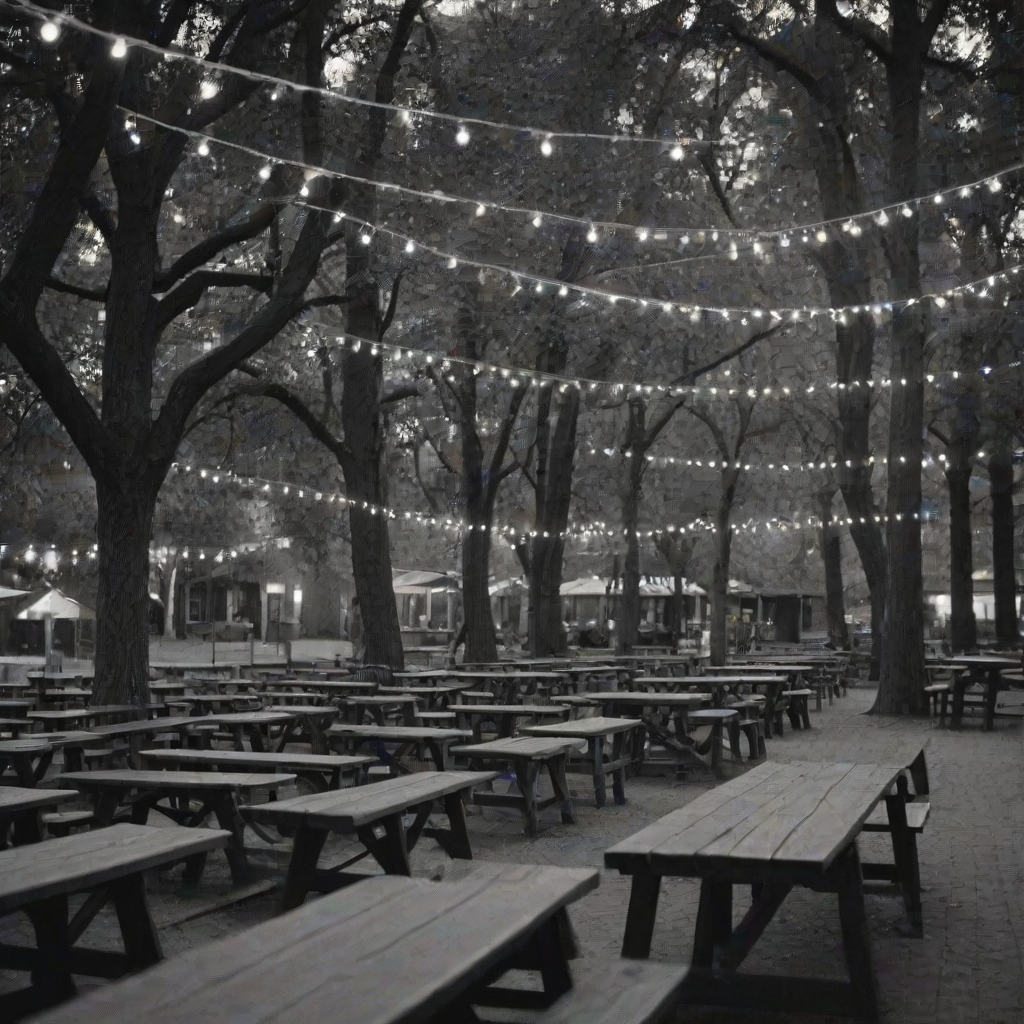
You sat outside and the outside was the point. The beer garden was the room without a roof and the room without a roof was the German idea that drinking is better when you can see the sky and the seeing the sky was the freedom that the tavern with its low ceiling and its heavy door could never provide. The beer garden had long wooden tables and the long wooden tables were the democracy because you did not choose who sat next to you. The stranger sat down and you moved over and the moving over was the hospitality and the hospitality was that in the beer garden there were no strangers. There were only people who had not yet shared a table.
The beer garden came to America with the Germans. The wave began in eighteen forty eight when the failed revolutions in Bavaria and Saxony and Prussia sent a million Germans to the United States and the million Germans brought with them two things that changed American social life forever which were lager beer and the idea that Sunday was for drinking outdoors. The Forty-Eighters were radicals and intellectuals and brewers and the brewing was the industry that built Milwaukee and St. Louis and Cincinnati into cities. Adolphus Busch arrived in St. Louis in eighteen fifty seven and married Lilly Anheuser and the marrying into a brewery family was the founding of Anheuser-Busch which became the largest brewery in the world. The beer garden attached to the brewery was the showroom and the showroom was where the neighborhood came on Sunday afternoon and the coming on Sunday afternoon was the Sabbath that the Puritans did not recognize and the not recognizing was the culture war that defined American drinking for the next hundred years.
The beer garden was the park that served beer. Atlantic Garden on the Bowery in New York opened in eighteen fifty eight and seated twelve hundred people and had a shooting gallery and a bowling alley and an orchestra that played Strauss waltzes and the playing of Strauss waltzes while drinking lager at a communal table was the civilization that the German immigrants built in the middle of Manhattan. The beer garden allowed families. Children ran between the tables while their parents drank and the running of children between the tables was the scandal that the temperance movement could not forgive because the temperance movement believed that alcohol and children occupied different worlds and the different worlds was the Puritan inheritance that the Germans rejected. The beer garden was where the labor movement met on weekends because the beer garden had space and the space was cheap and the cheap was that the brewer wanted you to drink and the drinking funded the meeting and the meeting funded the movement.
The beer garden was killed twice. Prohibition killed it the first time in nineteen twenty and the killing lasted thirteen years. The beer garden that reopened after Repeal in nineteen thirty three was smaller than it had been because the German-American community had spent thirteen years pretending it did not drink and the pretending had shrunk the culture. The Second World War killed it the second time because being German in America in nineteen forty two was dangerous and the dangerous meant the beer garden with its German name and its German music and its German food became an American bar with an American jukebox and American hamburgers and the becoming American was the assimilation that erased the communal table.
The beer garden is coming back. Brooklyn has beer gardens. Austin has beer gardens. Every city with a craft brewery has a beer garden or something that calls itself a beer garden. But the beer garden that is coming back is not the beer garden that left. The beer garden that left had twelve hundred seats and a bowling alley and an orchestra. The beer garden that is coming back has forty seats and a food truck and a speaker playing a playlist. The beer garden that left was where families spent Sunday. The beer garden that is coming back closes at ten because of the noise ordinance. The long wooden table is still there and the long wooden table still means you do not choose who sits next to you and the not choosing is still the democracy and the democracy is still the point. You can still see the sky. The sky has not changed. The beer is better than it was in eighteen fifty eight. The only thing missing is the orchestra and the twelve hundred people and the children running between the tables and the Sunday that lasted all afternoon and the lasting all afternoon is the thing that America cannot get back because America is in a hurry and the hurry is the enemy of the beer garden.