 DAVID PEEL
Bargeboard
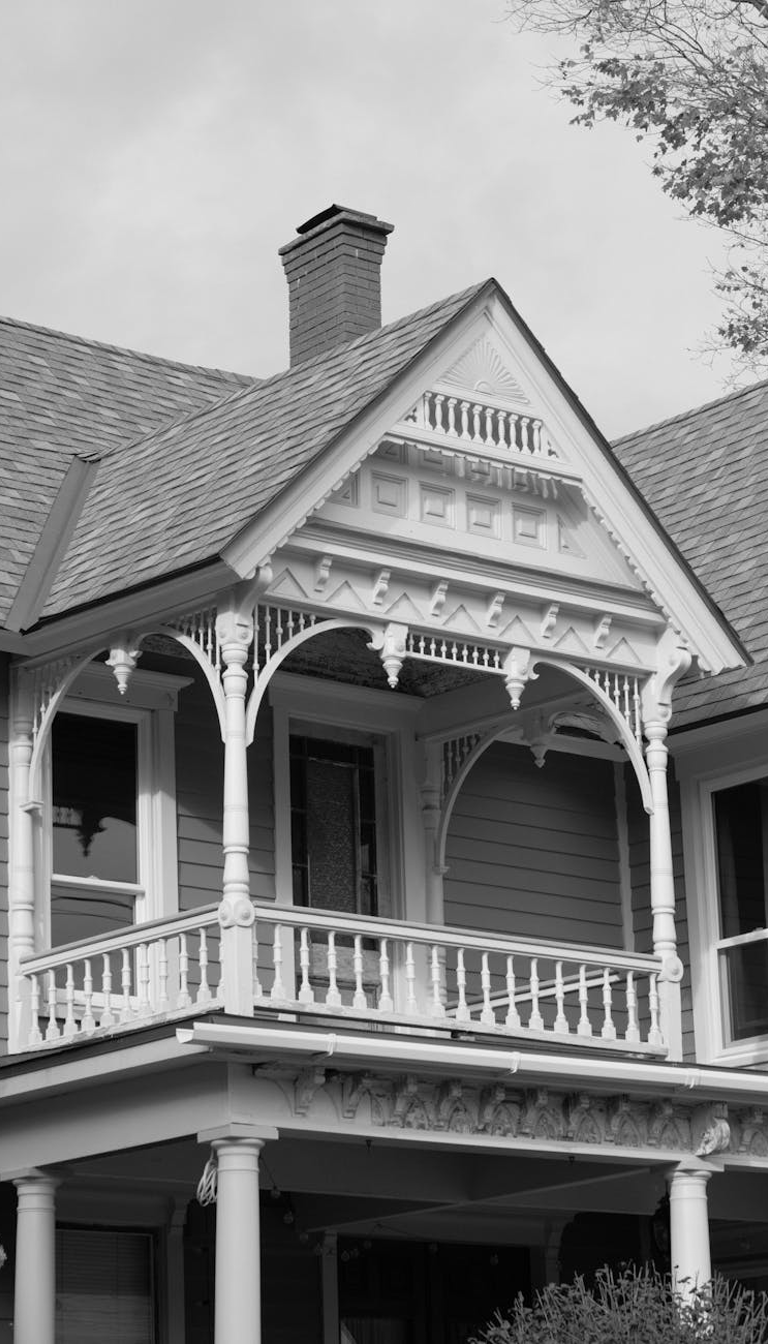
The bargeboard was the trim on the gable end. A board that followed the roofline on the side of the building where the roof ended and the sky began. The bargeboard covered the exposed rafter tails and the exposed rafter tails were ugly and the bargeboard was beautiful. The bargeboard was the building getting dressed for company. The rafter tails were the underwear. The bargeboard was the collar and the cuffs. You do not show the rafter tails for the same reason you do not show the underwear. Function does not need to be seen.
The Victorian bargeboard was carved. The carpenter took a wide board of pine or cedar and cut scrollwork into it with a jigsaw. Curves and points and trefoils and quatrefoils and every other shape the Gothic Revival could imagine. The bargeboard was the carpenter canvas. The wall was straight. The roof was straight. The bargeboard was where the straight lines ended and the imagination started. The carpenter who cut the bargeboard was a carpenter who knew how to draw. Not every carpenter can draw. The ones who could cut bargeboards.
The bargeboard served a purpose behind the decoration. The board sealed the gap between the roof sheathing and the wall. Rain blew sideways into that gap and the rain found the rafter tails and the rain ran down the rafter tails into the wall cavity and the wall cavity rotted from the top down. The bargeboard blocked the rain. The scrollwork was the excuse. The waterproofing was the reason. The Victorian builder understood that people will pay for beauty and tolerate function. Wrap the function in beauty and nobody complains about the cost.
The bargeboard weathered. The paint peeled. The carved points softened. The scrollwork filled with wasps and the wasps built nests in the curves and the curves that were meant to impress the neighbors became apartments for insects. The maintenance of a carved bargeboard was a full-time relationship. Scrape. Prime. Paint. Every three years. The homeowner who kept the bargeboard kept a promise to the building. The homeowner who let the bargeboard rot broke that promise and the building showed the break from the street. The bargeboard was the building reputation. Visible from a block away.
They use aluminum fascia now. The aluminum wraps the rafter tails and the aluminum does not rot and does not need paint and does not host wasps and does not look like anything. The aluminum is a solution to every problem the bargeboard had except the problem of being invisible. The bargeboard was visible. The bargeboard said somebody lived here who cared about the edge where the roof met the sky. The aluminum says somebody lives here who does not want to think about the edge. Not thinking about the edge is not the same as the edge not mattering.