 JOHN SINCLAIR
BARBERSHOP
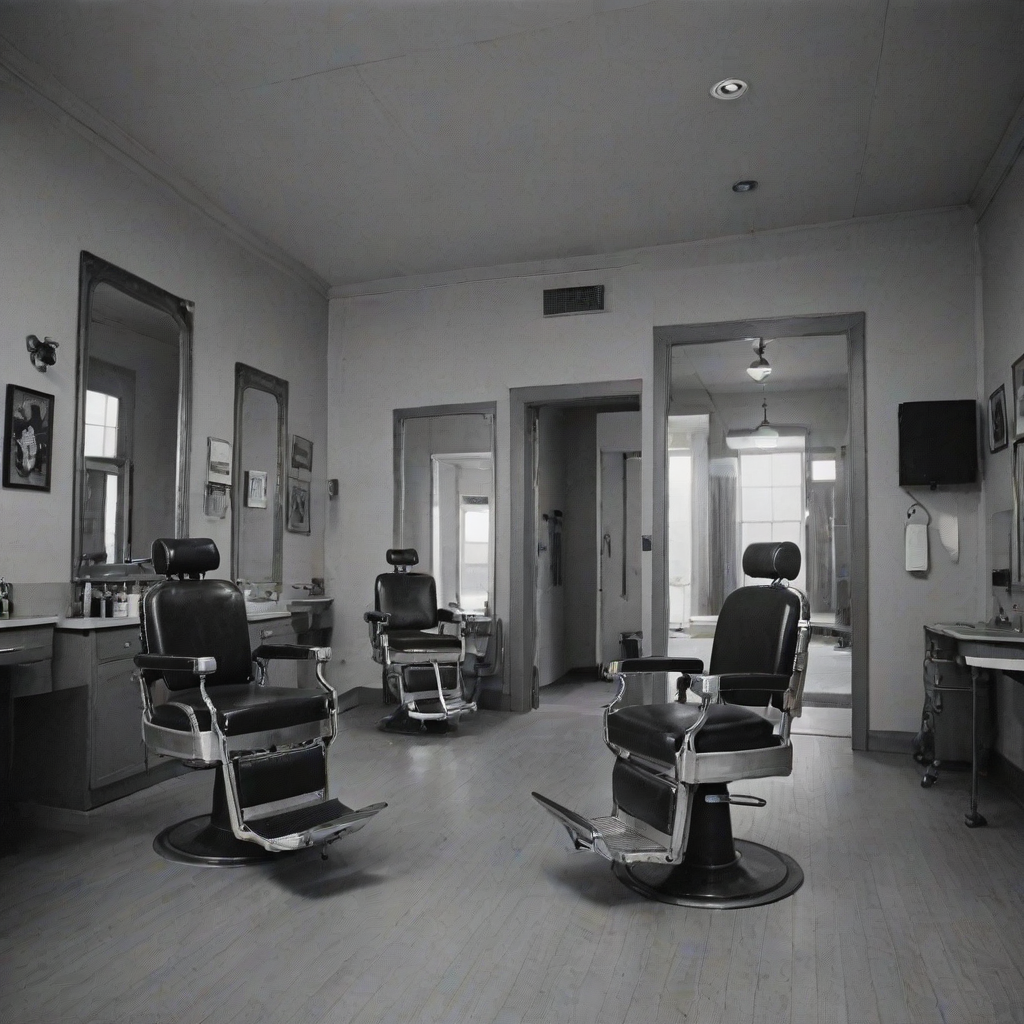
The barbershop was the only room in America where a man could sit still for thirty minutes and nobody thought he was lazy. The chair reclined and the reclining was permission. You came in vertical and the barber laid you back and the laying back was the beginning of the conversation. The conversation was the product. The haircut was the excuse.
The barber pole was a helix and the helix was red and white and blue and the spinning was continuous. The pole spun whether the shop was open or closed and the spinning was a promise. The promise said someone in this building knows how to use a blade near your throat and you will trust him because your father trusted him and your father's father trusted him and the trusting was inherited like the chair itself.
The chairs in the barbershop faced a mirror and the mirror faced another mirror and the two mirrors created an infinity and the infinity was the point. You sat in the chair and you could see the back of your own head for the first and only time and the seeing was unsettling and necessary. The barbershop was the only room that showed you the part of yourself you cannot see without help. The barber saw that part of you every two weeks. The barber knew the back of your head better than you did and the knowing was intimate in a way that nobody acknowledged.
The waiting area had chairs along the wall and the chairs were occupied by men who were not in a hurry. The men in the waiting area were reading newspapers that were three days old and the reading was not about information. The reading was about posture. The posture said I am a man sitting in a chair waiting for another man to cut my hair and the waiting is not wasted time. The waiting is the room's way of saying you are not the only person who needs attention today.
The barbershop had a television and the television played sports and the sports were a language. The language said we are strangers who share a chair and a mirror and a razor and the sharing requires a neutral subject and the neutral subject is a game played by other men in another city. The game was never the point. The game was the bridge between the door and the chair. You came in and you said did you see the game and the seeing was the password and the password let you sit down.
A man told the barber things he would not tell his wife. The barber heard confessions between the left sideburn and the right sideburn and the confessions disappeared with the hair on the floor. The hair on the floor was swept up at the end of the day and the sweeping was absolution. The secrets left the building with the clippings. The barbershop was a confessional with better lighting and a hot towel at the end.
The hot towel was the closing ceremony. The barber draped the towel over your face and the draping was a temporary blindness and the blindness was trust. You sat in a chair with a blade at your throat and a hot towel over your eyes and you trusted the man holding both because the room required it. The room was built on trust the way a church is built on faith. The trust was not spoken. The trust was architectural.
The barbershop is not gone. The barbershop still exists in every city in America. But the barbershop that was a gathering place is gone. The gathering required waiting and the waiting required patience and the patience required a room where time moved differently than the sidewalk outside. The modern barbershop takes appointments and the appointment eliminated the waiting and the waiting was where the gathering happened. The men in the chairs along the wall reading three-day-old newspapers are gone. The neutral subject is gone. The confession between sideburns is gone. The haircut remains. The haircut was never the point.