 DAVID PEEL
Barber Shop
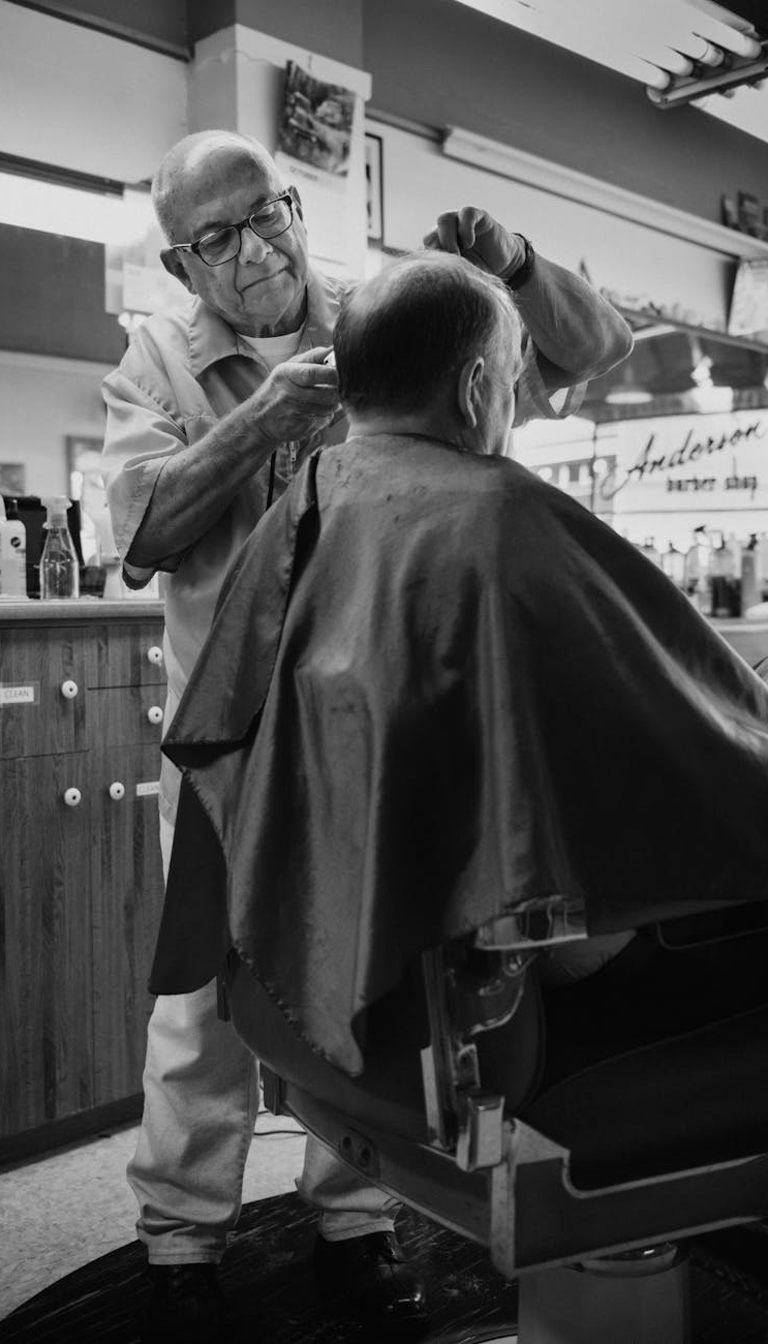
The barber shop was the only place on the block where men told the truth. You sat in the chair and the man put the cape around your neck and for twenty minutes you were trapped. You could not leave. You could not check your phone because phones did not exist. You sat there and you talked and the barber listened and the barber knew more about the neighborhood than the police and the priests combined. The barber shop was an intelligence agency with a striped pole.
My barber on Avenue B was a man named Sal. He had been cutting hair since 1952. His hands shook a little but the haircut was always perfect because muscle memory does not shake. Sal knew every man on the block by the shape of his head. He could tell you who moved in and who moved out and who was cheating on his wife and who lost his job and who was about to lose his job. All from the chair. All from the conversation that happened while the scissors worked.
The barber shop had a hierarchy. The first chair was the master. The second chair was the apprentice. The shoe shine was by the window. The waiting bench was against the wall and on the waiting bench the old men sat and argued about baseball and politics and women. The arguments were the same every day. The Mets. The mayor. The woman on the third floor. Nobody resolved anything. That was not the point. The point was the argument. The argument was the entertainment. Better than television. Cheaper too.
A haircut cost two dollars in 1968. Two dollars. Sal took twenty minutes and he used scissors and a straight razor and he shaved the back of your neck with hot foam and a blade that could kill you if he wanted to. He never wanted to. But the possibility was part of the experience. You trusted a man with a blade at your throat. That is intimacy. You do not get that at a salon. You do not get that from a machine. You get it from a man named Sal who has been holding a razor for forty years and never once thought about using it wrong.
The barber shops are salons now. They serve espresso. They play curated playlists. The barber has a tattoo sleeve and an Instagram following and the haircut costs forty-five dollars and they call it a grooming experience. Sal charged two dollars and he called it a haircut. The striped pole is still on some buildings but behind the pole is a different room. The cape is the same. The chair is the same. The razor is gone. Replaced by an electric trimmer that cannot kill you. Safer. Quieter. Less interesting. Like everything else.
See also: Razor Strop, Shoe Shine Stand