 DAVID PEEL
Baluster
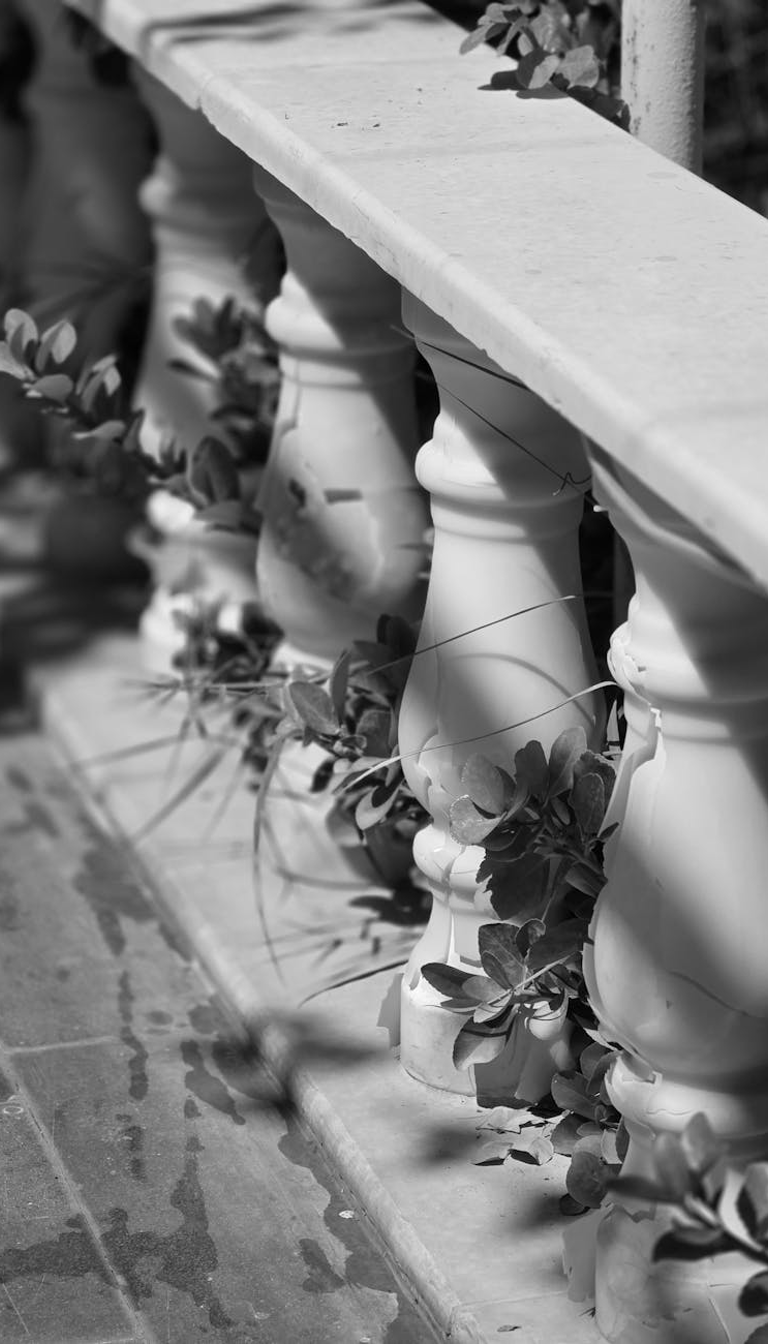
The baluster was a single vertical post in a railing. One post. The balustrade was the whole assembly — the row of balusters plus the rail on top and the base on the bottom. But the baluster was the individual. The soldier in the line. The baluster stood between you and the drop. The baluster was the reason you did not fall off the balcony or the staircase or the bridge. One baluster did nothing. A hundred balusters saved your life.
The baluster was turned on a lathe. The turner clamped a square blank of wood or stone between two centers and spun it and held a chisel against the spinning blank and the chisel carved the shape. The shape was a vase. A swelling in the middle and a narrowing at the top and bottom. The vase shape came from the pomegranate flower. The Italian word balaustra means pomegranate flower. The railing on your front porch is named after a fruit that grows in the Mediterranean. The name traveled farther than the fruit.
The spacing between balusters was not decorative. The spacing was code. Four inches. No gap wider than four inches. A child head cannot fit through a four-inch gap. The building code wrote the spacing and the spacing was a law about children and the law was invisible to every adult who walked past the railing without thinking about it. The baluster spacing was an act of protection disguised as architecture. The building protected the child and the child did not know and the adult did not notice and the baluster did not care about credit.
The cast iron baluster replaced the turned wood baluster in the nineteenth century. The foundry poured iron into a mold and the mold produced a hundred identical balusters in a day. The lathe produced one baluster in an hour. The foundry won on speed. The lathe won on character. The turned baluster had tool marks from the chisel. Each mark was a moment when the turner hand moved. The cast baluster had no marks. The cast baluster was born complete. The turned baluster was made. There is a difference between being born and being made.
They use aluminum pickets now. Straight vertical bars with no shape. No vase. No swelling. No pomegranate. The aluminum picket is a line. The line keeps you from falling and the line does nothing else. The baluster kept you from falling and told you a story about a fruit and a turner and a lathe and a chisel and a hand. The aluminum picket is efficient. The baluster was generous. Efficiency gives you what you need. Generosity gives you what you did not know you wanted.
See also: Balustrade, Bannister