 JOHN SINCLAIR
AUTOMAT
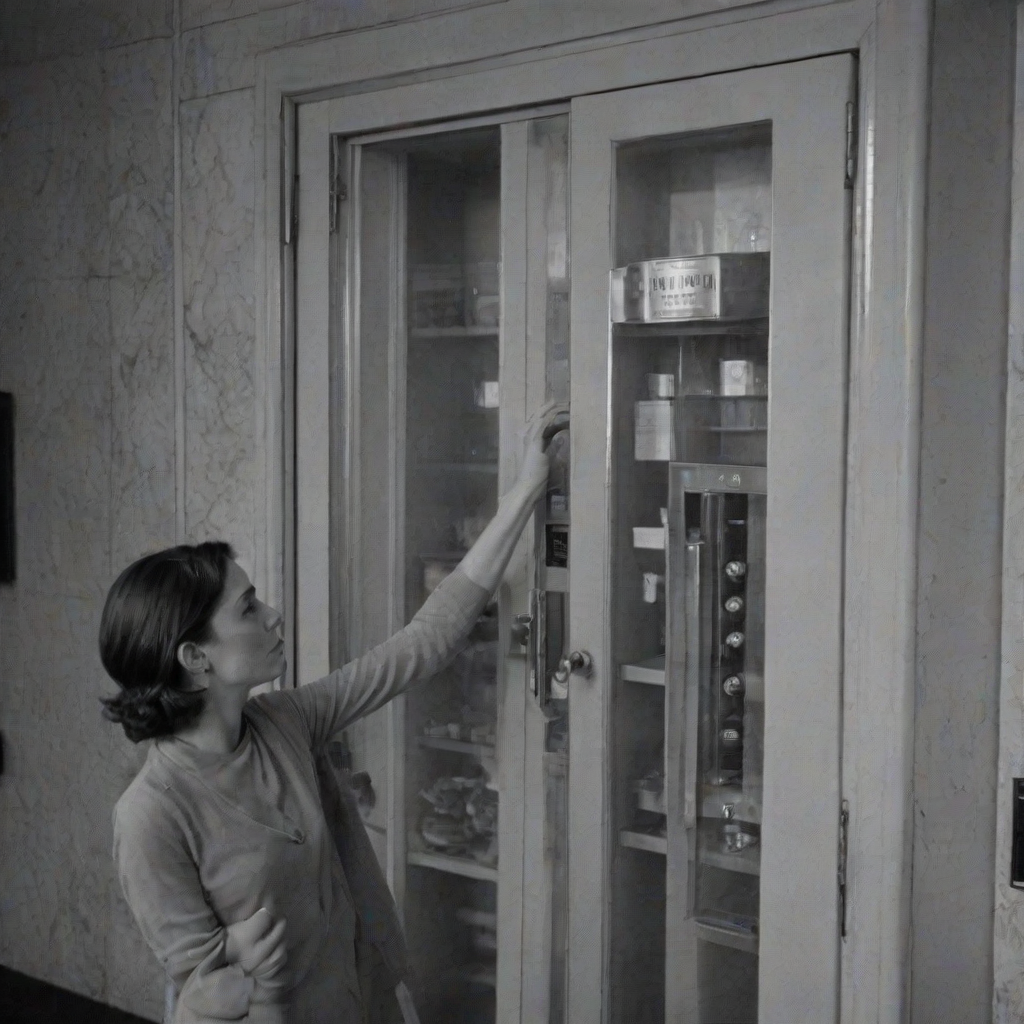
The automat was a restaurant with no waiter. You put a nickel in a slot and a little glass door opened and behind the door was a piece of pie or a sandwich or a bowl of macaroni and cheese and you took it and the door closed and that was the transaction. No conversation. No menu. No tip. Just a nickel and a door. The automat was the most honest restaurant in America because the automat could not lie. The pie was visible. The pie was behind glass. You could see the pie before you paid for it and the seeing was the selling. A menu describes. A glass door displays. The display is more honest than the description because the display cannot exaggerate. The pie is exactly as large and exactly as brown and exactly as good or bad as it looks. The automat trusted your eyes. Every other restaurant trusted your faith.
Joseph Horn and Frank Hardart opened the first automat in Philadelphia on June ninth nineteen oh two at eight eighteen Chestnut Street. The technology came from Germany. The Quisisana company in Berlin had been building coin-operated food dispensers since the eighteen nineties. Horn and Hardart imported the machines and the machines were beautiful. The machines were walls of chrome and glass and marble and the walls were the architecture and the architecture said modern. The architecture said the future has arrived and the future is efficient and the efficiency is not cold. The efficiency is warm because behind every glass door was food that a person had cooked and the cooking was invisible and the invisibility was the magic. You saw the product but not the labor. The labor was behind the wall. The cooks and the bakers worked in a kitchen that the customer never saw and the kitchen was as large as the dining room and the kitchen was where the humanity was. The automat was not a machine. The automat was a kitchen with a wall in front of it and the wall had windows and the windows had locks and the locks opened with nickels.
The Horn and Hardart automat on Broadway and Forty Sixth Street in Times Square seated three hundred people and served ten thousand customers a day and the ten thousand customers included everyone. The automat was the only restaurant in midtown Manhattan where a millionaire and a vagrant ate the same macaroni and cheese for the same nickel. The tables did not have categories. The stools did not have classes. The food did not know who was eating it. Irving Berlin ate at the automat. So did the seamstress from the garment district. The automat was the last place in New York where the price of entry was a nickel and the nickel was the great equalizer. The nickel did not ask your name. The nickel did not check your shoes. The nickel opened the door and the door did not care.
The coffee at the automat was legendary. The coffee came from a spout shaped like a dolphin's head and the dolphin was brass and the brass was polished and the coffee was fresh because the coffee was always being made. Horn and Hardart served ninety million cups of coffee a year at their peak and the ninety million cups were all the same. The consistency was the brand. The coffee tasted the same at eight in the morning and eight at night and the sameness was the promise. You could build your day around the coffee. You could count on the coffee when you could not count on anything else. The automat was the most reliable institution in the lives of the people who used it daily and the daily use was the relationship. You did not have a waiter. You had a dolphin. The dolphin never called in sick. The dolphin never got your order wrong. The dolphin poured the same cup every time and the same cup was enough.
The last Horn and Hardart automat closed on April ninth nineteen ninety one at two hundred East Forty Second Street in Manhattan. The closing was not sudden. The automats had been dying for thirty years. The nickels became dimes became quarters became too many coins for a sandwich and the coin problem was the first crack. Fast food was the second crack. McDonald's offered a hamburger for the same price with more calories and a seat and the seat had a back and the automat stools did not have backs and the back was the luxury that the working class chose when the choice was offered. The automat could not compete with the drive-through because the automat required you to be present and the drive-through did not require anything except a car and a window. The automat asked you to walk in and sit down and be in a room with other people and the asking was too much for a country that was learning to eat alone in motion. The automat was stillness in a city of speed and the stillness lost. But the people who remember the automat do not remember the speed. They remember the dolphin and the nickel and the glass door opening and the pie that was exactly what it looked like.