 DAVID PEEL
Architrave
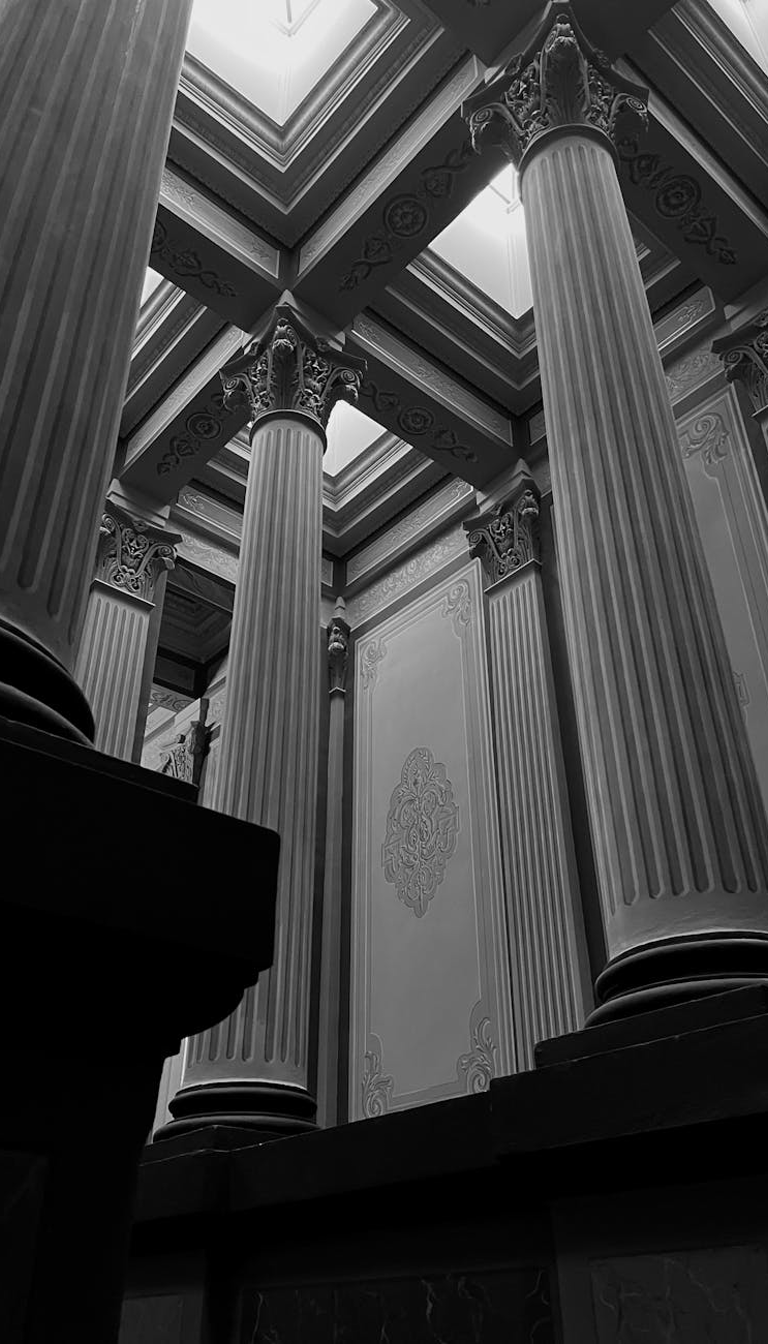
The architrave was the beam that sat on top of the columns. The lowest part of the entablature. The part that touched the column directly. The architrave was the handoff point between the vertical and the horizontal. The column pushed up and the architrave pushed sideways and the two forces met and the meeting was the architrave. The architrave was the negotiation between standing and spanning. Every building makes that negotiation. Stand up and reach across. The architrave was the reach.
The word means chief beam. Archi for chief. Trave for beam. The chief beam. The most important beam. The beam that every other beam depended on. The frieze sat on the architrave. The cornice sat on the frieze. The roof sat on the cornice. Take away the architrave and the whole stack falls. The architrave was the foundation of the top. The building had two foundations. One at the bottom where the stone met the earth. One at the top where the column met the sky. The architrave was the sky foundation.
The Greek architrave was a single stone spanning from column to column. One stone. The span limited the distance between columns because stone is weak in tension and a stone beam longer than fifteen feet will crack under its own weight. The Greek temple had close columns because the architrave could not reach farther. The limitation created the rhythm. The close columns created the colonnade and the colonnade created the shadow pattern and the shadow pattern became the most recognizable image in Western architecture. The limitation was the style.
The Roman architrave was different. The Romans used the arch and the arch could span farther than the stone beam. The Romans kept the architrave as decoration even when the arch did the work. The architrave became a face pasted over a different structure. The first curtain wall. The first facade that lied about what held the building up. The Romans invented the architectural lie and the lie lasted two thousand years and most buildings in Manhattan are still telling it. The stone face pretends the columns hold the building. The steel frame holds the building. The face is the tradition.
Nobody carves architraves. The steel beam spans and the drywall covers the steel and the drywall is smooth and the smooth surface says nothing about what is behind it. The architrave said everything about what was behind it. The architrave said there is a column below me and a frieze above me and I am the connection between them. The drywall says there is something behind me but I will not tell you what. The architrave was transparent. The drywall is opaque. The building went from showing its structure to hiding it. The hiding is the modern condition.
See also: Entablature, Girder