 JOHN SINCLAIR
AQUEDUCT
You see the aqueduct and the aqueduct is a bridge built for water and the bridge built for water is the oldest proof that cities cannot survive where they are. Every city is in the wrong place for water. Every city needs more water than the ground beneath it can provide. The aqueduct solves this problem by reaching. The aqueduct reaches from the city to the water and the reaching from the city to the water is the arm and the arm is made of stone or concrete or steel pipe and the arm brings the water to where the people are because the people will not move to where the water is.
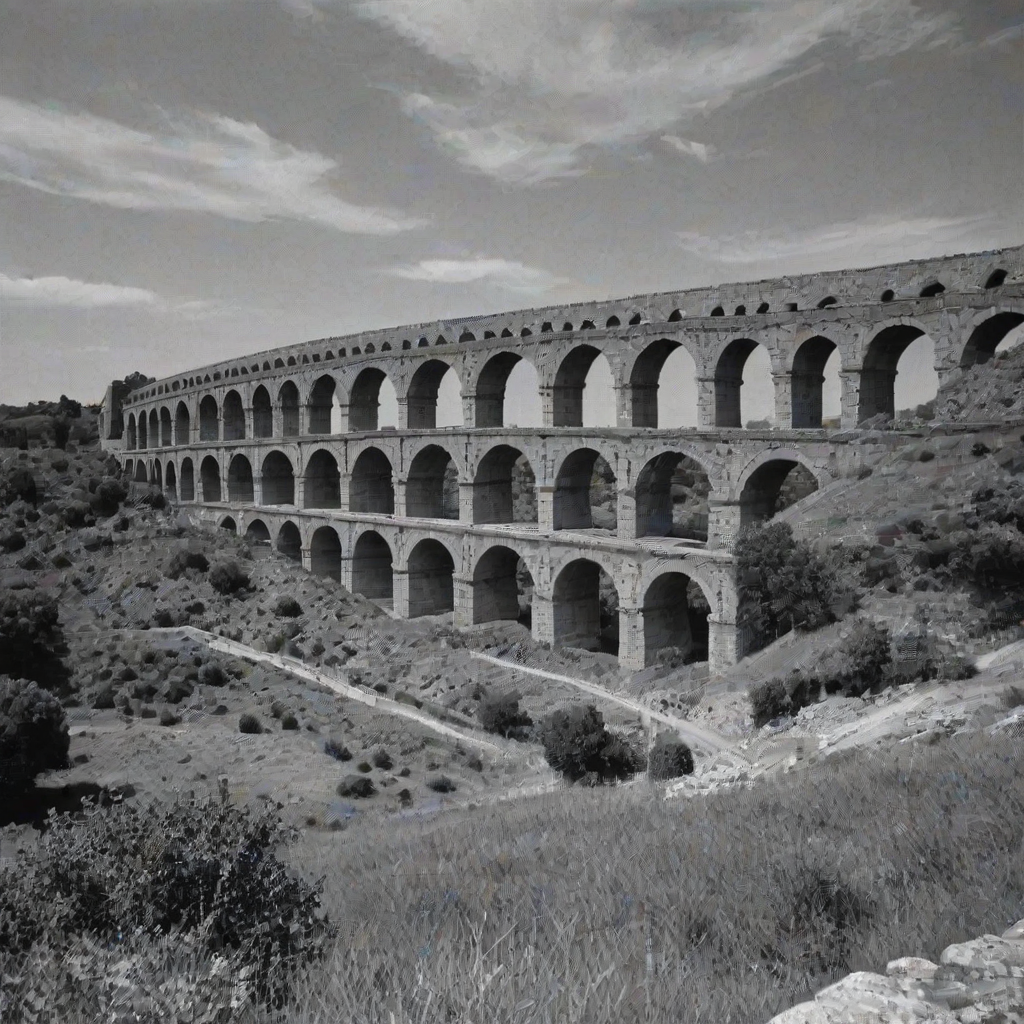
The Pont du Gard in southern France carried water across the Gardon Valley for five centuries and the five centuries of carrying water is the Roman answer to thirst. The Romans built the Pont du Gard in the first century AD and the building in the first century AD means the aqueduct is older than most nations. Three tiers of arches. One hundred and sixty feet tall. The water channel on top carried forty four million gallons a day to the city of Nimes and the forty four million gallons a day was the daily thirst of fifty thousand Romans. The Pont du Gard used no mortar. The stones were cut so precisely that they held each other by their own weight and the holding by their own weight for two thousand years is the engineering that no one has improved upon. The Pont du Gard still stands. The water stopped flowing centuries ago. The aqueduct remains because the stone outlasted the empire.
The Los Angeles Aqueduct brought water two hundred and thirty three miles from the Owens Valley in the eastern Sierra Nevada to Los Angeles and the bringing killed the valley. William Mulholland designed the aqueduct and Mulholland opened it in nineteen thirteen and when the water arrived Mulholland said there it is take it. Los Angeles took it. Los Angeles took every drop from the Owens River and the taking every drop turned the Owens Valley from farmland into desert and the turning farmland into desert is what happens when one city's thirst is stronger than another place's right to exist. The Owens Valley farmers dynamited the aqueduct. The dynamiting was the protest. The aqueduct was repaired. The water kept flowing to Los Angeles. The aqueduct won because the city's need is louder than the valley's grief. Chinatown was about this. Roman Polanski's Chinatown was about the Los Angeles Aqueduct and the aqueduct as theft and the theft of water as the original sin of Los Angeles.
The Catskill Aqueduct brings water ninety two miles from the Catskill Mountains to New York City and the ninety two miles runs underground through tunnels blasted through rock at depths of a thousand feet. City Tunnel Number One opened in nineteen seventeen and City Tunnel Number Two opened in nineteen thirty six and City Tunnel Number Three has been under construction since nineteen seventy and the under construction since nineteen seventy makes it the most expensive and longest-running capital project in New York City history. The tunnel workers are called sandhogs and the sandhogs work in compressed air hundreds of feet underground and the working in compressed air hundreds of feet underground is the most dangerous construction job in America. Twenty four sandhogs have died building City Tunnel Number Three. The aqueduct under New York is the infrastructure that no one sees and the infrastructure that no one sees delivers a billion gallons a day.
You turn on the faucet and the faucet delivers water and the delivering of water is the end of a journey that started in the mountains. The water in your glass fell as rain on a mountain and the rain on the mountain collected in a stream and the stream filled a reservoir and the reservoir fed an aqueduct and the aqueduct carried the water through a tunnel or across a valley on arches and the arches or the tunnel brought the water to a treatment plant and the treatment plant cleaned the water and the clean water entered a pipe and the pipe entered your building and the building's plumbing delivered the water to your faucet and you turned the faucet and the water came out and you drank it without thinking. The aqueduct. The reach. The arm that connects the city to the mountain. The invisible bridge between where you are and where the water is. Flowing. Right now. Under the ground or across the valley. The water is moving toward you.